Why we play
What you reward is what you get
Every game tells you what it pays for, and players do exactly that. So do whole countries.
Every game is a deal
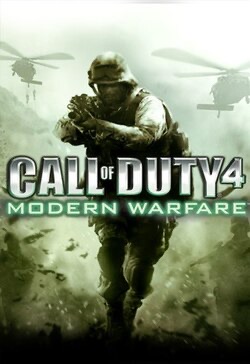
A game is a deal. Do this, get that. Players are brilliant at reading the deal and doing exactly what it pays for. Call of Duty 4 gives you experience for capturing a flag, so people hold flags. Give points for kills only and you get a lobby of lone snipers. Nobody had to give a speech about teamwork. The designers changed what the game paid for, and the players changed with it.
The research says the same. Clear goals with feedback lift effort, as Edwin Locke and Gary Latham found across 35 years of studies. Michael Sailer's team showed badges and progress bars raise how capable people feel, and teammates raise how connected they feel. Change the reward and you change the player.
A country that paid for the truth
In 1994, in about a hundred days, Hutu extremists in Rwanda killed hundreds of thousands of Tutsi, many with machetes, many by their own neighbours. Afterwards the prisons overflowed. Normal courts would have taken generations to hear every case.
So Rwanda changed the deal. From 2002 it ran gacaca, community courts held on the village grass, with no lawyers. Over ten years they heard close to two million cases. The rule that mattered: confess in front of your village, early, ask forgiveness, and your sentence came down, with part of it served as community work instead of in a cell.
Laws from the early 2000s went further: a convicted killer could walk out of prison by apologising to the survivors and asking their forgiveness. People confessed. Counselling programmes then brought killers and survivors together, sometimes for months. In 2014 the photographer Pieter Hugo took their portraits for the New York Times: killers and the survivors who pardoned them, side by side, some arm in arm. A widow next to the man who killed her husband.
In the village of Mbyo, 54 families of survivors and killers now live side by side. A man named Nkundiye went to the widow Mukalemera, told her he had killed her husband, and showed her where he was buried. She forgave him. When Associated Press reporters visited in 2019, she greeted him with a hug as they met to plan the planting season. "I found I could not live with anger forever," she said.
It wasn't perfect. Many survivors said community work was far too light, Human Rights Watch criticised trials without lawyers, and one survivor and genocide scholar, Sam Nshimirimana, called apologies made to win release artificial. But Rwanda got what it paid for: the truth, said out loud, and people learning to live side by side again.
A system that pays for silence
Now our deal. On paper, Australian courts reward a guilty plea, often with up to a quarter off the sentence. But the discount only counts once you're convicted. Defence lawyers point out that a confession is often the strongest evidence in a case, and anything extra a person admits can add to the sentence.
So our adversarial courts give an accused person little reason to admit anything, and defence lawyers advise accordingly. The system is not run by bad people. It's run by people doing exactly what it pays for, the same as a lobby full of snipers. If we want the truth, we have to pay for the truth.
Who hurts people, and who heals them
Here is the practical part. If you've ever been the one in danger, you don't care why someone is hurting you. You just want them to stop. And the why is how you stop the next one.
Jean Twenge and Roy Baumeister made people feel rejected in the lab, and those people turned more aggressive, even toward a stranger. Mark Leary's team studied 15 US school shootings and found rejection in all but two. Lonely, shut-out people are where a lot of harm starts. A squad is prevention.
And the people hurt worst often end up the kindest. Ervin Staub and Johanna Vollhardt call it altruism born of suffering. Immaculée Ilibagiza hid for 91 days in a tiny bathroom with seven other women while most of her family was killed, and later forgave a man who killed them. Azim Khamisa's son Tariq was shot dead delivering pizza by a 14-year-old; Azim started a foundation with the boy's grandfather, and they have spent decades teaching kids to put the gun down. Some 9/11 families formed Peaceful Tomorrows to push for answers to terror that wouldn't make more grieving families. People who have seen the worst rarely want revenge. They want it to stop.
Design your own deal
You run a few small systems yourself: a home, a team, a group of mates. Look at what yours pays for.
If a kid owns up to the broken window and gets the same yelling as a kid who's caught, you've built a game that pays for lying. Pay for the truth instead: thank them for telling you, then fix the window together. Adam Grant and Francesca Gino found that a simple thank-you makes people help again. We'd bet it works on honesty too.
Pay for the squad. Notice who held the flag. Bring in the person sitting alone. It costs nothing, and it's the oldest prevention there is.
Start with Call of Duty: what games are really for: why the deal we most want is a squad to serve.
Sources
- Locke, E. A., & Latham, G. P. (2002). Building a practically useful theory of goal setting and task motivation: A 35-year odyssey. American Psychologist, 57(9), 705-717. doi:10.1037/0003-066X.57.9.705
- Sailer, M., Hense, J. U., Mayr, S. K., & Mandl, H. (2017). How gamification motivates: An experimental study of the effects of specific game design elements on psychological need satisfaction. Computers in Human Behavior, 69, 371-380. doi:10.1016/j.chb.2016.12.033
- Clark, P. (2010). The Gacaca Courts, Post-Genocide Justice and Reconciliation in Rwanda: Justice without Lawyers. Cambridge University Press. doi:10.1017/CBO9780511761584
- Associated Press (2019, April 6). 25 years after Rwanda genocide, survivors forgive killers. The Sydney Morning Herald. www.smh.com.au
- Hugo, P., & Dominus, S. (2014, April 6). Portraits of reconciliation. The New York Times Magazine. www.nytimes.com
- Twenge, J. M., Baumeister, R. F., Tice, D. M., & Stucke, T. S. (2001). If you can't join them, beat them: Effects of social exclusion on aggressive behavior. Journal of Personality and Social Psychology, 81(6), 1058-1069. doi:10.1037/0022-3514.81.6.1058
- Leary, M. R., Kowalski, R. M., Smith, L., & Phillips, S. (2003). Teasing, rejection, and violence: Case studies of the school shootings. Aggressive Behavior, 29(3), 202-214. doi:10.1002/ab.10061
- Staub, E., & Vollhardt, J. (2008). Altruism born of suffering: The roots of caring and helping after victimization and other trauma. American Journal of Orthopsychiatry, 78(3), 267-280. doi:10.1037/a0014223
- Ilibagiza, I., with Erwin, S. (2006). Left to Tell: Discovering God Amidst the Rwandan Holocaust. Hay House.
- Grant, A. M., & Gino, F. (2010). A little thanks goes a long way: Explaining why gratitude expressions motivate prosocial behavior. Journal of Personality and Social Psychology, 98(6), 946-955. doi:10.1037/a0017935