What it was
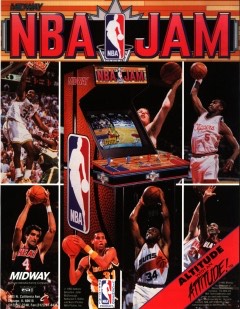
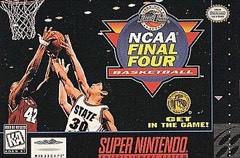
Basketball with the boring parts removed. Two players a side, real NBA teams and digitised faces, and almost no rules: no fouls, no free throws, just goaltending and the 24-second shot clock. You can shove a man to the floor and nobody blows a whistle. Players leap to the top of the screen and dunk with somersaults the human body cannot do.
Hit three baskets in a row and your player is on fire: unlimited turbo, sharper shooting and a ball that trails flames, until the other side scores or you sink four more. A pile of secret codes unlocks hidden players, and the announcer shouts the whole time.
Where it sits in history
Midway built NBA Jam for arcades after Total Carnage sold below hopes. Mark Turmell, the lead designer and programmer, wanted something with wide appeal and mixed the digitised look of Midway's other games with the two-on-two play of its earlier Arch Rivals. The NBA was wary of an arcade game carrying its name until a second pitch won it over, and the cabinet arrived in April 1993. It topped the American arcade charts for months and earned more in the United States that year than Jurassic Park did at the box office.
Acclaim bought the home rights and Iguana Entertainment did the conversions. The Super NES and Genesis versions use 1993-94 rosters. Michael Jordan is missing, because he, not the league, owned the rights to his name and likeness, and Shaquille O'Neal appears in the arcade game but not at home. In March 1994 it was the best-selling Super NES game in the United States, and Electronic Gaming Monthly's four reviewers each gave the Super NES version 9 out of 10. By 2019 the two cartridges had sold six million copies between them.
Turmell later confirmed a long-whispered rumour: a Detroit Pistons fan, he had made the Chicago Bulls miss last-second shots in close games against Detroit.
How it plays today
It still works, because it was never about basketball. A game is over in minutes, the rules fit in a sentence, and the on-fire streak gives every possession a stake. Against the computer it can feel like the same three plays on repeat.
With four people it is another game entirely: loud, physical, unfair and very funny. That is how to play it now. Alone, play a few quarters and move on.
Compared with
- NBA Jam Tournament Edition: The follow-up: three-player squads, substitutions and hot spots on the court, the same game with more in the box.
- Arch Rivals: Midway's earlier two-on-two basketball game, the template NBA Jam was built on.
- Tecmo Super Bowl: The other great licensed sports cartridge of the era, simple enough for anyone to pick up.
Why it matters
NBA Jam is Durkheim's collective effervescence in a cartridge: the charged, shared energy of people caught up in one thing at once. The announcer yelling that someone is heating up, four people on one couch groaning at the same missed dunk, the ball bursting into flames: it is built to make a room loud together.
It also shows how much of play is permission. Take away the fouls and the gravity and you get basketball as kids play it in their heads, where everyone can fly. The rules were the obstacle, so the game simply removed most of them, and found that what people wanted was the feeling of the dunk, not the sport around it.
Read: The second controller →
- Durkheim, E. (1912). The Elementary Forms of Religious Life.
What you're levelling up
You have been training these without noticing. Here is how to do it on purpose, and where it pays off away from the couch. All the skills games teach →
Teamwork
In the game. Two players a side. With four people it's loud, physical, unfair and very funny, and the team that passes beats the team that hogs.
Do it on purpose. Play a quarter where you have to pass before every shot. Watch how many easy dunks open up.
Off the couch. Passing the ball is good in sport and better in life. Mates who share the credit get asked back.
Judging risk
In the game. Hit three in a row and you're on fire, until the other side scores. Every possession has a stake.
Do it on purpose. When you're on fire, take only high-percentage shots. When you're not, go for the risky steal. Notice which pays.
Off the couch. Know when you're on a roll and when to play it safe. Money, sport and late nights out all reward that call.
Winning and losing well
In the game. No fouls, no free throws, and you can shove a man to the floor. It's a party game first.
Do it on purpose. Play winners-stay-on with three mates. Rate yourself on how good you were to play against, not just the score.
Off the couch. Being fun to lose to is a rare skill. It makes you the one people want at the barbecue, and the date people want to see again.
Verdict · 8/10
Basketball stripped to dunks, shoves and streaks, and better for it. A party game first and a sports game second.