The order of fun
Why games are fun: it is the order
Everyone knows games are fun. Fewer people can say why. The answer is hiding in the first thirty seconds of Super Mario Bros.
It is not the points
Ask anyone why games are fun and you get the obvious answers. The music. The colours. Beating your mate. All true, and none of it is the engine. Plenty of games have great music and bright colours and nobody plays them twice.
Here is the thing that actually does the work: the order. A good game hands you one skill at a time, each one sitting just past what you can already do, and it pays you off the second you land it. Then it stacks the next skill on top. Get the order right and a hard thing feels like a ride. Get it wrong and the same hard thing feels like homework.
World 1-1 is a lesson plan
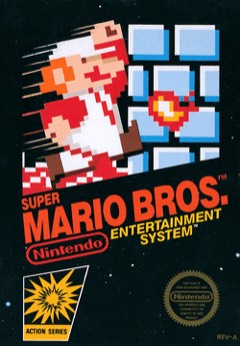
Super Mario Bros. never tells you how to play. It does not need to. You start on flat ground with nothing in the way, so the first thing you learn is that right is forward. Then question blocks float over your head, and a Goomba walks at you. You jump, because there is nothing else to do, and you find out jumping hits blocks and jumping on enemies kills them.
Next come the pipes, and they get taller as you go. Same skill, a little more of it: hold the button longer, jump higher. Then the first gap in the floor, which teaches the one lesson the pipes could not: a jump can kill you. By the time the level throws everything at you together, you already have every piece. You never felt taught. You felt clever.
That is the trick. Nothing arrives before you are ready for it, and nothing hangs around once you have it. Every few seconds you are slightly better than you were, and you can feel it.
Why the order feels so good
This is not just a nice design idea. Four lines of research land in the same spot.
Mihaly Csikszentmihalyi's flow is the state where time vanishes, and it turns up when the challenge matches your skill, the goal is clear and the feedback is instant. A well-ordered level is a machine for keeping you right there: each new step nudges the challenge up just as your skill catches it.
Lev Vygotsky saw the same thing in kids. In play, he wrote, a child acts a head taller than themselves. Play is where people stretch just past what they can do, not miles past it. Too easy is boring, too hard is despair, and the sweet spot is one step up.
Richard Ryan, Scott Rigby and Andrew Przybylski found that games pull us in when they meet three needs: feeling competent, choosing for ourselves, and feeling connected to others. The order is how a game makes you feel competent over and over, in small doses, all night.
And under all of it, the dopamine. Wolfram Schultz and colleagues showed that dopamine neurons fire on the gap between what you expected and what you got. Land a jump you were not sure of, find a block with a mushroom in it, and that gap lights up. A good game keeps those small surprises coming at a steady beat.
Bernard Suits called playing a game 'the voluntary attempt to overcome unnecessary obstacles'. The order is what turns those obstacles from a wall into a staircase.
We made one, and it shows the bones
We built our own NES platformer, Stomp, from scratch. It is rough around the edges, and we will be the first to say it is no Nintendo. But play its first level and you can feel the idea working, because we stole the order on purpose.
The title screen gives you the whole rulebook in five lines: move, jump, run, hold to jump higher, stomp the blobs, grab coins, reach the flag. Then the level hands it to you one piece at a time. A stretch of flat ground to get your thumbs moving. Question blocks to jump at. A pipe, then a taller pipe. Then a gap in the floor, and some floating bricks to finish. Each new thing builds on the last, and you can watch it happen in the clip at the top of this page.
Making it taught us more than playing a hundred platformers did. When you have to decide what comes first, you find out quickly that order is the whole game.
Make anything feel like a game
If the fun lives in the order, you can rebuild it in almost anything. Learning guitar, getting fit, a new job, a language, the gym. Watch yourself, then:
First, break the task into skills and put them in order, easiest first. Not the whole song: one chord, then the change between two chords, then the strum.
Second, make each step a bit harder than the last, never a lot. If you are bored, jump a step. If you are drowning, go back one.
Third, get feedback fast. Games give it in a heartbeat; real life hides it. So you build it yourself: a timer, a tally on the fridge, a recording of you playing, a mate who checks your work.
Fourth, choose it. The same task feels like play when it is yours and like work when it is forced on you. Pick your own next level.
This is also why most 'gamification' falls flat. It copies the points, the badges and the progress bars, and skips the order. Points are the scoreboard, not the game.
The honest limit
Some things in life will not give you feedback in seconds. A career, a relationship, your health. You still cannot see the whole level from the start. But you can chop the long thing into short levels you can feel: a week, a conversation, a single workout. Each one cleared is a small surprise, and small surprises at a steady beat are what kept you up till 2am with a controller.
Games did not invent this. They just got better at it than anything else, and spent forty years showing us how. We might as well use it.
Want to feel the order from the inside? Play Stomp, our own rough little NES platformer, free in your browser. Then go to Level up and see which skills you have been training all along.
Sources
- Csikszentmihalyi, M. (1990). Flow: The Psychology of Optimal Experience.
- Vygotsky, L. S. (1978). Mind in Society: The Development of Higher Psychological Processes.
- Ryan, R. M., Rigby, C. S., & Przybylski, A. (2006). The motivational pull of video games: A self-determination theory approach. Motivation and Emotion, 30(4), 344-360. doi:10.1007/s11031-006-9051-8
- Schultz, W., Dayan, P., & Montague, P. R. (1997). A neural substrate of prediction and reward. Science, 275(5306), 1593-1599. doi:10.1126/science.275.5306.1593
- Suits, B. (1978). The Grasshopper: Games, Life and Utopia.