What it was
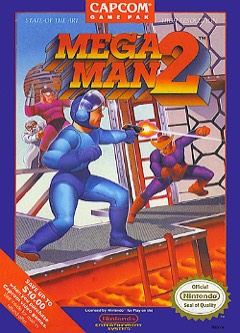
Eight robots, eight stages, pick your order. Mega Man 2 is a side-scrolling action platformer from Capcom in which Mega Man hunts down Dr. Wily's new Robot Masters: Metal Man, Air Man, Bubble Man, Quick Man, Crash Man, Flash Man, Heat Man and Wood Man. Beat one and you take its weapon, and every weapon is some other boss's weakness. Working out the chain is half the game.
After the eight, Wily's fortress runs five stages in a fixed line, ending with a rematch against all eight bosses in one room of unmarked teleporters, then Wily himself. Along the way you pick up three support items that make platforms, and they open routes you can't reach on foot.
Where it sits in history
Capcom released it in Japan in 1988 as Rockman 2: The Mystery of Dr. Wily, with North America and PAL regions following over the next two years. The first Mega Man had not sold well enough to earn a sequel on merit. Director Akira Kitamura got permission to make one only on the condition the team kept working on other projects, so much of it was made in the staff's own time, in three to four months. Keiji Inafune, the artist on the first game, took on a bigger role.
The team answered complaints that the original was too hard. Energy Tanks let you refill your health whenever you like, a password saves your progress after each boss, and the Western release added a Normal mode with stronger weapons. Capcom also ran a fan contest for boss designs and received 8,370 entries. Takashi Tateishi wrote the music, and the Wily stage theme became one of the most covered pieces of game music there is.
It sold more than 1.51 million copies and stayed the best-selling Mega Man game until Mega Man 11 passed it in 2019. Eight Robot Masters, Energy Tanks, the teleporter room and passwords all became series habits from here.
How it plays today
It holds up because the loop is so clean. Each stage is short and built around one theme, the controls respond instantly, and the weapon chain rewards curiosity. Finding that a boss folds to a weapon you nearly ignored is still a good feeling.
The weak spots are real. Normal mode, added for the West, makes the boss weapons so strong that several fights end before they start, and even at launch some reviewers found it easier than the first game. The Wily rematch room, with its unlabelled teleporters, is more guesswork than skill the first time through. Play on Difficult if you want the game to push back; that is how it shipped in Japan.
Compared with
- Mega Man: The first game has the idea but not the polish: six bosses, no passwords and a score counter nobody needed.
- Mega Man 3: Bigger all round and the next step for the series, but Mega Man 2 has the sharper stages and the more celebrated music.
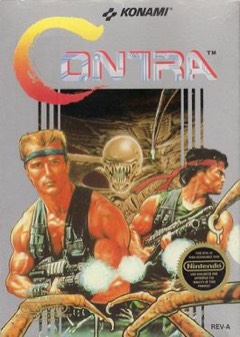
- Contra: The same year's other NES action benchmark. Contra asks for reflexes and memory; Mega Man 2 asks you to plan your route first.
Why it matters
Beat a Robot Master, take its weapon, and the other seven bosses suddenly look different. Mega Man 2 runs on a small engine of expectation. Every new weapon is a guess about who falls to it, and when a boss crumples under something you only half-suspected would work, the game pays out more than the win itself.
Wolfram Schultz and colleagues found dopamine neurons signal reward prediction error: the gap between what we expected and what we got. Mega Man 2 lives in that gap. Kent Berridge and Terry Robinson add a twist: dopamine is more about wanting than liking. That explains the stage-select screen. Eight faces, and the pull is always toward the next one, never a rest on the last. The kids who worked out the chain in 1988 and the adults still humming the Wily theme share the same itch. We are built to chase the next surprise, and a small team working in its own time built a near-perfect thing to chase.
Read: Wanting, not liking: what dopamine really does when you play →
- Schultz, W., Dayan, P., & Montague, P. R. (1997). A neural substrate of prediction and reward. Science, 275(5306), 1593-1599. doi:10.1126/science.275.5306.1593
- Berridge, K. C., & Robinson, T. E. (1998). What is the role of dopamine in reward: hedonic impact, reward learning, or incentive salience? Brain Research Reviews, 28(3), 309-369. doi:10.1016/S0165-0173(98)00019-8
What you're levelling up
You have been training these without noticing. Here is how to do it on purpose, and where it pays off away from the couch. All the skills games teach →
Problem solving
In the game. Every boss weapon is some other boss's weakness. Working out the chain from Metal Man to Wood Man is half the game.
Do it on purpose. Play it cold without a guide and test each new weapon on the next boss before you look anything up. Write the chain as you find it.
Off the couch. Most problems at work have a chain. Solve the easy one first and it hands you the tool for the hard one.
Pattern recognition
In the game. Quick Man, Air Man and the rest each run a script. After a few deaths you're dodging before the shot leaves.
Do it on purpose. Fight Air Man with the plain buster and say his tornado pattern out loud as it comes. Then fight him without saying it.
Off the couch. Your mate who always bails at 11, the boss who snaps on Mondays. Spot the loop and you stop getting caught by it.
Judging risk
In the game. Normal mode makes the boss weapons so strong some fights end before they start. Difficult is how it shipped in Japan.
Do it on purpose. Switch to Difficult. Notice which fights you'd been winning by brute force rather than skill.
Off the couch. Taking the harder option on purpose, the tougher course, the bigger job, is how you find out what you're made of. Easy mode teaches you nothing.
Verdict · 9/10
The game that turned Mega Man from a cult item into a series, and still the easiest one to recommend. Play it on Difficult and it earns its reputation.