What it was
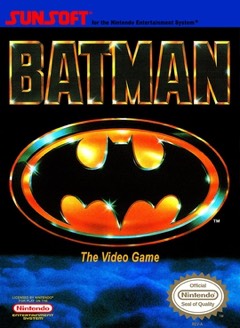
Batman: The Video Game hands you a dark purple Batman and five short, hostile stages: the Gotham City streets, the Axis Chemical plant, the sewers, a laboratory and the cathedral bell tower. His signature move is not a grapple but a wall jump. Kick off one wall, catch the other, climb. Much of the game is built around vertical shafts that test exactly that.
He also carries three thrown weapons, the Batarang, the Batdisk and the Batpoon, which draw on a shared supply of pellets you pick up from defeated enemies. Between stages, animated cutscenes tell a loose story that ends in a climb to face the Joker.
Where it sits in history
Sunsoft licensed Batman from Warner Bros. for US$1 million, a big bet for a company still moving from arcades to home consoles. Negotiations started before the film was finished, and the staff visited Tim Burton's set in London to get its look right. You can see the result in the palette: murky browns, deep purples and heavy shadow, unusual for a console full of bright blue skies.
The plot is another matter. It barely follows the film, and the minor enemies are drawn from deeper in the DC comics, with Deadshot, KGBeast, Maxie Zeus and Heat Wave among the grunts and Killer Moth and Firebug among the bosses. A prototype even left the Joker out of the fighting entirely, with his defeat shown only in the ending. Electronic Gaming Monthly named it the best movie-to-game adaptation of 1989.
How it plays today
The wall jump is the reason to play. It is quick and responsive, and once you have the rhythm, scaling a shaft while dodging turrets feels excellent. The controls are tight across the board, and the music, a driving Sunsoft soundtrack, carries the mood as much as the art does.
It is also hard, and it can feel unfair. Enemies knock you back into pits, a few jumps demand precision the stages don't hint at, and the final stretch in the bell tower is a real wall. Switching weapons is clumsy. The five stages are short, so a practised player gets through quickly, but getting practised takes a while.
Compared with
- Ninja Gaiden: The obvious cousin: both use wall climbing and knockback, and both punish you for them. Ninja Gaiden has more story; Batman has the stronger mood.
- Castlevania: A similar grim look and slow deliberate pace, but Batman moves faster and asks for more vertical play.
- DuckTales: The same year's other licence done right, and its opposite in tone: bright, forgiving and open.
Why it matters
Batman: The Video Game knocks you back into pits you had nearly cleared, and you go again. Its bargain is simple: you will die a lot, and you will want another go. The second half is the strange bit.
Jesper Juul calls it the paradox of failure. We avoid failing in life yet seek it in games, and failure is what makes us reconsider and improve. Each fall down a shaft teaches the wall jump's rhythm a little better, until one day you scale it clean with turrets firing and it feels excellent. Albert Camus ended his essay on Sisyphus, condemned to roll a boulder uphill forever, with "One must imagine Sisyphus happy." Camus found meaning in the struggle itself. A purple Batman kicking between two walls in the Axis Chemical plant, again, is Sisyphus with a better soundtrack. The climb is the game. The Joker at the top is almost an afterthought; one prototype left him out of the fighting altogether.
Read: One must imagine Mario happy →
- Juul, J. (2013). The Art of Failure: An Essay on the Pain of Playing Video Games. MIT Press.
- Camus, A. (1942). The Myth of Sisyphus.
What you're levelling up
You have been training these without noticing. Here is how to do it on purpose, and where it pays off away from the couch. All the skills games teach →
Timing and rhythm
In the game. The wall jump is the whole game. Kick off one wall, catch the other, climb, and once you've got the rhythm scaling a shaft while dodging turrets feels excellent.
Do it on purpose. Find the first tall shaft and climb it twenty times. Count how many you do clean and notice when it starts to feel like music.
Off the couch. Dancing, sport, and knowing when to make your move. Good timing looks effortless, and effortless is attractive.
Bouncing back
In the game. Enemies knock you back into pits, some jumps want precision the stage never hints at, and the bell tower is a real wall. Expect to die a lot.
Do it on purpose. Count deaths in the bell tower one session. Next session, beat the number.
Off the couch. The knock-back at the bar, the interview that went nowhere. Whoever asks again, a bit sharper, gets more yeses.
Keeping your cool
In the game. Getting knocked back into a pit right at the top of a shaft is the moment most people throw the pad.
Do it on purpose. After a bad death, wait five seconds before you continue. Loosen your hands on purpose.
Off the couch. Nobody fancies someone who throws the controller. Calm under a bit of pressure is quietly attractive.
Verdict · 8/10
A licensed game that stands on its own, carried by a superb wall jump, a gloomy look and a great soundtrack. Expect to die a lot, and expect to want another go.