What it was
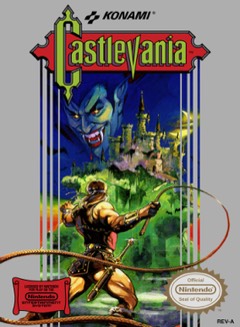
A century after a Belmont last put him down, Dracula is back, and Simon Belmont walks into his castle with a whip. That is the whole plot, and it needs no more. The castle unfolds across 18 stages in six blocks, each block ending with a boss lifted from the monster movies, Frankenstein's monster and the Grim Reaper among them, before the Count himself. A timer runs on every block.
Simon walks, jumps, climbs stairs and cracks the whip after a short wind-up. Candles drop hearts, and hearts pay for one sub-weapon at a time: throwing knife, axe, holy water, a boomerang cross or a stopwatch that freezes enemies. Pick up a new one and the old one is gone, so choosing what to carry into a boss fight matters.
Where it sits in history
Konami released it in Japan on the Famicom Disk System in September 1986 as Akumajō Dracula. Director Hitoshi Akamatsu wanted it to feel like a classic horror film, and it shows in the palette, the music and the rogues' gallery. The NES cartridge reached North America in 1987 and Europe in 1988, renamed because Konami of America was uneasy with the Japanese title's religious overtones.
It sold over a million copies and launched the series. On the NES it was followed by Castlevania II: Simon's Quest and the prequel Castlevania III: Dracula's Curse, and its rhythm of weapons and bosses showed up again in Ninja Gaiden.
How it plays today
It depends on how you feel about commitment. Simon cannot change direction mid-jump, and a hit knocks him backwards, often into a pit. Together with the whip delay, that makes every jump a decision you live with. It feels rigid for ten minutes, then deliberate, and the game is built around it: enemies come in patterns you can learn and beat.
What has not aged well is the late game, where flying enemies arrive mid-jump and one knockback can undo ten minutes of progress. The Grim Reaper is a wall for many players. The music, though, is some of the best on the console, and once you know the castle a full run is short.
Compared with
- Castlevania III: Dracula's Curse: The prequel adds branching routes and extra playable characters; the original is shorter and more focused.
- Super Castlevania IV: The SNES retelling lets Simon whip in several directions and is far more forgiving. This one is harder and leaner.
- Ninja Gaiden: Borrowed the item system and pushed speed where Castlevania chose weight.
Why it matters
Simon Belmont cannot change his mind in mid-air. Once a jump starts, it finishes, and if a flying enemy clips Simon on the way, the pit takes him. In a person we would call that a flaw. In a game we pay for it, then come back for more.
Jesper Juul calls this the paradox of failure: we avoid failing in life, yet seek it out in games, because failure makes us reconsider and improve. Castlevania is a clean case. Every death at the Grim Reaper is information, and the tenth attempt looks nothing like the first. Albert Camus wrote, 'One must imagine Sisyphus happy', finding meaning in the struggle itself. Simon climbs the same stairs through the same castle, run after run, and the stairs are the point. The castle never changes. You do.
Read: One must imagine Mario happy →
- Juul, J. (2013). The Art of Failure: An Essay on the Pain of Playing Video Games. MIT Press.
- Camus, A. (1942). The Myth of Sisyphus.
What you're levelling up
You have been training these without noticing. Here is how to do it on purpose, and where it pays off away from the couch. All the skills games teach →
Judging risk
In the game. Simon can't change direction mid-jump and a hit knocks him back, often into a pit. Every jump is a decision you live with.
Do it on purpose. Before each risky jump, say the odds you'd give it. Check over a few tries how good your gut is.
Off the couch. Some decisions you can't take back, like quitting a job or the first message you send someone you fancy. Learning what a good bet feels like makes you braver about the ones that matter.
Pattern recognition
In the game. Enemies come in patterns you can learn and beat, and the boss line-up runs to the Grim Reaper. Learn the script and the stiff controls stop mattering.
Do it on purpose. On the Grim Reaper, don't attack for the first ten seconds. Just watch where the sickles go.
Off the couch. Most problems repeat. Your mates, your boss, your budget. Spot the loop and step out of it.
Planning ahead
In the game. Pick up a new sub-weapon and the old one is gone, so choosing what to carry into a boss fight matters.
Do it on purpose. Before each boss, decide which sub-weapon you want and leave the rest alone. Note which choice works.
Off the couch. Turn up prepared, to the interview, the pub quiz, the first date. Knowing what to bring and what to leave behind is half of being ready.
Verdict · 8/10
A short, hard, beautifully paced horror platformer whose stiffness is a design choice, not a flaw. Learn its rules and it rewards you.