What it was
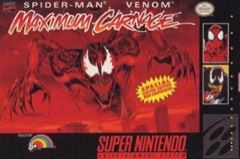
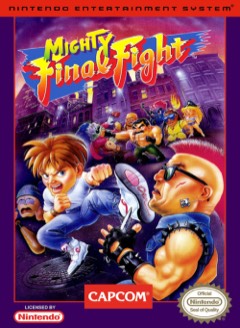
Spider-Man and Venom: Maximum Carnage is a side-scrolling beat 'em up in the Double Dragon and Final Fight mould. It's based on the comic story of the same name. Cletus Kasady has bonded with a symbiote and become Carnage, and he and his crew are tearing through New York.
It's single-player: you switch between Spider-Man and Venom, who are not mates and team up anyway. Hidden items in certain levels let you summon other Marvel heroes: Captain America, Black Cat, Iron Fist, Cloak and Dagger, Deathlok, Morbius and Firestar. The items sit in the same spots every time, and summoned heroes help in different ways, usually better for whichever of the two they favour.
Where it sits in history
Software Creations made it, LJN published it, and it came out for the SNES in 1994: North America on 16 September, Europe on 24 November. A Genesis version that's virtually identical came out too. It was one of the first games based directly on a comic book story, and the cutscenes use semi-animated art from the comics. It was also the first Spider-Man game with a teen rating.
The cartridge is red, which is odd enough to be famous. It's the only official Genesis game with a non-black cartridge, and one of three SNES games with a non-grey one, alongside Doom. Rock band Green Jellÿ wrote and produced the soundtrack, and the title song is 'Carnage Rules'. Boss fights use an uncredited version of Black Sabbath's 'The Mob Rules'.
How it plays today
It's hard, and honestly repetitive. The moves are limited, the backgrounds look alike and there's not much to interact with. Electronic Gaming Monthly gave it five out of ten across the board and called the graphics sloppy.
But the reputation has climbed over the years. People praise the soundtrack, the faithful comic adaptation, the challenge and the swap between Spider-Man and Venom. It's one player only, so put the soundtrack up, learn where the summon items hide, and keep a good controller handy.
Compared with
Why it matters
Ryan, Rigby and Przybylski found that games satisfy three needs: competence, autonomy and relatedness. Maximum Carnage leans on the third, even with one player. Spider-Man and Venom hate working together, and you feel it, but the game still asks you to stand beside someone you don't quite trust.
Lots of us know that situation. The best thing in the game is the moment the extra heroes arrive: you were outnumbered, and then you weren't.
Read: Who you are when you play →
- Ryan, R. M., Rigby, C. S., & Przybylski, A. (2006). The motivational pull of video games: A self-determination theory approach. Motivation and Emotion, 30(4), 344-360. doi:10.1007/s11031-006-9051-8
What you're levelling up
You have been training these without noticing. Here is how to do it on purpose, and where it pays off away from the couch. All the skills games teach →
Teamwork
In the game. Summoned heroes like Captain America or Black Cat help in different ways depending on who called them, and the summon items sit in the same spots every time. Knowing who to bring, and when, is half the fight.
Do it on purpose. Summon every ally once with Spider-Man and once with Venom, and note who works better for whom. Then save each one for the fight that needs them.
Off the couch. Knowing which mate to call for which job: the one who can lift, the one who can talk to the landlord, the one who'll just listen. Asking the right person is a skill, not a weakness.
Bouncing back
In the game. The difficulty is high, the moves are few and the waves keep coming, so you'll lose lives in the same spot more than once.
Do it on purpose. After each death, change one thing before you try again: a different hero, a summon saved, a slower approach.
Off the couch. Knockbacks in a job hunt or on the dating apps. Tweak one thing, don't tilt, go again.
Timing and rhythm
In the game. Boss fights with Shriek, Demogoblin, Doppelganger and Carrion punish button mashing and reward hitting the moment they've committed to a move.
Do it on purpose. For one boss, don't attack at all for the first thirty seconds. Watch what they do, then strike only into the gaps.
Off the couch. Knowing when to speak up in a meeting, when to let a mate finish their rant, or when it's time to leave the party while it's still good.
Verdict · 7/10
Clunky, loud and strangely lovable. The red cart, the Green Jellÿ tunes and the sheer Marvel of it all make it a cult classic.