What it was
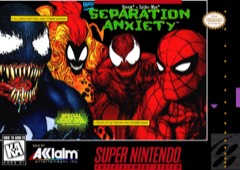
It's a beat 'em up where one or two players team up as Spider-Man and Venom to take down Carnage. The thugs are the Jury, who are heavily armed, and Venom's symbiote children. Captain America, Ghost Rider, Hawkeye and Daredevil show up to lend a hand.
The title borrows from a Venom comic series, but the story follows Venom's first limited series, Lethal Protector. You see Spider-Man turn up, the digger in San Francisco, the underground city, the Jury, five symbiote seeds becoming five new symbiotes, and the escape from the Life Foundation.
Under it all it's a side-scroller where you walk right and hit things. What changes it is having two characters to choose between, and a mate who can take the other.
Where it sits in history
Acclaim released it in 1995 on Mega Drive/Genesis and Super NES, and it was later ported to PC. It's the sequel to Spider-Man and Venom: Maximum Carnage. Both versions were re-released in the Marvel MaXimum Collection in 2026.
Critics were not kind. Electronic Gaming Monthly's review crew agreed it wasn't much fun, citing repetitive fights and cheap combat with a constant flow of unavoidable hits. Next Generation said it was on par with Maximum Carnage but offered nothing new. GamePro's Genesis reviewer still called it a solid action game for its big move list, and its SNES reviewer preferred that version for its more colourful graphics.
How it plays today
Be honest about what it is. The fights repeat, the levels are monotonous and there's no big idea to set it apart from Maximum Carnage or the other brawlers of the time. Choosing between Spider-Man and Venom is the one feature the critics agreed was good.
It's best treated as a curiosity for Marvel fans. The SNES version looks better than the Genesis one, and that's the version to pick.
Go in for the novelty of playing as Venom, not for depth. With a mate and a snack it'll hold you for a session, and then you'll have seen it.
Compared with
Why it matters
Juul calls it the paradox of failure: we avoid failing in life but go looking for it in games, because failing makes us rethink and get better. Separation Anxiety shows the other side. When the failure is cheap hits you can't dodge, there's little to learn, and losing just feels like losing.
It's a useful bad example. Good difficulty teaches you something each time you lose. This one mostly teaches you to put the controller down.
Read: The zone: why good games make time disappear →
- Juul, J. (2013). The Art of Failure: An Essay on the Pain of Playing Video Games. MIT Press.
What you're levelling up
You have been training these without noticing. Here is how to do it on purpose, and where it pays off away from the couch. All the skills games teach →
Keeping your cool
In the game. The fights keep landing hits you can't dodge, against the same enemies again and again. Mashing in a temper only makes it worse.
Do it on purpose. When a fight feels unfair, take one breath and change your approach instead of mashing.
Off the couch. Staying civil in a queue that's going nowhere, or with a call-centre script on loop. Whoever stays polite usually gets the manager, and the refund.
Teamwork
In the game. One or two players fight side by side as Spider-Man and Venom against Carnage and the Jury.
Do it on purpose. Swap characters halfway and see what your mate was dealing with.
Off the couch. A partner's job always looks easier from the outside. Swap for a day, the cooking or the school run, and you'll both stop keeping score.
Pattern recognition
In the game. Heavily armed Jury thugs and symbiote children keep coming in familiar waves.
Do it on purpose. Work out which enemy needs which move and stick to it.
Off the couch. Spotting the same argument coming round again, the dishes or the in-laws, and trying a different opening line before it starts.
Verdict · 4/10
Repetitive and unoriginal. A curiosity for comics fans, and for two players only.