Identity
Who you are when you play
Type your name into the save file and something happens. There is you, there is the hero, and there is a third person made of both.
Your name here
The Legend of Zelda asks for your name before it lets you in. Three save files, eight letters each. Plenty of kids typed their own name, and for the next few weeks the hero exploring Hyrule was, in some way that is hard to pin down, them.
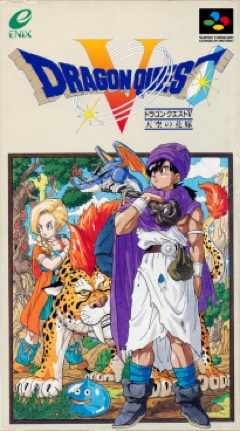
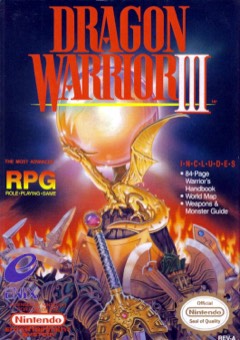
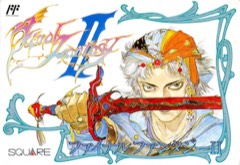
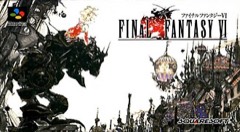
Dragon Warrior asked the same question at the start. Final Fantasy went further and asked you to pick four heroes from a line-up of fighters, thieves and mages, then name every one. EarthBound asked you to name the whole party, the dog, and your favourite food. Games of this era kept handing players a pen, and players kept writing themselves in.
Neither you nor them
The linguist James Paul Gee has a useful name for what happens next. He calls it projective identity. When you play, you are not simply yourself, and you are not simply the character. You are a blend of the two, shaped by what you want that character to be. Link is a silent boy in a green tunic. Your Link is cautious or reckless, thorough or impatient, because you are. And you, while holding the controller, are braver than usual, because Link is.
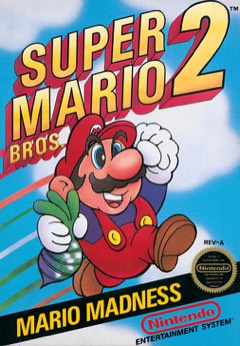
Super Mario Bros. 2 made the choice visible. Before each level you picked Mario, Luigi, Toad or the Princess, each with different strengths. Luigi jumps highest. Toad digs fastest. The Princess can float. Watch a room of kids pick, and you learn a little about each of them: who wants power, who wants grace, who wants the safe option, who picks Luigi out of loyalty to the underdog.
The self you are reaching for
Nick Yee and Jeremy Bailenson found that people's behaviour shifts to match the avatar they are given. They called it the Proteus effect, after the Greek sea god who could change his shape. The character is not just a costume we wear. It seems to wear back into us a little.
Andrew Przybylski and colleagues looked at a related question: which games do people find most engaging? Their answer was games in which playing a character brings people closer to their ideal self. The pull is not escaping who you are. It is getting a closer look at who you would like to be. The hero who walks into the dark cave with a wooden sword is appealing because some part of us wants to be the person who goes in.
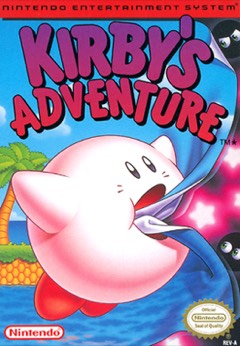
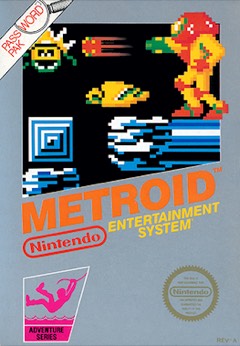
Kirby's Adventure turned this into a mechanic. Kirby swallows an enemy and takes on its power: fire, a sword, a parasol. It is a sweet, strange picture of what games let us do. Try a power on. See how it fits. Spit it out and try another. And Metroid's ending, when a fast enough finish sees the armour come off and Samus turns out to be a woman, asked a generation of players a quiet question about who they had assumed was inside the suit, and why.
The space between
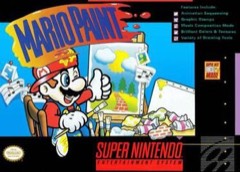
The psychoanalyst Donald Winnicott thought play happens in a space between the inner world and the outer one. It is not purely imagination, and not purely the world out there. It sits somewhere in the middle, and in his view that middle space is where people get to be creative and find a self. Mario Paint is a fine example: a real mouse, real colours on a real screen, and whatever was in your head spilling out onto it.
The psychologist Sherry Turkle, writing about early computers, saw people using them, and the games on them, as objects to think with, things they could see themselves in. She also wrote about the holding power of video games: the way they grip. That grip is not only about the game. Part of what holds us is our own reflection in it.
Trying on selves
Growing up is largely a matter of trying on selves and keeping the ones that fit. Children have always done it in the backyard with sticks for swords. Games gave the stick a health bar and a map. That is not a lesser version of the old kind of play. It is the same work, done with new tools.
And it connects us in a way that is easy to miss. When a friend names their Final Fantasy party, picks the Princess every time, or plays Link as a careful, methodical explorer, they are showing you who they are hoping to be. That is a generous thing to see. We play to find ourselves, and we find each other along the way.
We all like wearing masks and dressing up. It gives us a chance to explore a new identity and find new meaning for ourselves. To see how that psychological benefit can be made deliberately fun, look at Critical Core.
Sources
- Gee, J. P. (2003). What Video Games Have to Teach Us About Learning and Literacy.
- Yee, N., & Bailenson, J. (2007). The Proteus effect: The effect of transformed self-representation on behavior. Human Communication Research, 33(3), 271-290. doi:10.1111/j.1468-2958.2007.00299.x
- Przybylski, A. K., Weinstein, N., Murayama, K., Lynch, M. F., & Ryan, R. M. (2012). The ideal self at play: The appeal of video games that let you be all you can be. Psychological Science, 23(1), 69-76. doi:10.1177/0956797611418676
- Winnicott, D. W. (1971). Playing and Reality.
- Turkle, S. (1984). The Second Self: Computers and the Human Spirit.