What it was
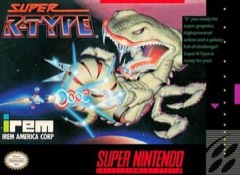
A side-scrolling space shooter from Irem, and a partial port of its arcade game R-Type II. Four stages come from that game and three are new. You fly deep into alien space, pick up weapons along the way and fight large, detailed alien bosses.
Two things define it. There are no checkpoints: die anywhere in a stage and you start that stage again from the beginning. And when the screen gets busy, the game slows almost to a standstill, far more than other early SNES games did.
Where it sits in history
Irem released it in Japan and North America in 1991. Europe got it in 1992 and Brazil in 1993, with Nintendo publishing in Europe. According to Famitsu it sold 109,120 copies in its first week in Japan and 190,374 in all. Micom BASIC Magazine ranked it eighth in popularity in October 1991.
Entertainment Weekly's Bob Strauss picked it as the second best game of 1991, praising aliens that looked like pulp science-fiction illustrations from the 1930s. Super Gamer liked how it looked and played but found going back to the start of a stage after every death tedious.
It came to the Wii Virtual Console in March 2008 and was pulled in 2012. Retro-Bit put it on a new SNES cartridge with R-Type III: The Third Lightning in July 2018, and it joined Nintendo Classics on 12 April 2024.
How it plays today
It looks wonderful. The alien designs are the reason to see it, and the slowdown, oddly, helps: when the screen fills with bullets, the game hands you time to thread through them.
The lack of checkpoints is harder to forgive. Losing ten minutes of a stage to one stray shot is a test of temperament more than skill. Play it for the art, take each stage as its own small mountain, and do not be ashamed to stop for the night.
Compared with
Why it matters
Jesper Juul calls it the paradox of failure: we work to avoid failing in life, yet seek it out in games, because failing makes us rethink and get better. Super R-Type tests how far that goes. Every death is total. The whole stage resets.
And still people go again, the way Camus imagined Sisyphus going back down the hill. 'One must imagine Sisyphus happy.' Anyone who has finally cleared a stage of this game knows the feeling he meant.
Read: One must imagine Mario happy →
- Juul, J. (2013). The Art of Failure: An Essay on the Pain of Playing Video Games. MIT Press.
- Camus, A. (1942). The Myth of Sisyphus.
What you're levelling up
You have been training these without noticing. Here is how to do it on purpose, and where it pays off away from the couch. All the skills games teach →
Bouncing back
In the game. No checkpoints. Die anywhere and you start the stage again, and losing ten minutes to one stray shot tests your temper more than your skill.
Do it on purpose. Treat each stage as its own small mountain. After every death, say the one thing you'll do differently, then do it next attempt.
Off the couch. A knock-back from someone you liked feels like starting the stage over. It isn't: you know more now. Whoever shakes it off and has a go again, somewhere new, does fine.
Keeping your cool
In the game. When the screen fills with bullets, the game slows almost to a standstill. Panic wastes that gift; calm players thread straight through.
Do it on purpose. When it slows, loosen your grip and move in small taps, not big swerves. Notice how many hits you take when you stay small.
Off the couch. When work gets chaotic, most people speed up and stuff up. Slowing down on purpose looks like confidence, because it is.
Pattern recognition
In the game. With no checkpoints you'll fly the same stretch of each stage again and again, which means you can learn exactly where everything comes from.
Do it on purpose. On your next attempt, call out where the next wave appears before it shows. Count how many you get right, then beat that count.
Off the couch. Spotting the loop, like the bill that always lands the week before payday, is how you stop getting caught by it.
Verdict · 6/10
Gorgeous, slow when busy and unforgiving all the time. A shooter for patient people.