What it was
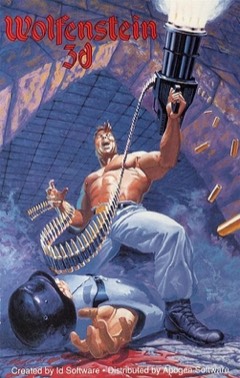
B.J. Blazkowicz, an Allied spy, has been caught and locked up in Castle Wolfenstein, and he has to fight his way out, then carry the war through a run of Nazi strongholds. Every level is a flat maze of rooms, doors and corridors on a grid, all walls the same height, with an elevator hidden somewhere inside. The elevator is the only way on. A boss waits at the end of each episode.
You start with a knife and a pistol and pick up a submachine gun and a chain gun, plus keys for locked doors. Health is a percentage, treasure adds to your score, and some wall tiles slide back when you push them, opening secret rooms of food, ammunition and loot.
Where it sits in history
id Software made the original for MS-DOS in 1992, a fast, loud remake of Muse Software's 1981 Castle Wolfenstein. John Carmack kept every wall on a flat grid so the computer had less to draw, which is what made it quick enough to play, and it earned the nickname 'grandfather of 3D shooters'.
Imagineer bought the rights and paid id a US$100,000 advance for a Super NES version. Busy with Doom and Spear of Destiny, id ignored it for seven or eight months, and an outside attempt stalled. In the end the id team taught themselves to make Super NES games and built the port in three weeks, finished by March 1993. For speed it used binary space partitioning instead of the PC game's ray casting, a technique Carmack would lean on again in Doom.
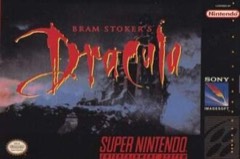
Nintendo wanted it cleaned up. Blood went green, then went altogether, the Nazi imagery and German voice clips were cut, and the attack dogs became giant rats. It came out in Japan on 10 February 1994 as Wolfenstein 3D: The Claw of Eisenfaust, then in North America and Europe later that year. Electronic Gaming Monthly's four reviewers called it a good conversion and shrugged off the censorship, and Total! ranked it 84th in its 1995 top 100 Super NES games. Carmack later used this port's source code to make the Jaguar version.
How it plays today
It is quick and uncluttered, and that still counts. Doors slide open, guards drop, and you are moving again before you've finished reacting. The levels are big, and the music, which reviewers liked at the time, keeps pushing you along.
The flatness is the problem. Every wall is the same height and one corridor looks much like the last, so whole levels blur and you end up circling rooms you have already cleared. The giant rats are funny for about a minute. It is a historic game and a fair port, but it is an evening, not a month.
Compared with
- Doom: id's next game, also on the Super NES: walls at any angle, stairs and light, and a much harder squeeze for the console.
- Faceball 2000: Another early Super NES maze shooter in first person, with smiley faces where the soldiers should be.
Why it matters
Nintendo took a lot out of Wolfenstein 3D: the blood, the Nazi imagery, the German voices, the dogs. What was left should have been a hollow shell. Reviewers at the time said it was still a good game, and it is, because the thing that made it work was never the costume. It was the order underneath: find the key, open the door, beat the guard, reach the elevator.
Johan Huizinga, the Dutch historian, described play as a magic circle, a space set apart from ordinary life with an order all its own. The Super NES version proves his point by accident. Swap a dog for a giant rat and the circle holds, because the rules are what you step inside. Strip the dressing off a game you love and look at what's left. Usually it is the part you loved all along.
Read: The magic circle: the world that rules make →
- Huizinga, J. (1938/1949). Homo Ludens: A Study of the Play-Element in Culture.
What you're levelling up
You have been training these without noticing. Here is how to do it on purpose, and where it pays off away from the couch. All the skills games teach →
Curiosity
In the game. Some wall tiles slide back when you push them, opening hidden rooms of treasure, health and ammunition. You only find them by trying.
Do it on purpose. Pick one level and push every wall you pass. Count what you find against what you'd have walked straight past.
Off the couch. Same at dinner. The good stuff about a person sits behind the wall you didn't push: ask the second question, then the third. Interested is interesting.
Memory and routing
In the game. Every level is a grid of same-height walls and the corridors look alike. The only way to the elevator without going round in circles is remembering where you've been.
Do it on purpose. Clear a level, then replay it straight to the elevator from memory. Note every wrong turn.
Off the couch. Finding the car after the footy, or the way back to the pub. A few landmarks in your head beat twenty minutes wandering round in the cold.
Deep focus
In the game. John Romero cut ideas like looting bodies because they broke the flow of fast play. What's left is shoot, open, move, which is how an hour goes missing.
Do it on purpose. Phone in another room, one episode, no pausing. See how far you get when nothing pulls you out.
Off the couch. Work has its own version of looting bodies: tabs, pings, little detours. Cut them for an hour and see how much you finish.
Verdict · 6/10
A rushed, censored port that still carries what made id's shooter matter: speed, simple rules and the pull of the next door. The mazes blur together long before the end.