What it was
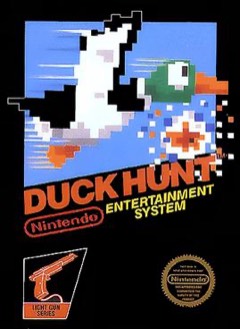
You point the NES Zapper at the television and pull the trigger. Ducks flap up out of the grass, one at a time in Game A or two at once in Game B, and you get three shots to bring them down. Game C swaps the ducks for clay pigeons flung away into the distance. Ten targets make a round; hit too few and the game ends.
Each round the birds fly faster and the pass mark climbs. Miss, and your hunting dog pops up from the grass and laughs at you. That dog is the reason everyone remembers this game. One quiet extra: in Game A a second player can steer the duck with a controller, turning target practice into a duel between the person with the gun and the person with the bird.
Where it sits in history
The idea is older than the Famicom. In 1976 Gunpei Yokoi and Masayuki Uemura designed Beam Gun: Duck Hunt, an electronic toy, for Nintendo. The video game version came from Nintendo Research & Development 1, the team that also built the Zapper, with Takehiro Izushi supervising, Yokoi producing, Hirokazu Tanaka on music, and Hiroji Kiyotake drawing the characters with Shigeru Miyamoto.
It reached the Famicom in April 1984, and the same month went into arcades as Vs. Duck Hunt, where the dog sometimes jumps into your line of fire in a bonus stage. Shoot him there and he scolds you. On console he can't be hit at all; Nintendo of America's Jerry Momoda said that was to keep the game family-friendly. Duck Hunt launched with the NES in North America in October 1985 and came packed with the console for years, alongside Gyromite in the Deluxe Set and on one cartridge with Super Mario Bros. in the Action Set. Bundled that widely, it sold 28.3 million copies.
How it plays today
As a game, it is thin. Three modes, one idea, and after a handful of rounds you have seen it all. The pleasure is physical: the weight of the Zapper, the click, the duck folding in mid-air. Round 99 in Game A rolls over into a broken Round 0 where targets stop making sense, which tells you how far anyone was expected to go.
The catch is hardware. The Zapper was built to fire at a CRT television, so the original setup wants the old kit. Nintendo's 2014 Wii U release swaps the gun for the Wii Remote, which keeps the pointing and loses some of the click. With a friend steering the duck, it is still good for twenty minutes of shouting.
Compared with
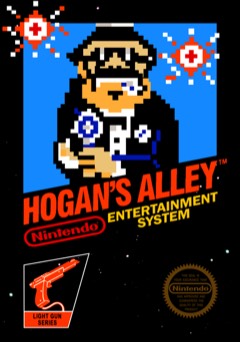
- Hogan's Alley: The other Zapper launch game; it asks you to choose who not to shoot, which is a better test.
- Wild Gunman: A quick-draw duel against outlaws, Zapper again, and tenser in short bursts.
- Barker Bill's Trick Shooting: A later Zapper game with more variety, and the one place the dog finally gets what's coming.
Why it matters
Nobody needed a dog to laugh at them. Nintendo put one in anyway, and it is the part of Duck Hunt people still talk about forty years later. Jesper Juul calls this the paradox of failure: in life we avoid failing, yet in games we go looking for it, and the sting is what makes us look again at what we did and try to do better. The laughing dog is that sting given a face.
It works because it costs nothing. You miss, you get mocked, you raise the gun again. Somewhere in that loop a lounge room full of people learned that being bad at something can be funny, and that the next round is right there.
Read: One must imagine Mario happy →
- Juul, J. (2013). The Art of Failure: An Essay on the Pain of Playing Video Games. MIT Press.
What you're levelling up
You have been training these without noticing. Here is how to do it on purpose, and where it pays off away from the couch. All the skills games teach →
Hand-eye coordination
In the game. Ducks flap up out of the grass and you get three shots with the Zapper. Each round they fly faster and the pass mark climbs.
Do it on purpose. Play Game B, two ducks at once. Pick your duck before it clears the grass, and count how often your first shot lands.
Off the couch. Sport, darts at the pub, catching the keys someone tosses you. Being sharp with your hands reads as confidence, and nobody minds that.
Bouncing back
In the game. Miss and the dog pops up and laughs at you. It stings, it costs nothing, and the next round is right there.
Do it on purpose. Every time the dog laughs, name what went wrong: too early, too late, wrong duck. Then raise the gun and fix that one thing.
Off the couch. A knock-back at the bar stings for a second, like the dog. Laugh it off, learn something and you're the one who still asks next time. That person gets more yeses.
Winning and losing well
In the game. In Game A a second player steers the duck with a controller. Suddenly it's a duel between the gun and the bird.
Do it on purpose. Swap roles every round. When you're the duck and winning by heaps, try a cheekier flight path instead of grinding them down.
Off the couch. Mates remember how you lose. Take it with a grin and you're back on the couch next week.
Verdict · 6/10
A toy more than a game, and a famous one: the Zapper, the ducks and that dog defined the NES for millions of households. Play it with a second person steering the duck.