What it was
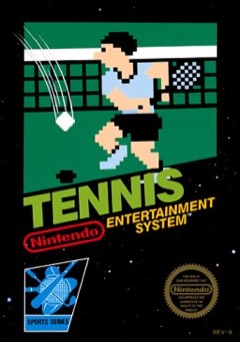
Tennis with Mario in the umpire's chair. You can play singles or doubles, and set the computer opponent to one of five levels of skill.
The odd rule is who can play whom. Singles is always you against the computer. Doubles puts two people on the same team against two computer players. There is no way to play a friend head to head, and no doubles match of people against people. Two players means partners, never rivals.
Where it sits in history
It came out on the Famicom in Japan on 14 January 1984, a few months after the console itself, when the Famicom library was still only a handful of games. Shigeru Miyamoto said he was directly in charge of the character design and the game design. The arcade version, Vs. Tennis, followed four days later and became a hit in Japan and America; it was the sixth top-performing arcade game in the United States in 1984.
In October 1985 it was one of the 17 launch games for the NES in North America, and it launched in Europe too. A Game Boy version came in 1989, one of the handheld's five launch games in North America. The NES game turned up hidden inside Animal Crossing and as one of 9-Volt's games in WarioWare: Twisted!. It joined Nintendo Classics on Switch in late 2018, and Hamster put the arcade version on Switch as part of Arcade Archives in December 2020.
How it plays today
Simply, and quite well. Timing a swing is easy to learn, the top levels are properly hard, and a rally has a nice tock-tock rhythm. There is not much else to it: no tournaments, no players to choose, one court.
The doubles mode is the reason to load it now. Pair up with someone, take the hardest computer team, and see how long you last.
Compared with
- Super Tennis: The Super NES answer seven years later, with a world circuit and real choice of players.
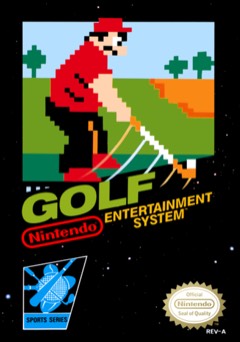
- Golf: Another 1984 Nintendo sports game, just as plain and just as easy to pick up.
- Top Players' Tennis: A later NES tennis game, also known as Four Players' Tennis.
Why it matters
Most sports games put two people on opposite sides of the net. Tennis would not let you. If you picked up the second controller, you were on the same team as the person holding the first, against the machine.
Research on why games satisfy points to three needs: feeling competent, choosing for yourself, and feeling close to other people. Tennis meets that third one by rule. A parent and a child, two siblings who normally fight, have to cover each other's side of the court, and a lost point is lost together.
Read: The second controller →
- Ryan, R. M., Rigby, C. S., & Przybylski, A. (2006). The motivational pull of video games: A self-determination theory approach. Motivation and Emotion, 30(4), 344-360. doi:10.1007/s11031-006-9051-8
What you're levelling up
You have been training these without noticing. Here is how to do it on purpose, and where it pays off away from the couch. All the skills games teach →
Teamwork
In the game. Two players means partners, never rivals. Doubles puts you both on the same side against two computer players.
Do it on purpose. Pair up, take the hardest computer team and agree who covers the net. Count the games you take before you swap.
Off the couch. Being good on the same side as someone is underrated. Partners, flatmates and colleagues who cover each other last, and that includes the person you're dating.
Timing and rhythm
In the game. Timing a swing is easy to learn, and a rally has a nice tock-tock rhythm. The top levels test whether you can keep it.
Do it on purpose. Against the top level, hit nothing but safe returns for a set. Notice when the rhythm breaks, and on whose shot.
Off the couch. Conversation has a rhythm too: listen, answer, let them talk. People feel it when you're in step.
Bouncing back
In the game. The hardest computer level is properly hard, and you'll drop game after game before you take one.
Do it on purpose. Track games won against the top level each session. Beat your own number and forget the match score.
Off the couch. Measure yourself against last week, not the fittest person at the gym. That's how you keep going long enough to get good.
Verdict · 6/10
A launch game that still plays fine, with Mario keeping score. Its two-player mode is a team, and that turns out to be a gift.