What it was
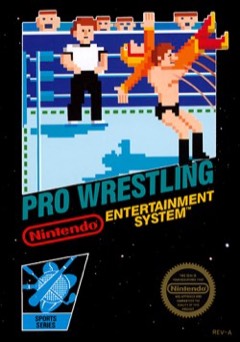
Six wrestlers, each with their own moves: Fighter Hayabusa, Giant Panther, Kin Corn Karn, King Slender, Starman and The Amazon. Punch, kick, run, lock up for slams and piledrivers, climb the turnbuckles, or leave the ring and beat the 20-count back in. Pin for three and you win.
The referee is the clever part. He has to run to the pin, get down on the mat and count, so a pin on the far side of the ring buys the other player time. A cameraman and commentators sit at ringside. Alone, you win five matches for a shot at the VWA title, defend it ten times, then face the Great Puma of the VWF. Two players get best-of-three falls with no time limit.
Where it sits in history
It came out on the Famicom Disk System in Japan in 1986 and on the NES in North America and Europe in 1987. Nintendo published it, but the system and all the programming came from Masato Masuda, then at TRY, who went on to make Fire Pro Wrestling at Human Entertainment.
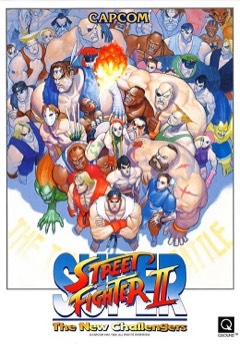
Famitsu reported it the number one game in the United States for about two months. Computer Gaming World named it Nintendo's best sports game of 1988 and praised how well it understood the sport. Game Informer ranked it 79th of all time in 2001. The Amazon's moves inspired Blanka in Street Fighter II.
How it plays today
Surprisingly well. The roster is tiny, but each wrestler feels different, and the rhythm of lock-ups, rope runs and near-falls is closer to the real show than most games of its age.
Single player gets hard, and the Great Puma is famously tough. With two people it is a proper night in.
Compared with
Why it matters
Wrestling is two kinds of play at once. Caillois called them agon, the contest, and mimicry, the make-believe. Everyone knows it is a show, and everyone still cares who wins.
Pro Wrestling gets that. It builds in the theatre (the cameraman, the commentators, the referee scrambling to count) and keeps the contest real underneath. A kid playing it is doing what the crowd at a real show does: pretending and competing in the same breath, with no contradiction at all.
Read: The magic circle: the world that rules make →
- Caillois, R. (1958/1961). Man, Play and Games (trans. M. Barash).
What you're levelling up
You have been training these without noticing. Here is how to do it on purpose, and where it pays off away from the couch. All the skills games teach →
Reading people
In the game. The referee has to run to the pin, so a pin on the far side buys your opponent time. The good player watches where their mate drags the fight, and why.
Do it on purpose. Against a human, spend one match just noticing their go-to move. Next match, be ready for it.
Off the couch. Reading what someone's about to do, a mate about to bail or a colleague about to push back, lets you meet them halfway before it gets tense.
Winning and losing well
In the game. Best-of-three falls with no time limit against a mate on the couch. Someone's going to get piledriven and someone's going to gloat.
Do it on purpose. Winner of each fall has to say one thing the loser did well. Loser picks the next wrestler.
Off the couch. Nobody fancies a sore loser or a smug winner. Shake hands, laugh it off, run it back. That's who people want to hang out with.
Timing and rhythm
In the game. Lock-ups, rope runs and near-falls have a rhythm, and the 20-count outside the ring is a clock you can play with.
Do it on purpose. Leave the ring on purpose and see how close to 20 you can get back in. Then use it in a real match.
Off the couch. Knowing exactly how late you can leave for the train, or when to wrap up a story before it drags, is timing too.
Verdict · 7/10
A tiny roster and a big understanding of what wrestling is. The referee alone earns its place.