What it was
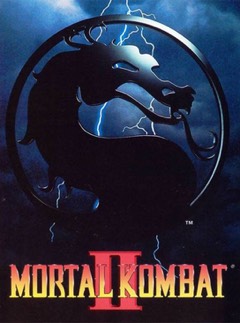
Twelve fighters, a tournament in Outworld, and the emperor Shao Kahn waiting at the end. Mortal Kombat II takes the first game's digitised actors and makes everything bigger: more characters, including Kitana, Mileena and Kung Lao; more stages; and stronger roundhouse kicks that knock a fighter across the screen. A crouching punch joins the move set, high and low kicks are more distinct, and shorter recovery makes combos easier to string together. Win two rounds and the loser stands dazed, waiting for you to finish them.
That finish is where this game made its name. Each fighter has more than one Fatality, and some stages have their own: an uppercut onto ceiling spikes, a drop into acid. Then the game turns around and laughs at itself. A Babality shrinks your opponent into a crying baby. A Friendship has you dance, or hand over a gift. The violence is still the headline, but now it comes with a punchline.
Where it sits in history
Midway released the arcade game in 1993. Ed Boon, the lead programmer, said it held everything the team had wanted in the first game and had not had time for; John Tobias led the design and art, and Dan Forden composed the music. Acclaim published the home versions, and the Super NES port came from Sculptured Software.
Nintendo had cut the blood from its version of the first game and watched it sell poorly next to the Genesis release. For the sequel it relented. The industry rating system was not expected until late 1994, so the Super NES box carried a warning label instead. The Japanese release kept some restraint, with green blood and Fatalities shown in black and white. The Super NES, Genesis, Game Boy and Game Gear versions all launched on 9 September 1994, a day dubbed Mortal Friday. More than 2.5 million copies shipped, first-week sales passed $50 million in the United States, and it was the best-selling game in the world until Donkey Kong Country arrived that November. Electronic Gaming Monthly called the Super NES version a near-perfect translation of the arcade, and Game Players named it the best Super NES game of 1994.
How it plays today
It still feels quick and heavy. The uppercut lands with a thud, the stages look grim and handsome, and the twelve-strong roster gives you real choices. Next to Street Fighter II it is a looser, stranger fighter: less about reading spacing, more about specials, juggles and knowing the codes. That suits a couch with two people on it better than a tournament.
The finishing moves are the part people remember, and they hold up as theatre. Typing a Fatality's input in the second before the timer runs out is still a thrill. The digitised look has aged into something with its own charm.
Compared with
Why it matters
Mortal Friday was not really about a cartridge. Picture millions of kids carrying the same game home on the same day, then swapping the inputs for Friendships and Babalities at school. Durkheim called it collective effervescence: the charged energy of people gathered in one activity, and the way it binds them. A fighting game needs two people. This one gave a generation something to gather around.
And the jokes matter. A game that ends a brutal fight by turning your friend's fighter into a crying baby is telling you, plainly, that this is play. The blood is for show, the rivalry is for fun, and the person on the other controller is still your mate when the screen goes dark.
Read: The second controller →
- Durkheim, E. (1912). The Elementary Forms of Religious Life.
What you're levelling up
You have been training these without noticing. Here is how to do it on purpose, and where it pays off away from the couch. All the skills games teach →
Timing and rhythm
In the game. Typing a Fatality's input in the second before the timer runs out is still a thrill, and it only works if your hands are calm and quick.
Do it on purpose. Pick one fighter and drill one Fatality until you can land it every time without looking at the list.
Off the couch. Delivering the punchline at the right moment, or saying the right thing before the moment passes, is a skill people notice.
Winning and losing well
In the game. A Babality shrinks your opponent into a crying baby and a Friendship has you dance. Even the finishers come with a punchline.
Do it on purpose. When you win, finish with a Friendship instead of a Fatality. When you lose, ask your mate to show you the move that got you.
Off the couch. Winning with a grin and losing with good grace keeps mates around. It's also very good on a date, because nobody likes a sulker.
Teamwork
In the game. It suits a couch with two people on it better than a tournament, and knowing the codes is a shared job.
Do it on purpose. Split the move list with your mate: each of you learns half the Fatalities and teaches the other.
Off the couch. Splitting the work and teaching each other is how study groups and footy teams get good fast.
Verdict · 8/10
The best home Mortal Kombat of its day and the moment Nintendo let the series be itself. Still the one to play with a friend and a list of codes.