What it was
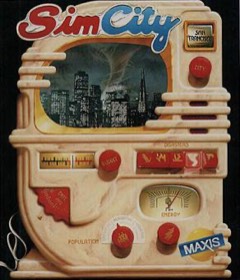
SimCity hands you an empty patch of land and no objective. You zone it residential, commercial or industrial, lay roads and rail, wire up a power grid and set the tax rate. Then the tiny residents, the Sims, decide what to build, based on things like traffic, power, crime and what's next door. A house beside a power plant will rarely grow into anything flash.
Disasters keep you honest: floods, tornadoes, fires, earthquakes and monster attacks. On the SNES the monster is Bowser, not Godzilla. Hit 500,000 people and you get a Mario statue to plant in your city. There are also reward buildings such as casinos, parks and expo centres, a bank that lends $10,000 at a time, and a cartoon adviser called Dr. Wright, drawn to look like Will Wright.
Where it sits in history
Will Wright started it in 1985, after finding he enjoyed building islands in the level editor for Raid on Bungeling Bay more than playing the game. Publishers passed because you couldn't win or lose it. Maxis, a tiny new company, took it on, and Broderbund distributed it from 1989. It sold slowly at first, then press praise turned it into a best-seller.
Nintendo rang Maxis co-founder Jeff Braun in mid-1989. Shigeru Miyamoto was keen on how the game let you build your own world. Nintendo did the port and paid Maxis $1 a copy, and Miyamoto worked alongside Wright on it. The SNES version came out in Japan in April 1991, North America in August 1991 and PAL regions in 1992, with Soyo Oka composing the music. It sold 1.98 million copies worldwide, 900,000 of them in Japan. Some of its reward buildings turned up again in SimCity 2000. A NES version was announced and shown at the 1991 Consumer Electronics Show, but never properly released. Prototype cartridges turned up in 2018.
How it plays today
It's slow by today's standards and you'll spend a lot of time staring at a map. That's the point. Nothing tells you what to do, so every wobble in your city is your doing.
The cartoon touches, Bowser stomping through town and the Mario statue, make a serious game feel friendly. It's a good first city builder and a decent argument that games don't need a score.
Compared with
- SimCity 2000: The sequel, which picked up some of the SNES version's reward buildings.
- SimEarth: Maxis zooms out from one city to a whole planet.
- SimAnt: Maxis zooms in, from a city to an ant colony in a backyard.
Why it matters
Winnicott saw play as the space between our inner world and the outer one, where we get to be creative and find a self. SimCity is a whole game built in that space. Nobody sets the goal, so what you build says what you value: parks or factories, trains or roads.
Wright's own city started as a level editor he liked more than the game. Sometimes the thing we make for fun is the real thing.
Read: Who you are when you play →
- Winnicott, D. W. (1971). Playing and Reality.
What you're levelling up
You have been training these without noticing. Here is how to do it on purpose, and where it pays off away from the couch. All the skills games teach →
Systems thinking
In the game. Power, roads, taxes, crime and the zone next door all push on each other. Drop the tax rate to cheer up the Sims and the budget can't fix the roads; build a power plant to grow industry and the houses beside it stop improving.
Do it on purpose. Change one thing at a time, then watch the whole map for five minutes before touching anything else. Say out loud what you expect to happen first.
Off the couch. Why the new roster at work fixed Mondays and broke Thursdays. Everything's connected to something, and the smart move is asking 'and then what?' before you change it.
Planning ahead
In the game. You lay roads and zones for a city of 100,000 while you're still a village, because bulldozing a grown neighbourhood later costs money you won't have. The bank lends $10,000, but only one loan at a time.
Do it on purpose. Sketch the grid on paper before you place a single road: where the industry goes, where the houses go, how the trains get between them.
Off the couch. Budgeting for the rent rise before it lands, or booking the flights before the prices jump. Future you sends thanks.
Keeping your cool
In the game. Bowser stomps through a city you've nursed for hours, or a fire jumps three blocks, and you've got to rebuild, not throw the controller.
Do it on purpose. When a disaster hits, don't reload. Rebuild the worst-hit block first and see how fast the city recovers.
Off the couch. Staying level when a plan falls over in front of the boss, or when the dinner you cooked for someone you like burns. Shrug, order pizza, and you've still got a good night.
Verdict · 8/10
A game with no way to win and a hard time putting down. The Nintendo touches make it warmer than the computer originals without changing what it is.