What it was
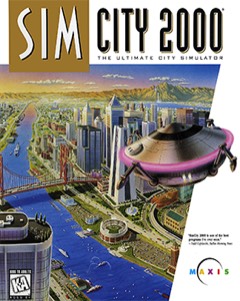
You get a patch of land and no one telling you what to do. Zone it for homes, shops and factories, wire up power, lay roads, set the taxes, and keep the budget out of the red. Run too deep a deficit and the game ends. Otherwise there's no finish line, only a city that's working or one that isn't.
The big step up from the first SimCity is the view and the depth. Land has hills, pipes and subways run underground, and taxes can be set separately for residential, commercial and industrial zones. The PC game has nine kinds of power plant, from coal to fusion, and most wear out and need rebuilding. The SNES port keeps the heart of it and trims the rest.
Where it sits in history
Maxis made the original for Macintosh and MS-DOS in 1993. Fred Haslam and Will Wright built it together, after Wright, who had spent five years on the first game, handed the sequel to Haslam. HAL Laboratory ported it to the Super Famicom and Imagineer published it in Japan in May 1995. It reached North America and Europe in late 1996, through Black Pearl Software and THQ, near the end of the SNES's life.
The cartridge pays for it. Expect longer load and scrolling times, six maps per game on a single save slot, and no difficulty settings. Only five scenarios survive, the Riot and Volcano disasters are gone, and there's one newspaper no matter how big your city gets. It uses the controller only, with no Super NES Mouse support. Names for teams, cities and mayors are capped at eight characters. On the plus side, HAL added bigger rewards: a larger city hall at 1,000,000 people, a TV station at 2,000,000, and a rocket pad at 3,000,000. Hit 5,000,000 in the last scenario and you watch a launch arcology lift off. Because it was made in Japan, the stock photos became images that look more like anime or manga.
How it plays today
Be ready to wait. The load times and slow scrolling are real, and the pad takes some getting used to after a mouse. GamePro's Andromeda called the control interface awkward and the music repetitive, but still reckoned it a worthwhile buy for sim fans and a step up on the SNES original. Famitsu's reader panel gave the Super Famicom version 6 out of 10.
That seems about right. This is a lot of city for a cartridge, and a trimmed one. Still, once your power grid is humming and the population ticks over a milestone, the rocket pad is a cheeky reward for sticking at it.
Compared with
- SimCity: The first game on the SNES, with Bowser as the disaster and no way to win or lose.
- SimEarth: The Maxis sim Haslam and Wright had just finished when the sequel was first pitched: a whole planet instead of a city.
- SimAnt: Maxis zooms right in, from a city to an ant colony in a backyard.
Why it matters
A game with no win screen asks a different question: what do you want your city to be? Winnicott saw play as the space between our inner world and the outer one, where we're free to be creative. A budget slider and a patch of empty land make a nice small version of that space, and nobody grades your choices.
The designers learned something similar while writing the manual. Michael Bremer set out to write about city-planning trends, then found most cities aren't planned at all, so he filled it with people's own ideas of what a city means to them. A city is whatever we make of it together.
Read: Who you are when you play →
- Winnicott, D. W. (1971). Playing and Reality.
What you're levelling up
You have been training these without noticing. Here is how to do it on purpose, and where it pays off away from the couch. All the skills games teach →
Systems thinking
In the game. Taxes, power, pipes, transport and zoning all push on each other, and tax rates can be set separately for homes, shops and industry.
Do it on purpose. Change one tax rate, then watch the whole map for five minutes before you touch anything else.
Off the couch. Seeing why cutting one cost at work blows up something three steps away. Money, rosters, relationships, all the same.
Planning ahead
In the game. Most power plants wear out and have to be rebuilt, so the grid you build now is the problem you have in a few decades.
Do it on purpose. Before you place a thing, write down what it'll cost to replace and when.
Off the couch. Putting money aside for the car repair that's coming. Future you will send a thank-you.
Keeping your cool
In the game. A deficit, a disaster or a stalled grid can sink the city you've nursed for hours. The scenarios throw a mess at you on purpose.
Do it on purpose. Pick one scenario and finish it without reloading, even after it goes pear-shaped.
Off the couch. Staying level when the plan falls over in front of the boss, or when a date goes sideways. Calm makes you better company.
Verdict · 7/10
A squeezed but honest version of a landmark sim. It's slow and cut down, yet it holds on to what makes the game addictive, and the rocket pad is a nice touch.