What it was
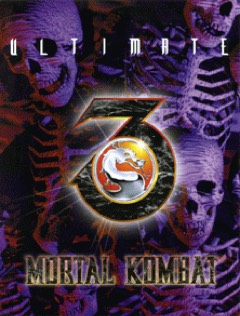
Mortal Kombat 3 left out the ninjas, and players noticed. Ultimate put them back: Scorpion, Kitana, Jade and Reptile return, along with new stages including Scorpion's Lair, where an uppercut can drop your opponent into a river of lava. Combos were rebalanced, jump attacks can now start a chain, and the computer opponents got smarter.
The Super NES version goes further in places. Mileena, Ermac and Classic Sub-Zero are playable from the start, Rain and Noob Saibot are playable for the first time, and Motaro and Shao Kahn can be unlocked for two-player fights. There is a 2-on-2 mode and an eight-player tournament, and beating either opens Shao Kahn's Lost Treasures, a wall of prize boxes. A code unlocks three cheat menus that let you bend the rules almost any way you like.
Where it sits in history
Midway released the arcade game in early November 1995, and arcade owners who had Mortal Kombat 3 could upgrade for free. Ed Boon, the series' co-creator, later called it his favourite 2D Mortal Kombat and the last game he programmed himself.
Avalanche Software built the Super NES port on the code from Sculptured Software's Mortal Kombat 3 a year earlier. Williams Entertainment published it in North America on 11 October 1996 and Acclaim in Europe before the year was out. The cartridge forced cuts: Sheeva is gone, the announcer no longer calls names, only seven stages remain, and Animalities were dropped. In their place came Brutalities, borrowed from Mortal Kombat Trilogy, where an eleven-button string ends with the loser exploding. Delays into the 1996 Christmas season, and rumours it would never come out, hurt its sales.
How it plays today
This is the Mortal Kombat 3 to own on Super NES. The run button and dial-a-combos are still here, the missing favourites are back and the extra fighters fill out the select screen. The cheat menus are a gift for a two-player night.
Reviewers in 1996 were fair to ask whether anyone needed Mortal Kombat 3 again a year later, especially when other consoles were getting the larger Trilogy. That question has faded. Played now, without the price tag, it is simply the most complete version of the game the Super NES could hold.
Compared with
Why it matters
In 2000 a US appeals court struck down Indianapolis's attempt to ban violent video games, and Ultimate Mortal Kombat 3 was one of the games it cited. Judge Richard Posner wrote that the game has a message, even an ideology, as books and films do, in showing a woman holding her own in violent combat with heavily armed men.
Becker argued that 'deviant behavior is behavior that people so label'. A city looked at a fighting game and saw something to ban; a judge looked at the same game and saw a story with a point of view. Same cartridge, different labels. Which one sticks is a choice people make, not something that lives in the game.
Read: The magic circle: the world that rules make →
- Becker, H. S. (1963). Outsiders: Studies in the Sociology of Deviance.
What you're levelling up
You have been training these without noticing. Here is how to do it on purpose, and where it pays off away from the couch. All the skills games teach →
Memory and routing
In the game. The run button and dial-a-combos are still here: strings of presses you learn by heart until your thumbs know them.
Do it on purpose. Pick one fighter and learn one combo cold. Land it ten times in a row in practice, then try it in a real fight.
Off the couch. Learning something by heart, a speech, a song on guitar, the names at a new job, is the same chunking. Remembering what your date told you last week beats any pick-up line.
Making things
In the game. A code unlocks three cheat menus that let you bend the rules almost any way you like. That's game design with training wheels.
Do it on purpose. Set up one house-rules match with a mate using the cheat menus. Play five rounds and decide whether your rule made it better.
Off the couch. Changing a rule and seeing what happens is how people start making things: a better roster at work, a new tradition at the barbie, a side project.
Winning and losing well
In the game. There's a 2-on-2 mode and an eight-player tournament, and winning opens a wall of prize boxes. Seven people go home without it.
Do it on purpose. Run the eight-player tournament. Shake every hand, win or lose, and shout the winner a drink.
Off the couch. How you lose with an audience is what the room remembers. Good losers get invited back.
Verdict · 8/10
A crowded, generous update that fixed Mortal Kombat 3's biggest mistake. If you only play one 16-bit Kombat 3, play this.