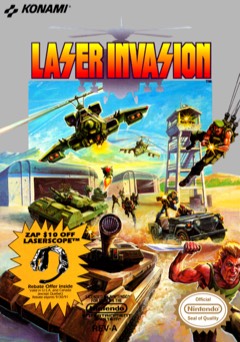
What it was
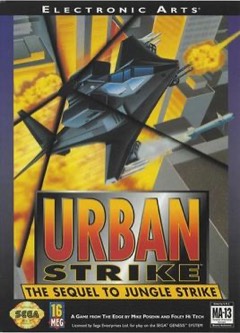
You fly a Mohican attack helicopter across North America, starting in Hawaii and moving through Mexico, San Francisco, New York and Las Vegas. The villain is H. R. Malone, a millionaire media mogul who lost a run at the presidency and now wants a superweapon to wreck the government. An old co-pilot from Jungle Strike dies in a car bomb in the opening, so it's personal.
Missions mean blowing up installations, rescuing hostages and capturing enemy personnel. Armour drops when you're hit, fuel burns the whole time, and ammo runs dry. Barrels, crates and rescued friendlies top you up. Machine guns, Hydra rockets and Hellfire missiles are your kit, and the stronger the weapon, the fewer you can carry.
The new trick is on-foot missions. At set points you hop out and creep through interiors with a rifle and a missile launcher. You can also fly a bigger Blackhawke for rescues in the first two levels, and steal a Ground Assault Vehicle in the third.
Where it sits in history
It's the third Strike game, after Desert Strike and Jungle Strike. Electronic Arts made it for the Sega Genesis in 1994. Black Pearl Software handled the ports: the Super NES version in 1995, then Game Gear in 1995 and Game Boy in 1996. The Black Pearl versions move the story from 2001 to 2006. Co-designer Tony Barnes plays the doomed Agent Ego.
Critics liked it without getting excited. A Next Generation reviewer said the Super NES version is more colourful than the Genesis one but has less smooth controls and animation, and gave it three stars out of five. Mega gave it 88% and said EA had taken the genre as far as it could go. A Russian magazine, Great Drakon, thought it too easy and the weakest of the series.
How it plays today
It still works if you like Jungle Strike's juggling act. The new on-foot sections break up the flying, and picking the right weapon for the job still matters. It doesn't change the formula much, and the reviewers said as much at the time.
Start here only if you've already played one of the earlier two. Otherwise go to Jungle Strike first, then come back for the extra vehicles and the ground missions.
Compared with
Why it matters
Urban Strike asks you to leave the helicopter and walk. After hours of looking down from the sky, you're suddenly small, slow and exposed. Changing the scale of a game is a quiet way of reminding players that the same job feels different up close.
Juul's paradox of failure fits here too: running out of fuel or ammo stings, and the sting teaches you where to look next time. The loss is what makes the planning feel worth doing.
Read: One must imagine Mario happy →
- Juul, J. (2013). The Art of Failure: An Essay on the Pain of Playing Video Games. MIT Press.
What you're levelling up
You have been training these without noticing. Here is how to do it on purpose, and where it pays off away from the couch. All the skills games teach →
Planning ahead
In the game. Fuel, armour and ammo drain at once, so you map the route to the next barrel before taking on the next target.
Do it on purpose. Before each mission, name what you'll run short of first and where you'll refill it.
Off the couch. Packing the car for a road trip, budgeting till payday, ordering a big Saturday of errands so you're not doubling back. Work out what runs out first, and plan round that.
Judging risk
In the game. Hellfire missiles hit hardest, but you carry fewer, so each one is a bet you won't need something else.
Do it on purpose. Take the heavy loadout into one mission and note what you wished you'd packed.
Off the couch. Deciding what to carry on a hike, how much to chuck in on a deal, whether to take the shortcut. The strongest option is not always the one you want three of.
Keeping your cool
In the game. On-foot missions drop you into tight interiors with a rifle, and panic-firing gets you killed.
Do it on purpose. Clear one on-foot section without using the launcher on anything small.
Off the couch. Staying calm when a job goes sideways, when the boss walks over, or when the date goes quiet. Slow down, pick one thing, do it well. Nobody wins a conversation by panic-firing.
Verdict · 7/10
A solid third helping of chopper logistics, with ground missions as the new twist. Play it after Jungle Strike, not before.