What it was
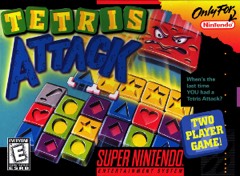
A stack of coloured panels creeps up from the bottom of the well. You move a two-panel cursor and swap neighbours left and right, lining up three or more of a colour to clear them. Panels above fall into the gap, and if they land on a match they clear too. Set that up deliberately and you get chains; clear more than three at once and you get combos. Let the stack touch the top and it's over.
The genius is in the swap. Because you can move panels while others are still falling, a quick player can keep extending a chain on the fly, and against an opponent every big chain or combo drops a slab of garbage on their side. There are endless, timed, stage-clear and puzzle modes, plus a story mode against a run of computer rivals.
Where it sits in history
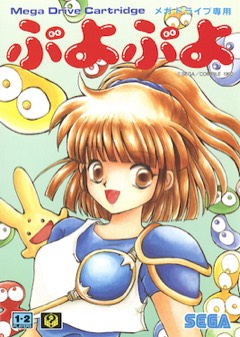
Intelligent Systems developed it, with Gunpei Yokoi producing, and Nintendo released it in Japan on 27 October 1995 as Panel de Pon, starring a cast of fairies. For North America in August 1996 and Europe that November, Nintendo swapped the fairies for Yoshi and friends from Yoshi's Island and licensed the Tetris name, although the game has nothing to do with Tetris. Henk Rogers of The Tetris Company later said he regretted allowing it, because the game got lost behind the brand.
Critics loved it. Electronic Gaming Monthly made it their Super NES game of the year and later ranked it among the best console games ever. It led to a line of sequels under the Puzzle League name, from Pokémon Puzzle League to Planet Puzzle League on the DS.
How it plays today
As well as it ever did. Few puzzle games have a skill curve this satisfying: the first hour teaches you to clear panels, and the next hundred teach you to build chains while the stack is moving. Against another person it is fast, tense and endlessly replayable, and the moment a five-line garbage block lands on your friend never gets old.
Alone, the story mode's later opponents turn sharply difficult, and the puzzle mode, with its fixed layouts and move limits, is more of a brain-teaser than the main event. The Yoshi dressing is cheerful but thin. The fairies of Panel de Pon, now easy to play officially, have more personality if you want to see the original.
Compared with
- Tetris: Shares the name and nothing else; Tetris Attack is about swapping and chaining, not dropping and rotating.
- Wario's Woods: Nintendo's other late puzzle game with a cast of mascots, fiddlier and less elegant.
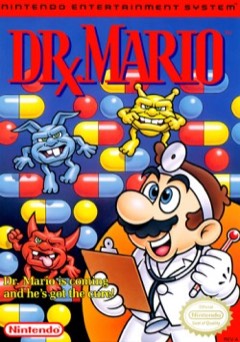
- Dr. Mario: The simpler colour-matching puzzler; Tetris Attack is faster and rewards far more skill.
Why it matters
The first hour of Tetris Attack teaches you to match three panels. The next hundred teach you to keep a chain alive while the stack is still falling, and somewhere in there your hands start moving before your eyes have finished reading the board.
Mihaly Csikszentmihalyi called this flow: absorption when challenge matches skill, with clear goals, immediate feedback, self-consciousness gone and time going strange. This game is built for it. Every swap answers you instantly. The rising stack keeps the challenge climbing just ahead of you. Then it wobbles, you panic, and the thread snaps. Against a friend, two flows run side by side and crash into each other as garbage blocks. It is a rare case where being knocked out of the zone is half the fun, because the person beside you did the knocking, and you are about to return the favour.
Read: The zone: why good games make time disappear →
- Csikszentmihalyi, M. (1990). Flow: The Psychology of Optimal Experience.
What you're levelling up
You have been training these without noticing. Here is how to do it on purpose, and where it pays off away from the couch. All the skills games teach →
Planning ahead
In the game. Set up a clear so falling panels land on a match and you get a chain. The next hundred hours are learning to build chains while the stack keeps moving.
Do it on purpose. In endless mode, refuse every single clear for a minute. Only clear when it sets up a chain, and note your best chain length.
Off the couch. Setting up the next thing before you need it, a reference before you apply, savings before the car dies, pays out later. That's a chain.
Deep focus
In the game. Because you can swap panels while others are still falling, a quick player keeps a chain going on the fly. That only happens when you're fully in it.
Do it on purpose. Phone in another room, three timed runs. Notice what was going on in your head during the best one.
Off the couch. Full attention, phone face down, is rare and people feel it. Give it to someone across the table and they'll remember the night.
Winning and losing well
In the game. Every big chain drops garbage on your mate's side, and watching a five-line block land on him never gets old. Unless it's on you.
Do it on purpose. Play a mate first to ten. Every time you get buried, say 'good one' before you restart.
Off the couch. Taking a hit with a laugh keeps you in the game, at work and at the pub. Nobody wants to play with someone who sulks.
Verdict · 9/10
One of the great competitive puzzle games, hidden behind a misleading name. Grab a second controller and a friend.