What it was
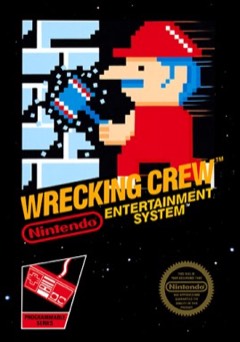
Mario has a hammer, and the hammer is so heavy he cannot jump. That one rule turns a platform game into a puzzle. Each of the 100 levels is a building full of walls, pillars and ladders to knock out, with bombs that bring down everything joined to them, barrels that won't break, and enemies wandering the floors. Smash a ladder too early and the wall above it is out of reach for good; get the order right and a chain of bombs earns a bonus.
A foreman named Spike stalks Mario through the building, knocking things loose to drop him to the bottom. Doors swing open to send enemies harmlessly into the background. You can start on any level from the title screen, and there is an editor for building four levels of your own.
Where it sits in history
Yoshio Sakamoto and Makoto Kanoh designed it. It began in arcades in 1984 as VS. Wrecking Crew, a two-player game with Luigi alongside, then came to the Famicom in 1985 as a one-player game and launched with the NES in North America that October. Europe got it in 1987.
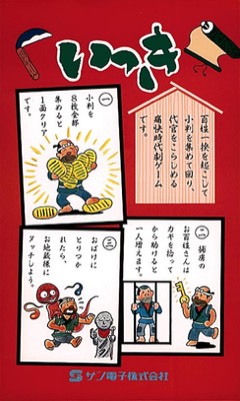
The editor could save levels only through the Famicom Data Recorder, a cassette drive sold in Japan alone. Western carts kept the editor but not the saving, and the American manual explained the dead options as there for possible future products. The Wii Virtual Console finally let people save their levels in 2007.
It joined Nintendo Classics on Switch in July 2019, and Hamster put VS. Wrecking Crew on Switch in its Arcade Archives line in April 2020. A Japan-only sequel, Wrecking Crew '98, turned it into a competitive panel puzzler for the Super Famicom; Nintendo Classics brought that to the West for the first time in April 2024. Spike, called Blackie in Japan until the 2023 film, turned up as Mario and Luigi's old boss in The Super Mario Bros. Movie.
How it plays today
Better than it looks. The graphics are plain and the levels share one palette of girders, so it can feel samey over a long sitting, a point Nintendo Life made when it gave the Wii U release six out of ten. But the puzzles are honest: every failure is your own bad order, and the level select means a stuck level never blocks the rest.
Play it in short bursts, a few buildings at a time, and try the editor. Designing a level that someone else can't solve is half of what this game is for.
Compared with
- Donkey Kong: Mario again, and the hammer again, but here the hammer is the whole game rather than a few seconds of power.
- Lode Runner: The closest cousin: dig, trap and plan your route, with an editor of its own.
- Mario Bros.: Another early Mario arcade game, built for two players at once.
Why it matters
Bernard Suits defined playing a game as 'the voluntary attempt to overcome unnecessary obstacles'. Wrecking Crew is that definition with a hammer. Mario jumps in every other game he is in; here someone took the jump away, and the loss is what makes every level a problem worth solving.
We accept the rule because the rule is the fun. Nobody plays Wrecking Crew wishing Mario could hop over the wall. We play it to find out whether we can get to the wall the long way round, and the moment the last pillar falls is ours because the game made it hard on purpose.
Read: The magic circle: the world that rules make →
- Suits, B. (1978). The Grasshopper: Games, Life and Utopia.
What you're levelling up
You have been training these without noticing. Here is how to do it on purpose, and where it pays off away from the couch. All the skills games teach →
Planning ahead
In the game. Mario can't jump, so smash a ladder too early and the wall above is out of reach for good. Get the order right and a chain of bombs earns a bonus.
Do it on purpose. Before swinging in a new building, plan the order out loud. When it fails, note which swing broke it.
Off the couch. Doing things in the right order saves heaps: paying the bill before the holiday, asking before booking. Plans that respect order look effortless.
Making things
In the game. There's an editor for building four levels of your own, and designing one a mate can't solve is half the point.
Do it on purpose. Build one level, hand it to a mate and watch them play without helping. Fix the bit where they got stuck for the wrong reason.
Off the couch. 'I made this' beats 'I watched this'. Having something you build gives you something to show and something to talk about, and that's magnetic on a date.
Problem solving
In the game. Bombs bring down everything joined to them, barrels won't break, and Spike stalks you knocking things loose. Every failure is your own bad order.
Do it on purpose. When a building beats you, write down what you did first and try starting from the other end.
Off the couch. If something keeps failing, change the order before you change the plan. Works on recipes, workouts and moving house.
Verdict · 7/10
A Mario game about thinking before you swing. Plain to look at, sharp underneath, and the editor still earns its place.