What it was
In the year 5012 a giant alien organism called Parasitis eats the planet Abadox, then takes the planet's shape and goes looking for more. The galactic military attacks and is destroyed. Parasitis then swallows a hospital ship carrying Princess Maria. The last survivor, Second Lieutenant Nazal, flies into the creature's body to get her out.
It is a horizontal shooter in the Gradius and R-Type mould. Almost every enemy looks like an organ: brains, eyes, even cilia. Power-ups give you speed, firepower, homing missiles and shield-like options, and you can swap your shot for a three-way gun, a spread, a laser or a hoop-like weapon.
The twist is the second, fourth and sixth stages. They go vertical, but they scroll downward rather than up. The last stage is a race out of the alien's back passage before it implodes, which is about as dignified as it sounds. Die, and you lose your upgrades and restart from the last checkpoint, sometimes at slow speed with nothing to protect you.
Where it sits in history
Natsume published it in Japan in 1989, and Milton Bradley brought it to North America in 1990. Kiyohiro Sada, credited as K. Sada, did the music and sound. He had composed for several Konami NES games, including Contra, Blades of Steel and Rush'n Attack.
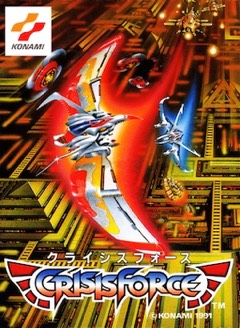
It looks a lot like Konami's Life Force, flesh walls and all, and it does not try to hide it. If Life Force left you wanting another trip down a monster's gullet, this is the NES's other one.
How it plays today
Reviewers like the design and complain about the difficulty, and both are fair. A single enemy projectile kills you, and losing your upgrades makes the next stretch worse. Allgame gave it three stars out of five.
Play it for the downward stages and the grim anatomy-class art. Expect to die a lot. If you can get through the first two stages, you will have learned most of what the game has to teach you.
Compared with
- Life Force: The Konami shooter Abadox looks most like, right down to its organic setting.
- Gradius: The shooter whose shield-like Option pickup Abadox's shields resemble.
- Super R-Type: Irem's R-Type on the SNES, the other series Abadox borrows from.
Why it matters
Abadox punishes a single slip and takes your upgrades with it. That is a harsh way to teach anything, but the lesson is a real one: you can lose almost everything and still be standing, and what you do next is what counts.
Csikszentmihalyi's flow needs challenge matched to skill. Abadox sets the dial high, so flow comes only once you have learned the patterns. Until then it feels like a wall, and getting past it feels like something you earned.
Read: The zone: why good games make time disappear →
- Csikszentmihalyi, M. (1990). Flow: The Psychology of Optimal Experience.
What you're levelling up
You have been training these without noticing. Here is how to do it on purpose, and where it pays off away from the couch. All the skills games teach →
Bouncing back
In the game. Die and you lose every upgrade and restart from a checkpoint, sometimes slow and defenceless.
Do it on purpose. After a death, restart immediately and aim only to survive the next ten seconds. Then rebuild.
Off the couch. A bad week, a knockback at work, a lousy match. You have already practised carrying on from a worse spot.
Pattern recognition
In the game. Organ-shaped enemies come in set waves. Learn them and you can read where the bullets will be.
Do it on purpose. Play stage one without shooting wildly. Watch one wave and say where the next enemy will appear.
Off the couch. Noticing the same row with your housemate always starts on bin night, and sorting the bins before it does.
Judging risk
In the game. One enemy projectile kills you, so every move in a tight gap is a bet.
Do it on purpose. Pick one tight spot and decide in advance whether it is worth the risk. Stick to your call.
Off the couch. Whether to text first after a date or leave it a day. Weigh it, make the call, and stop rereading the message.
Verdict · 6/10
A tough, unlovely shooter with a good idea in its downward stages. Worth a few lives if you like being punished.