Flow
The zone: why good games make time disappear
When a game pitches its challenge right at the edge of your skill, the world falls away, and a psychologist has a name for it.

Where did the afternoon go?
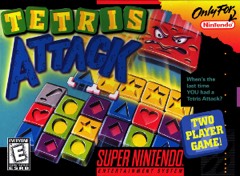
You sat down with Tetris after school. The pieces fell slowly, then less slowly, then fast enough that your hands moved before you had decided anything. The stack crept up and the music sped up with it. You held a well open on the right, waiting for the long straight piece, and when it came you dropped it in without a thought. Then someone flicked the light on and asked why you were sitting in the dark.
Almost everyone who grew up with a Nintendo has a version of that story. The hours went somewhere, and nobody was watching them go. The psychologist Mihaly Csikszentmihalyi gave this state a name: flow. He described it as total absorption, and it turns up under particular conditions. The challenge matches your skill. The goals are clear. The feedback is immediate. In flow you stop worrying about how you look, and time bends. An hour feels like ten minutes, and a single jump seems to hang in the air.
Flow is not a gaming idea. It belongs to anything people do with their whole attention: music, sport, cooking for a crowd, a long conversation. But games may be the most dependable flow machines anyone has built, and the old ones show the working parts plainly, because there was so little else on the cartridge.
Just hard enough
The heart of flow is the match between challenge and skill. Make a task too hard and it feels like panic. Make it too easy and your mind drifts off to look for something better. Flow lives in the narrow band between, and that band keeps moving, because the more you play, the better you get.
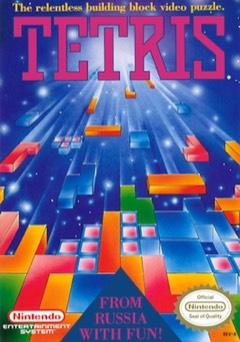
Tetris handles this with brutal elegance. Clear enough lines and the level ticks over and the pieces fall faster. The game raises the challenge at about the pace your skill grows, so for a long stretch it always asks for slightly more than you managed a minute ago. Eventually it outruns you. Every game of Tetris ends that way, and it never feels like a cheat, because you watched it coming.
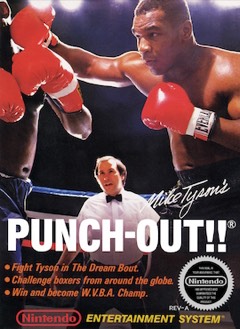
Mike Tyson's Punch-Out!! does it with a ladder of opponents. Glass Joe exists to teach you to dodge and counter. Each boxer after him adds a new pattern to read and a tighter window to strike, so the skill the last fight built is the skill the next fight tests. The game is a staircase, and each step is cut to your current height.
Richard Ryan, Scott Rigby and Andrew Przybylski found that games pull people in when they satisfy a need for competence, the sense of getting better at something, and that this predicts how much people enjoy a game and want to come back. Flow and competence are close cousins. One is the feeling of being stretched to the limit. The other is the satisfaction of having grown to fit.
Clear goals, instant answers

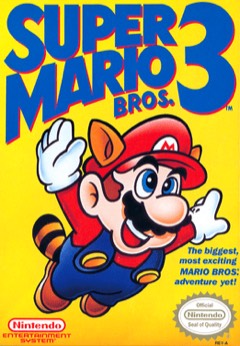
The other parts of flow are easy to miss, because good games make them look obvious. World 1-1 of Super Mario Bros. has a goal you understand without a word of text. The screen scrolls right, so go right. At the end stands a flagpole. Nobody needs to explain it.
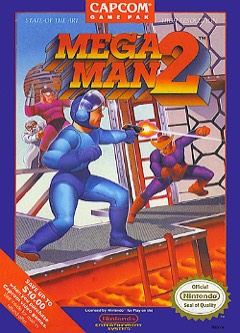
The feedback is just as quick. Press A and Mario jumps, now, with a sound. Punch a brick from below and it breaks or it chimes. Walk into a Goomba and you know at once what you did wrong. In Mega Man 2, the hero flashes and gets knocked back the instant he takes a hit. No waiting a week for results. No wondering whether you did well. The game answers every action, every time.
Ordinary life is often the opposite. The goals are fuzzy, the feedback slow, and it can be hard to tell whether you are improving at anything. That is part of why a well-made game feels so clean. It is not simpler than life because it is trivial. It is simpler because someone designed it to be readable, and a readable world is one you can lose yourself in.
Forgetting yourself
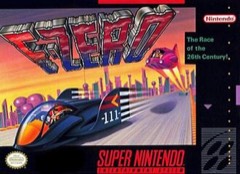
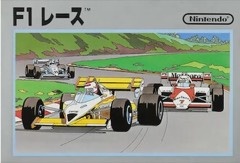
Watch someone play F-Zero and you will see their whole body lean into the corners, as if tilting the controller could tilt the car. They have no idea they are doing it. This is the loss of self-consciousness Csikszentmihalyi described. The part of the mind that keeps watch over how we seem to others goes quiet, because every scrap of attention is already spoken for.
It is a strange kind of rest. You work hard, sometimes harder than at anything else all day, yet you come out lighter. The running commentary in your head stops. For a while there is only the next corner, the next piece, the next punch.
All here
It is easy to call this escape, but that gets it backwards. Flow is not being somewhere else. It is being entirely here, with nothing left over. Most of us spend our days half present, doing one thing while worrying about three others. A game that pulls you into flow offers something rare: an hour of whole attention.
And it connects us more than it looks. The kid in the dark with Tetris, the musician lost in a song, the grandparent who cannot be interrupted mid-crossword: all in the same state, reached by different roads. When you see flow on someone else's face, you know exactly where they are, because you have been there too. We are built to be absorbed. Being alive, at its best, feels a lot like the stack clearing and the long piece finally dropping in.
Sources
- Csikszentmihalyi, M. (1990). Flow: The Psychology of Optimal Experience.
- Ryan, R. M., Rigby, C. S., & Przybylski, A. (2006). The motivational pull of video games: A self-determination theory approach. Motivation and Emotion, 30(4), 344-360. doi:10.1007/s11031-006-9051-8