What it was
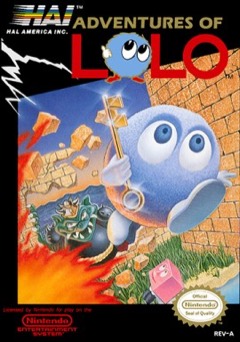
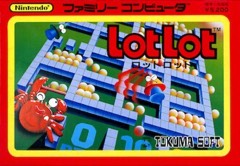
King Egger has taken Princess Lala, and Lolo, a small round hero, walks into his castle to get her back. The castle is fifty single-screen rooms, ten floors of five. In each one you collect every heart, which opens a treasure chest, which opens the exit. Once you take the gem from the chest, every enemy in the room vanishes.
The trick is that the enemies are also your tools. You carry a limited number of shots. Shoot a monster and it turns into an egg for a moment, and you can push that egg into a gap, lay it in water as a bridge, or shoot it again to clear it out of the way. Some monsters kill you on contact or with a shot; others only stand in the way. If you trap yourself, you can restart the room, but it costs a life.
Where it sits in history
HAL Laboratory made and published it, and it reached North America in April 1989. It was not new in Japan: its rooms came from two earlier Eggerland games, which makes it the fifth in that series but the first one released in North America. HAL was surprised by how well it did. It was followed by Adventures of Lolo 2 and 3 on the NES, and IGN has named it as one of Satoru Iwata's successes at HAL.
Lolo and Lala later moved into HAL's other series as Lololo and Lalala, starting in Kirby's Dream Land, and they still turn up in Kirby games today. Puzzle designers keep citing it too: the developers of Professor Fizzwizzle and LIT both named Lolo as an inspiration.
How it plays today
Beautifully. A Lolo room is a short, closed problem you can read at a glance and then get wrong for twenty minutes. The early floors teach one idea at a time; the late floors combine them until you are planning five moves ahead and still missing the one block that matters.
Two cautions. The short music loop wears on you, and one critic joked it drives players towards madness. And GameSpot noted it can be finished in a day, so it is better taken a floor at a time than all at once. Neither stops it being one of the best puzzle games on the system.
Compared with
- Adventures of Lolo 2: More rooms in the same style, compiled from earlier Japanese games.
- Kickle Cubicle: Another single-screen NES puzzler often compared to Lolo, and easier.
- Wrecking Crew: Nintendo's earlier single-screen puzzle game, with a hammer in place of eggs.
Why it matters
Bernard Suits defined playing a game as 'the voluntary attempt to overcome unnecessary obstacles'. Lolo is close to the pure form of that. Nobody needs to push an egg across a river. There is no prize but the next room. Yet people sit with one screen for half an hour, because the obstacle was built to be beaten, and beating it with your own head is the reward.
It is also generous. Every room has an answer, and the game is quietly sure you can find it.
Read: The magic circle: the world that rules make →
- Suits, B. (1978). The Grasshopper: Games, Life and Utopia.
What you're levelling up
You have been training these without noticing. Here is how to do it on purpose, and where it pays off away from the couch. All the skills games teach →
Problem solving
In the game. Each room's a closed puzzle you can read at a glance and still get wrong for twenty minutes. Monsters turned into eggs become bridges, blockers or something to clear away.
Do it on purpose. Ban walkthroughs. When a room stumps you, list every egg trick you haven't tried before touching the pad.
Off the couch. Broken tap, dodgy spreadsheet, a mate's problem nobody can crack. Sitting in 'stuck' without panicking is what makes you the one people ring.
Planning ahead
In the game. Shots are limited and trapping yourself costs a life. The late floors make you plan five moves ahead and you'll still miss the one block that matters.
Do it on purpose. Before moving in a new room, plan your whole route in your head and commit. Restart only if the plan was wrong, not the thumbs.
Off the couch. Plan the night out properly, not 'dunno, what do you reckon?'. Having a plan, and being happy to change it, makes you easy to say yes to.
Deep focus
In the game. A Lolo room shrinks the world to one screen. Get into it and the next half hour vanishes.
Do it on purpose. Phone in another room, one floor, no breaks. Notice how much faster you solve rooms when nothing else is pulling at you.
Off the couch. Full attention, phone face down, is about the most attractive thing you can give someone across a table. Lolo's good practice.
Verdict · 8/10
Fifty small locked rooms, each one a fair fight with your own thinking. A puzzle game that has not aged a day.