What it was
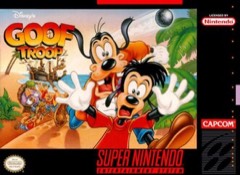
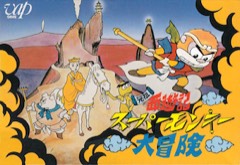
A top-down puzzle adventure for one or two players, based on the Disney cartoon. Goofy and his son Max are out fishing with their neighbours Pete and PJ when a pirate ship snatches Pete and PJ and sails for Spoonerville Island. The pirates have mistaken Pete for their long-lost captain, Keelhaul Pete, and Pete is rather enjoying it.
The twist is that neither hero can attack. You beat enemies by throwing barrels and bombs at them, kicking blocks into them, knocking them off ledges or luring them into each other's fire. Goofy is slower and hits harder; Max is quicker. Five areas, from a beach to a haunted castle to the pirate ship, are built from rooms you clear by sliding blocks, ringing bells, lighting candles and swinging across gaps with a grappling hook. Each player carries one item at a time, two when you play alone.
Where it sits in history
Capcom developed and published it for the Super NES. It came out in North America in July 1993, in Europe on 25 November 1993, and in Japan on 22 July 1994. It is one of the first games Shinji Mikami designed, long before Resident Evil made his name.
Reviews were warm. Nintendo Power found it too easy but great fun anyway. Looking back in 2013, Nintendo Life called it a gem with a friend and tedious alone, because the puzzles were plainly designed for two.
How it plays today
That review still holds. With two players, Goof Troop is a small delight: one of you rings the bell to draw the pirates, the other drops a barrel on them, and you both laugh when it goes wrong. The puzzles are gentle, the game is short, and that suits a co-op afternoon.
Alone, you juggle two item slots and push blocks through rooms meant for a pair, and it drags. Find a partner, ideally one who has never played a game like it. It is a fine first co-op game for a child, and there is a pleasure in spotting the Mikami of later years in its locked rooms and item puzzles.
Compared with
Why it matters
Goof Troop is about a father and son who cannot fight, so they have to cooperate. Goffman described a game as a shared world with its own rules of what matters, and engrossment together as what makes an encounter feel alive. Here the rule is simple: one of you alone cannot solve the room. The bell needs a ringer and a trap needs a second person to spring it.
Played by a parent and a child, it becomes the cartoon it came from: two people, unequal in speed and strength, working out a problem together and laughing at Goofy's mistakes along the way.
Read: The second controller →
- Goffman, E. (1961). Encounters: Two Studies in the Sociology of Interaction ('Fun in Games').
What you're levelling up
You have been training these without noticing. Here is how to do it on purpose, and where it pays off away from the couch. All the skills games teach →
Teamwork
In the game. Neither hero can attack. One of you rings the bell to draw the pirates, the other drops a barrel on them, and you both laugh when it goes wrong.
Do it on purpose. Play co-op and talk through every room before anyone moves: who rings, who throws. Give the newer player the fun job.
Off the couch. A co-op game is a cracking date. Calling the plan, sharing the barrel, laughing when Goofy stuffs it up: you'll learn more about each other than over a fancy dinner.
Problem solving
In the game. You beat enemies by throwing barrels and bombs, kicking blocks into them, knocking them off ledges or luring them into each other's fire.
Do it on purpose. In each room, before you touch anything, say out loud what each object might do. Then test your guesses one at a time.
Off the couch. No proper tool for the job? Use what's lying around. Whoever fixes the wobbly table with a beer coaster is a handy person to know.
Spatial thinking
In the game. Rooms clear by sliding blocks, ringing bells, lighting candles and swinging across gaps with a grappling hook. Push one block wrong and you're stuck.
Do it on purpose. Before you slide a block, trace its whole path in your head and where it stops. Count how often you're right.
Off the couch. Packing the boot for a road trip, flat-pack furniture, getting a couch through a doorway. Picture it first and you only lift it once.
Verdict · 7/10
A short, kind co-op puzzle game where the heroes win by thinking, not hitting. Essential with a friend, skippable alone.