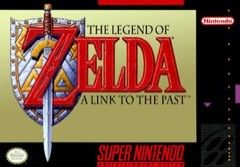
What it was
It starts on a rainy night. Link's uncle heads out to Hyrule Castle with a sword, Link follows against orders, and within minutes you are sneaking through a dungeon with a lamp. It is one of the great openings of the 16-bit era, and it tells you what kind of game this is: top-down, like the first Zelda, but with a story, a sense of place and far more to do.
The big idea arrives a few hours later. Hyrule has a twin, the Dark World, a warped mirror of the same map with its own enemies, towns and dungeons. Portals take you in, and the Magic Mirror brings you back out, leaving a shimmer you can step through to return. Because the two maps line up, a ledge you can't reach in one world might be a short walk in the other. Most of the game's best puzzles come from flipping between them.
Where it sits in history
Development began in 1988 as a NES game before moving to the Super Famicom a year later. Nintendo gave it a large budget and time, and an 8-megabit cartridge, double the usual size for the console at the time. Shigeru Miyamoto produced, Kensuke Tanabe wrote the script and Koji Kondo composed a score that gave the series many of its lasting themes, including Zelda's Lullaby and the Kakariko Village music.
It came out in Japan on 21 November 1991, North America on 13 April 1992 and Europe on 24 September 1992. In Japan it was the best-selling release of 1991, and in the United States it sold a million in 1992. Combined with the 2002 Game Boy Advance version, it had sold 6.5 million copies by 2004. The Master Sword, the parallel world and the dungeon-then-big-chest rhythm all became Zelda standards, and Nintendo returned to the same Hyrule in A Link Between Worlds on the 3DS in 2013.
How it plays today
Remarkably well. Link now moves in eight directions, the sword swings in an arc, and the controls are crisp. Dungeons stack over several floors, with holes to drop through and stairs to climb, and each one hands you a new item that changes how you look at the overworld. The world is dense with secrets, heart pieces and caves without ever feeling padded.
The rough edges are minor. Some item switching means a trip to the menu, a couple of Dark World dungeons can leave you wandering, and the early story is thin once you are past the castle. None of that gets in the way for long.
Compared with
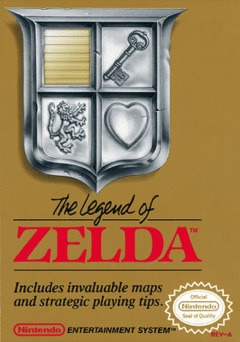
- The Legend of Zelda: The NES original is the rough draft: same overhead view, far less guidance and no second world.
- Zelda II: The Adventure of Link: The side-scrolling detour that this game quietly undid, going straight back to the top-down view.
- Secret of Mana: Square's SNES action adventure has a party and a ring menu, but A Link to the Past has the tighter world and dungeons.
- Illusion of Gaia: Enix's top-down adventure borrows the view and the pace, trading item puzzles for a stronger story.
Why it matters
Rain, a lamp, an uncle heading out into the night. For many players the opening of A Link to the Past is the first thing they remember, often along with the room they played it in. Then comes the Dark World: the same map, warped, every familiar path now slightly wrong.
Tim Wildschut and colleagues found nostalgia is mostly positive, often features close others, and raises social connectedness and self-regard. That suits a game built on returning. Kakariko Village and Zelda's Lullaby became fixtures, and Nintendo went back to the same Hyrule in 2013. There's something tender in the Dark World too. It shows home made strange, then lets you step through the mirror and find it waiting. Revisiting an old game works the same way. The world is smaller than you remember, and a little darker, and you still know where every ledge leads. What you really find again is the younger person who learned the way, and the people who were in the room.
Read: Why old games feel like home →
- Wildschut, T., Sedikides, C., Arndt, J., & Routledge, C. (2006). Nostalgia: Content, triggers, functions. Journal of Personality and Social Psychology, 91(5), 975-993. doi:10.1037/0022-3514.91.5.975
What you're levelling up
You have been training these without noticing. Here is how to do it on purpose, and where it pays off away from the couch. All the skills games teach →
Spatial thinking
In the game. Hyrule has a twin, the Dark World, and because the maps line up, a ledge you can't reach in one is a short walk in the other.
Do it on purpose. When you're stuck, open the map and find the same spot in both worlds. Say out loud what's different before you move.
Off the couch. Holding two layouts in your head is how you read a floor plan, a train map in a new city and the car park after the gig.
Problem solving
In the game. Dungeons stack over several floors, with holes to drop through, and each one hands you an item that changes how you look at the overworld.
Do it on purpose. No guide for one dungeon. When stuck, list every item you have and one place you haven't tried it yet.
Off the couch. When something's stuck, a fight with someone you're seeing or a project at work, list what you haven't tried. Calm problem solving beats sulking every time.
Curiosity
In the game. The world is dense with secrets, heart pieces and caves, and none of it feels like padding.
Do it on purpose. Spend a session hunting heart pieces only, no main quest. Tally how many you find without a guide.
Off the couch. The habit of checking round the corner finds you better jobs, better flats and better mates.
Verdict · 10/10
The Zelda template, and still one of the best games on the SNES. If you have never played it, start here rather than with the NES original.