Dopamine
Wanting, not liking: what dopamine really does when you play
The famous dopamine hit is not pleasure. It is the moment before you hit the question block, wondering what is inside.
The block before you hit it
A question block hangs in the air over World 1-1. You know it holds something. It might be a coin. It might be a mushroom. You jump, and for a fraction of a second before your head connects, you lean forward in your seat.
That lean is the subject of this essay. People often say games give you a 'dopamine hit', meaning a squirt of pleasure that keeps you hooked. The phrase is everywhere, and it is half right in an interesting way. Games do involve dopamine. But dopamine is not what most people think it is.
Yes, there is dopamine
In 1998 a team led by Matthias Koepp used brain imaging to watch people play a video game. They saw dopamine released in the striatum, a region deep in the brain tied to reward and movement. Play, in other words, shows up in the brain's chemistry.
So the chemical is real, and it is busy while we play. That should surprise nobody. Dopamine is busy whenever we pursue anything we care about. The interesting question is what it is doing.
That is where the popular story goes wrong. It treats dopamine as a reward handed out after the fact, like a coin dropping into a slot. The research points to something more like a spotlight. Dopamine helps decide what grabs your attention and what you move towards. The pleasure itself is a different matter.
Wanting is not liking
The neuroscientists Kent Berridge and Terry Robinson pulled apart two things we usually lump together. Liking is the pleasure itself: the taste of the cake, the warm feeling when the princess is finally in this castle. Wanting is the pull towards something, the way it catches your eye and draws you in. They called that pull incentive salience, and their work suggests dopamine has much more to do with wanting than with liking.
Think about The Legend of Zelda. A suspicious wall. You have bombs. The wanting is enormous: you need to know. When the wall opens and a secret room appears, the jingle plays, and that little burst of delight is liking. The two feel like one experience, but they are separate systems, and dopamine drives the first.
The dopamine hit, then, is less like eating a lolly and more like seeing the lolly jar. It is the lean forward, not the sigh afterwards.
The surprise signal
Wolfram Schultz, Peter Dayan and Read Montague added another piece. They showed that dopamine neurons signal reward prediction error: the gap between what we expected and what we got. Get more than you expected and the signal says so. Get exactly what you expected and there is little news to report.
Every Nintendo kid felt this without the vocabulary. The first time a vine grows out of a block in Super Mario Bros. and climbs off the top of the screen, it is astonishing. The tenth time, you know it is there, and you head straight for it. Still satisfying, but no longer news. That is why the great games of the era kept hiding things: warp zones, secret rooms, a raft or a ladder that opens a new corner of the map. They kept the gap open.
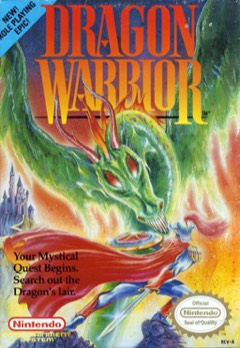
It also explains why Dragon Warrior feels good to grind. You can watch the experience points climb towards the next level. The wanting is steady, and the level-up, when it lands, arrives with a fanfare to mark the moment.
The shape of hope
None of this makes wanting a flaw. It is how every animal gets up in the morning. Wanting pulls us towards food, company, and the room we have not explored yet. A game tunes into that ancient machinery, and so does a good book, a garden, or a friend who says 'guess what happened'. When the wanting and the liking line up, you have a great evening. When you notice the wanting running on after the liking has gone, when one more go is no longer fun, that is worth noticing too. Knowing how the machinery works is useful, not shameful.
Anticipation might be the most hopeful feeling we have. Think of the walk to the video shop on a Friday, turning a rental box over in your hands, or the playground rumour about what lies behind a waterfall. Those were wanting, shared out loud. We lean towards what comes next, and we lean together. That is not a hit. It is being alive, pointed at the future.
The pull is strongest just before an uncertain result lands. The simplest way to notice it is to roll dice and watch your own attention lean in before they stop.
Sources
- Koepp, M. J., et al. (1998). Evidence for striatal dopamine release during a video game. Nature, 393, 266-268. doi:10.1038/30498
- Berridge, K. C., & Robinson, T. E. (1998). What is the role of dopamine in reward: hedonic impact, reward learning, or incentive salience? Brain Research Reviews, 28(3), 309-369. doi:10.1016/S0165-0173(98)00019-8
- Schultz, W., Dayan, P., & Montague, P. R. (1997). A neural substrate of prediction and reward. Science, 275(5306), 1593-1599. doi:10.1126/science.275.5306.1593