What it was
Rock, paper, scissors with robots. Six Robot Masters, among them Cut Man, Guts Man, Ice Man and Elec Man, wait at the ends of six stages you can play in any order. Beat one and you take its weapon, and every boss is weak to one of the others' weapons. Choosing the order is the real puzzle. When all six fall, Dr. Wily's fortress opens: four linked stages, new bosses, and a rematch with all six Robot Masters before Wily himself.
Mega Man runs, jumps and fires his arm cannon. Weapon energy and health come from drops left by enemies, and nothing refills between the fortress stages, so you arrive at Wily with whatever you managed to save. There is even a score counter, the only one the series ever had.
Where it sits in history
Capcom was an arcade company, and Mega Man was its first game built specifically for home consoles. Director Akira Kitamura led a team of six. A young Keiji Inafune drew and pixelled nearly every character and enemy, taking inspiration from Astro Boy, and Manami Matsumae composed the music, made the sound effects and programmed the audio in three months. In Japan the hero is Rock and his sister is Roll; the American title Mega Man was Capcom USA's idea.
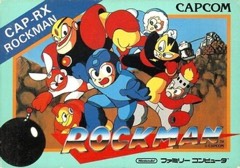
It came out in December 1987 in Japan and North America. The American box art, drawn in a hurry, showed a grown man in a yellow-and-blue suit holding a pistol and is still mocked as one of the worst covers ever made. Sales were modest and grew by word of mouth, enough for Capcom to allow a sequel. Mega Man 2 turned it into one of the company's longest-running series.
How it plays today
The design still shines. Picking a stage, then using what you have learned to beat the next boss, is one of the best loops in games, and it began here. Matsumae's music is bright and catchy, the enemies are full of character, and many of the ideas every later Mega Man leans on are already in place.
The difficulty is harsh. Some jumps feel unfair, a few bosses are brutal, and dying in the fortress sends you back without the weapon energy you spent. The game is also short, which makes the difficulty feel even sharper. If you are new to the series, start with Mega Man 2 or 3 and come back here to see where it began.
Compared with
- Mega Man 2: The sequel Capcom only just agreed to make, and the one that turned a sleeper into a long-running series.
- Mega Man 3: Bigger again, with the slide and Rush; the NES series at its most generous.
- Super Mario Bros.: One stage after another in a fixed line; Mega Man's stage select was a sharp break from that.
Why it matters
Mega Man sends you to Dr. Wily with whatever you managed to save. Nothing refills between fortress stages, and dying there means going back without the weapon energy you spent. It is harsh. It is also the whole shape of the thing: pick a stage, fail, learn, pick the next, and reach the end carrying the lessons as literal ammunition.
Albert Camus finished The Myth of Sisyphus with a line built for games like this: 'One must imagine Sisyphus happy.' The rock rolls back down, and Camus finds the meaning in the pushing itself. Mega Man turns that into rock, paper, scissors with robots. Every failure tells you something about the next boss. The game came from a team of six, sold modestly and lived on word of mouth, which is its own story of pushing a rock uphill. Enough players kept pushing to earn it a sequel, and the rest is a very long series.
Read: One must imagine Mario happy →
- Camus, A. (1942). The Myth of Sisyphus.
What you're levelling up
You have been training these without noticing. Here is how to do it on purpose, and where it pays off away from the couch. All the skills games teach →
Problem solving
In the game. Six Robot Masters, every one weak to another's weapon. Choosing the order is the real puzzle.
Do it on purpose. Beat Cut Man first with the plain buster, then test his weapon on each other boss before choosing your next.
Off the couch. Find the one thing that unlocks the rest. In study, at work, in fixing your car, there's usually an obvious first step.
Judging risk
In the game. Nothing refills between the fortress stages, so you arrive at Wily with whatever weapon energy you managed to save.
Do it on purpose. Through the fortress, only use special weapons where they save real damage. Count what's left when you reach Wily.
Off the couch. Money works the same. Spend early on things you don't need and you hit the big bill with nothing.
Bouncing back
In the game. Some jumps feel unfair, a few bosses are brutal, and dying in the fortress sends you back without the energy you spent.
Do it on purpose. Set a target of reaching one screen further each attempt. Note the exact spot each death happens.
Off the couch. Getting rejected, by a job or a crush, isn't the end. Note what went wrong, stay decent about it, and go again.
Verdict · 7/10
The blueprint for one of the NES's great series, with a brilliant idea and a punishing execution. Worth playing for history, best enjoyed with save states.