What it was
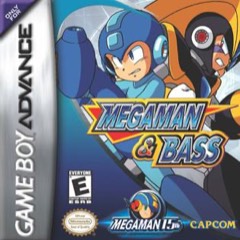
A robot called King raids Dr. Wily's lab and the Robot Museum, steals the blueprints for every robot Wily and Dr. Light ever built, and announces a world where robots rule. Mega Man goes to stop him. So, for his own reasons, does Bass, Wily's creation and Mega Man's rival, who wants to prove he is the stronger machine.
The big change is that you pick one of them at the start and stay with that choice for the whole save. Mega Man plays like the classic games: charge shot, slide, shoot on the move. Bass is a different animal: he fires rapid shots in eight directions but has to stand still to do it on the ground, and he can double-jump and dash, which combine into long dash-jumps. Stages unlock in a branching order rather than all at once, bolts buy upgrades in a shop, and 100 hidden data CDs reward exploration.
Where it sits in history
Capcom released it in Japan on 24 April 1998, for a Super Famicom that was well past its prime; Mega Man 8 had already appeared on PlayStation and Saturn. Producer Keiji Inafune said it was aimed at younger players who still only had the older console, and he asked the team to make it as hardcore as possible. It reuses many sprites from Mega Man 8, along with two of its bosses.
It stayed in Japan until a Game Boy Advance port in 2002, released internationally in 2003 for the series' 15th anniversary. Because it followed Mega Man 8 and plays like a numbered entry, many assumed it was Mega Man 9; the real one arrived in 2008.
How it plays today
The sprite work is some of the best in the classic series, big, colourful and full of animation, and the Super Famicom's sound gives the stages punch. Bass in particular is a joy to control once you learn to chain dashes and double jumps, and he makes the game feel fresh even if you know the series well.
The difficulty is the catch. Bosses have erratic, hard-to-read patterns, and many stages feel built on trial and error, with traps you only avoid after dying to them. Playing as Mega Man is the harder route, since he lacks Bass's mobility. Series fans will relish it; newcomers should start with one of the NES games.
Compared with
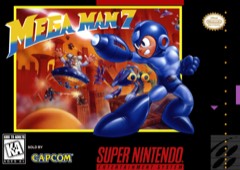
- Mega Man 7: The earlier Super Famicom and SNES entry: similar look, gentler challenge, only one hero.
- Mega Man X: Bass's dash and eight-way shooting borrow from X; the X series is faster and more forgiving.
- Mega Man 2: The NES favourite. Simpler and fairer, and a better first Mega Man for most people.
Why it matters
A hundred data CDs are hidden through Mega Man & Bass, each a scrap of lore about a robot you have probably already met. They do almost nothing for your run. Players hunt every one of them.
Kent Berridge and Terry Robinson argued that dopamine is more about wanting, what they called incentive salience, than liking, the pleasure itself. Collectibles show the split plainly. The hundredth CD is rarely a thrill; the chase for the ninety-ninth is. The same pull runs the bolt shop and the trial-and-error stages: one more try, because the next attempt feels close, even when the last ten did not feel good. Keiji Inafune asked for it to be as hardcore as possible, and aimed it at younger players still on the old console. That is a lot of wanting to point at a kid. Yet the game holds a tidy lesson. The pleasure was never the pile of CDs. It was the player who went looking, picked Bass, learned the dash-jump and got good.
Read: Wanting, not liking: what dopamine really does when you play →
- Berridge, K. C., & Robinson, T. E. (1998). What is the role of dopamine in reward: hedonic impact, reward learning, or incentive salience? Brain Research Reviews, 28(3), 309-369. doi:10.1016/S0165-0173(98)00019-8
What you're levelling up
You have been training these without noticing. Here is how to do it on purpose, and where it pays off away from the couch. All the skills games teach →
Hand-eye coordination
In the game. Bass fires rapid shots in eight directions but must stand still on the ground to do it, and his double-jump and dash chain into long dash-jumps.
Do it on purpose. Pick one stage as Bass and practise only dash-jumps across its gaps. Go for ten clean ones in a row.
Off the couch. Physical skill reads as confidence. Whether it's surfing, footy or just parking well, people notice someone who moves like they mean it.
Pattern recognition
In the game. Bosses have erratic, hard-to-read patterns. It takes real attention to find the loop in them.
Do it on purpose. On a boss you hate, spend one attempt just watching. Write down three things it always does before an attack.
Off the couch. The tell is always there, even in people who seem unpredictable. Watching first saves you a lot of grief at work.
Memory and routing
In the game. Many stages feel built on trial and error, with traps you only avoid after dying to them.
Do it on purpose. After each death, say where the trap was out loud. Next run, see how many you remember without being hit.
Off the couch. Remembering someone's name, their dog's name, what they said last week, is a small thing that makes people feel you actually care.
Verdict · 7/10
A handsome, demanding late-life platformer with a second hero worth learning. Best for players who already love the series.