What it was
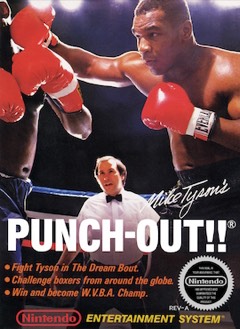
Call it a boxing game if you like, but it plays like a series of locks. Little Mac, a small 17-year-old from the bottom of the rankings, climbs three circuits, Minor, Major and World, against 13 cartoon fighters, then gets a shot at the champion. Each opponent has tells: a twitch, a flash, a wind-up. Read the tell, dodge or duck, then punish. Land a counter at the right instant and you earn a star, which powers the uppercut.
Mac's toolkit is short on purpose: jabs and body blows to either side, the uppercut, a dodge each way, a duck and a block. Hearts act as stamina. Waste punches on a guard and Mac turns pink and can only defend until he earns them back. Lose a title bout and you drop down the ladder.
Where it sits in history
Nintendo R&D3 built it from its own 1984 arcade games Punch-Out!! and Super Punch-Out!!, with Genyo Takeda, who produced the arcade originals, directing. The NES could not draw the arcade's see-through wireframe hero, so the team shrank the player's boxer instead, and Little Mac was born of that limit.
Nintendo of America's Minoru Arakawa signed Mike Tyson as the final boss before Tyson won the WBC heavyweight title in November 1986, a bet that paid off once the fighter became champion. By 1988 it had sold more than two million copies in North America. Before Tyson's version, Japan got a gold prize cartridge with Super Macho Man as the last fight, given away through a 1987 golf tournament. When the Tyson licence ran out in 1990, the game was retitled Punch-Out!! and Tyson became the fictional Mr. Dream, the version every later re-release uses.
How it plays today
Few NES games hold up as cleanly. The sprites are big and expressive, the fighters are funny, and the controls answer so quickly that every dodge feels earned. Early bouts teach the rules, and by the World Circuit you are memorising patterns frame by frame. That is the whole appeal: it is a rhythm game about recognising a cue and answering it.
The difficulty curve is the catch. Later fighters give almost no warning, and the final bout is brutal enough that plenty of players will stall before it. There is no way around that wall except practice. If you like learning a routine until it becomes muscle memory, this is a delight; if not, the World Circuit will feel like a brick wall.
Compared with
- Super Punch-Out!!: The SNES follow-up brings bigger 16-bit fighters, but the same idea: learn the tell, then punish it.
- Street Fighter II Turbo: Hyper Fighting: Both reward reading an opponent; one gives you a script to learn, the other a human who changes it.
- Tetris: Another NES game that looks simple and becomes pure reflex and recognition the longer you play.
Why it matters
Hardly anyone beats Mike Tyson on the first go. Most never beat him at all, and yet kids kept pressing start, walking Little Mac back into the ring. Jesper Juul calls this the paradox of failure: we avoid failing in life yet seek it out in games. Punch-Out!! runs on that bargain. Every loss shows you a tell you missed, and failure, in Juul's account, is what makes us reconsider and improve.
There is something tender in how small the hero is. Little Mac exists because the NES could not draw the arcade's wireframe boxer, so the team shrank him instead. A 17-year-old from the bottom of the rankings, reading twitches and flashes, knocked down and getting up. Not a bad picture of growing up. The game never pretends the wall isn't there. It just trusts you to keep learning until the wall turns into a routine you know by heart.
Read: One must imagine Mario happy →
- Juul, J. (2013). The Art of Failure: An Essay on the Pain of Playing Video Games. MIT Press.
What you're levelling up
You have been training these without noticing. Here is how to do it on purpose, and where it pays off away from the couch. All the skills games teach →
Reading people
In the game. Every opponent has tells: a twitch, a flash, a wind-up. Read it, dodge or duck, then punish.
Do it on purpose. Fight one boxer without throwing a punch for the first round. Just name each tell out loud as it comes.
Off the couch. Body language does the same job in real life. Notice when your date is leaning in or glancing at the door, and act on it. It's just paying attention.
Timing and rhythm
In the game. Land a counter at the right instant and you earn a star for the uppercut. Waste punches on a guard and Little Mac turns pink.
Do it on purpose. Pick one counter window and hit only that, every time. Count the stars you earn.
Off the couch. Timing a joke, a question or a request for a raise is the difference between nailing it and falling flat.
Memory and routing
In the game. By the World Circuit you're memorising patterns frame by frame. Later fighters give almost no warning.
Do it on purpose. Write out one fighter's routine on paper, round by round. Then fight him from memory.
Off the couch. Knowing your material cold, a presentation, a speech, a set list, frees you up to actually enjoy it.
Verdict · 9/10
A boxing game with the soul of a puzzle, and one of the tightest-feeling cartridges Nintendo made. Expect the last fights to test your patience as much as your reactions.