What it was
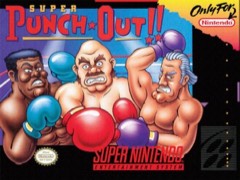
You see your boxer from behind, drawn see-through so the opponent stays in full view, and you have three minutes to knock him out. No points decision, no draw: if the clock runs out, you lose. That rule makes Super Punch-Out!! feel urgent from the first bell.
Every opponent is a puzzle with a tell. Each guards differently, so you learn where the gaps are and aim jabs or body blows at them. Land punches and a power meter fills, unlocking slower, heavier hooks, uppercuts and rapid flurries. Dodge left or right, duck or block, then counter while the other fighter is exposed. String enough clean hits together and he staggers, and a well-timed knockout punch in that window can end the fight on the spot.
Sixteen opponents fill four circuits. The last circuit only opens if you have never lost a bout, and a battery save keeps your records and best times.
Where it sits in history
Nintendo released it in North America in October 1994, with Europe following in early 1995. Japan did not see it until 1 March 1998, and then only as a download to a rewritable cartridge through the Nintendo Power kiosk service. It was the fourth Punch-Out!! game, built by Nintendo Integrated Research and Development under Genyo Takeda, alongside the NES game StarTropics II.
It is closer to the Punch-Out!! arcade games than the NES version was, borrowing their power meter and the see-through boxer, though it is not a straight port. Mike Shapiro and Charles Martinet voiced the fighters, referee and announcer. In 2022 players found a hidden two-player mode, unlocked by a button code, that had been sitting in every version for nearly three decades.
How it plays today
It holds up well because it is all learnable. Each fighter's opening fight is bewildering, then you spot the shoulder twitch or the grunt before the big swing, and the next attempt goes differently. Beating a circuit feels earned. The big sprites are bright and full of character, and it is quick to pick up for a round or two.
The flaws are small. The three-minute rule, combined with some fighters who only go down by technical knockout, makes the later circuits a race against the clock as much as the boxer. Replaying for faster times is the long-term hook, and not everyone will want it. It is also more about reaction than the puzzle-box timing of the NES game, which some prefer.
Compared with
- Mike Tyson's Punch-Out!!: The NES favourite has a small boxer and a sharper puzzle feel; Super Punch-Out!! is bigger, faster and more like the arcade.
- Street Fighter II: The World Warrior: The SNES's defining fighting game is about reading a human opponent; Super Punch-Out!! is about memorising a computer one.
- Super Mario Kart: Another SNES game built for chasing your own best times, with records saved to the cartridge.
Why it matters
A boxing ring is about the plainest magic circle there is: a square of rope where hitting someone is suddenly allowed, and where a clock and a referee decide what counts. Super Punch-Out!! draws its circle tighter still. Three minutes, no points decision, and if the clock runs out you lose.
Johan Huizinga saw play as free and bounded, set apart from ordinary life, with its own order. Everything inside this ring obeys that order. Each opponent has a tell, a shoulder twitch or a grunt before the big swing, and learning them is learning the local law. Pride and the urge to flail don't help in there; patience does. The last circuit opens only to someone who has never lost a bout, a very game-shaped kind of justice. Outside the ring, life rarely shows its tells so clearly. Maybe that's why a boxing game full of cartoon bruisers feels so restful. For three minutes the rules are clear and fair, and if you pay attention, you can win.
Read: The magic circle: the world that rules make →
- Huizinga, J. (1938/1949). Homo Ludens: A Study of the Play-Element in Culture.
What you're levelling up
You have been training these without noticing. Here is how to do it on purpose, and where it pays off away from the couch. All the skills games teach →
Reading people
In the game. Every fighter has a tell. The shoulder twitch or the grunt before the big swing, and once you've spotted it the next bout goes differently.
Do it on purpose. Spend the first fight against a new opponent just watching, even if you lose it. Name his tell, then next fight only dodge on that tell.
Off the couch. People have tells too, like the half-second pause before someone says they're fine. Catch it and ask, and you're better company than most, on a date or with a mate having a rough week.
Timing and rhythm
In the game. String enough clean hits together and he staggers, and a well-timed knockout punch in that window can end it on the spot. Early or late and the window shuts.
Do it on purpose. After every stagger this session, count beats out loud before you swing. Find the beat that lands the knockout and use only that one.
Off the couch. Knowing when to ask for the pay rise, when to make the call and when to leave the party. Right move, right moment.
Keeping your cool
In the game. No points decision, no draw: if three minutes run out, you lose. The later circuits become a race against the clock as much as the boxer.
Do it on purpose. For one fight, only look at the clock between knockdowns. See whether your time actually gets worse when you stop staring at it.
Off the couch. Deadlines make people sloppy. Whoever keeps working clean with ninety seconds left is the one who gets handed the big jobs.
Verdict · 8/10
A sharp, colourful boxing game that rewards patience and memory. Less famous than the NES game, and in some ways the better one to play.