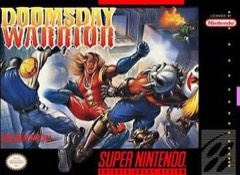
What it was
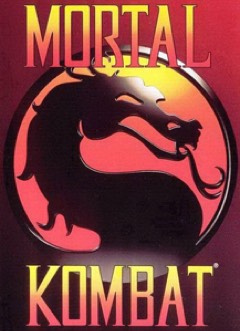
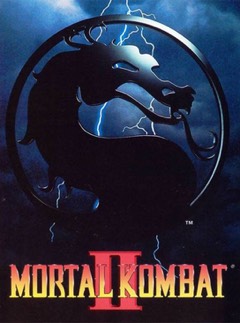
A martial arts tournament with the fate of Earth at stake, seven fighters to choose from and three more standing in the way, among them the four-armed Goro and the sorcerer Shang Tsung. The fighters are digitised photographs of real actors, which made them look like nothing else in 1993. Five buttons handle high and low punches and kicks plus a dedicated block.
The draw in the arcade was the Fatality: a gory finishing move performed on a beaten opponent. On the Super NES, Nintendo's family-friendly rules changed the blood to sweat and swapped most Fatalities for milder finishing moves.
Where it sits in history
Midway released the arcade game in 1992. Ed Boon programmed it, John Tobias and John Vogel drew it, and Dan Forden did the sound; the actors were filmed on Tobias's own Hi-8 camcorder. Midway wanted a fighting game within a year, and Street Fighter II's success helped the pair sell the idea.
Acclaim brought it home on 'Mortal Monday' in September 1993, on Super NES, Mega Drive, Game Boy and Game Gear at once; Sculptured Software made the SNES version. It looked and sounded closer to the arcade than Sega's, with looser controls. The Sega version hid its blood behind a code, ABACABB, and outsold the SNES one. Sculptured pitched an improved SNES edition, Mortal Kombat Nitro, then dropped it to work on Mortal Kombat II. Along with Night Trap and Lethal Enforcers, the game led to the founding of the ESRB.
How it plays today
Rough. Next to Street Fighter II the fighting is stiff, the moves are few, and the computer opponents lean on cheap patterns. The digitised look that stunned people in 1993 now reads as a stage show, which has its own charm, and the uppercut still lands with a satisfying thud.
The sweat is the problem. Mortal Kombat was sold on excess, and without the Fatalities the SNES version loses what made anyone care. For the game as its makers meant it, play the arcade original. Keep this cartridge for what it is: a record of the moment a company decided what its players were allowed to see.
Compared with
Why it matters
Johan Huizinga saw play as a world set apart, with its own boundary and its own order. Inside, a Fatality is a flourish that ends a round. Outside, the same picture became a national argument and a ratings board. Howard Becker wrote that 'deviant behavior is behavior that people so label': the thing itself matters less than the rules a group makes and who it applies them to.
The SNES Mortal Kombat is that idea on a cartridge. The same fight, the same characters, the same game; only the colour of a sprite changed, because one company drew the line in a different place from another. Every player who typed ABACABB on a friend's Mega Drive learned something about who gets to decide.
Read: The magic circle: the world that rules make →
- Huizinga, J. (1938/1949). Homo Ludens: A Study of the Play-Element in Culture.
- Becker, H. S. (1963). Outsiders: Studies in the Sociology of Deviance.
What you're levelling up
You have been training these without noticing. Here is how to do it on purpose, and where it pays off away from the couch. All the skills games teach →
Pattern recognition
In the game. The computer opponents lean on cheap patterns. Once you spot them, they fold.
Do it on purpose. Against one computer opponent, lose a round on purpose while watching. Name its go-to move and punish it next round.
Off the couch. Plenty of people at work run a script too. Spotting it means you stop being surprised and start being ready.
Keeping your cool
In the game. Goro has four arms and hits like a truck. Players who panic and jump in get flattened.
Do it on purpose. Against Goro, block first and only strike when he's finished a move. Count how much health you save.
Off the couch. Big moments, a job interview, meeting a partner's parents, go better if you breathe and wait. Rushing in makes it worse.
Story sense
In the game. Nintendo changed the blood to sweat and swapped the Fatalities for milder moves. The cartridge is a record of a company deciding what players could see.
Do it on purpose. Play it next to the arcade original and ask yourself what the change did to the game.
Off the couch. Understanding why things are the way they are, rules, workplaces, laws, makes you a sharper thinker and better at a pub debate.
Verdict · 5/10
A handsome port of an important game, with its most famous part taken out. Play the arcade version, and keep this one as history.