What it was
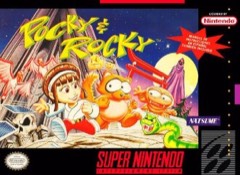
A top-down scrolling shooter for one or two players. Pocky is a young shrine maiden tending a Shinto shrine. Rocky is a tanuki, a raccoon dog, from the Nopino Goblins, a band of creatures Pocky once cured of madness. Now they have gone mad again, someone is controlling them, and the two set off to find out who, through six levels of kappa and other monsters from Japanese myth.
Pocky throws paper charms, ofuda, and swings a purification wand, a gohei, up close. Rocky throws leaves and whips his tail. Both can slide, and both carry a few screen-clearing bombs. They differ in small ways: Pocky is a little faster and her bombs hit harder; Rocky slides further, his bombs cover more ground, and he can turn into an invulnerable statue. In two-player mode, sliding into your partner sends them spinning across the screen into the enemies. Continues are unlimited.
Where it sits in history
Taito made KiKi KaiKai for arcades in 1986 and licensed the sequel to Natsume, which developed and published it. It came out on the Super Famicom on 22 December 1992 and in the rest of the world in 1993. In Japan it was also broadcast over the Satellaview satellite service in 1997.
Critics liked it, and in 1996 Super Play put it at 91 in its top 100 Super NES games. Pocky & Rocky 2 followed in 1994, Pocky & Rocky with Becky on Game Boy Advance in 2001, and a new game, Pocky & Rocky Reshrined, in 2022.
How it plays today
It looks wonderful still: a sweet heroine and monsters drawn with real affection for the folklore they come from. The eight-way movement and the quick slide make it feel more like dancing through a crowd than flying a ship.
It is also hard, with danger coming from every direction you can move in. Unlimited continues soften that, and two players help more than they should, partly because flinging your friend into a crowd of goblins is the best move in the game. Alone, pick Pocky for speed. Together, take one each and expect to argue about who used the last bomb.
Compared with
Why it matters
Pocky & Rocky is a game about a friendship. Pocky helps the goblins because she cured them once before, and Rocky comes to her because he trusts her to do it again. Research on why games satisfy us names three needs: feeling competent, choosing for yourself, and being connected to other people. Most shooters only feed the first. This one, with two players on the couch, feeds all three.
The slide that flings your partner into the enemy is a small design choice with a big effect: it turns your friend into a weapon you can only use together. The best runs are the ones where you stop playing next to each other and start playing with each other.
Read: The second controller →
- Ryan, R. M., Rigby, C. S., & Przybylski, A. (2006). The motivational pull of video games: A self-determination theory approach. Motivation and Emotion, 30(4), 344-360. doi:10.1007/s11031-006-9051-8
What you're levelling up
You have been training these without noticing. Here is how to do it on purpose, and where it pays off away from the couch. All the skills games teach →
Teamwork
In the game. Two players help more than they should, partly because sliding into your partner sends them spinning into the goblins. It works when you plan it, and it's chaos when you don't.
Do it on purpose. Before each level, agree who's on bombs and who's on sliding. Afterwards, sort out who used the last bomb like adults.
Off the couch. Flatmates, mates moving house, two of you cooking dinner. Agreeing who does what before you start saves the argument halfway through.
Keeping your cool
In the game. Danger comes from every direction you can move in, and kappa don't wait for you to settle. The player who panics slides into trouble; the calm one dances through the crowd.
Do it on purpose. When the screen fills, stop firing for one beat and pick the gap you'll slide into. Then go.
Off the couch. A busy bar, a chaotic shift, a first date where the waiter forgets your order twice. Staying easy while it's all going on is half of why people like being around you.
Winning and losing well
In the game. Unlimited continues and a mate on the couch means you'll die a lot, together. How you take it decides whether you get to level six or quit at three.
Do it on purpose. Next game over, no groaning. Say one thing your partner did well, then hit continue.
Off the couch. Lose at pool or trivia with grace and people want you back next week. Someone you fancy notices how you lose more than whether you won.
Verdict · 8/10
A gorgeous, tough little shooter steeped in folklore, made for two. One of the Super NES's best co-op games.