What it was
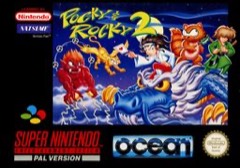
A top-down shoot 'em up for the Super NES, the sequel to Pocky & Rocky. You move freely in eight directions, like the first game, and Pocky still fights by throwing ofuda, paper talismans the English versions call cards. She picks up items to make her shots stronger and new clothes that soak up damage.
The big change is player two. Instead of a second hero with equal powers, the second player picks one of Pocky's friends, each with their own attack and unlimited lives. With nobody on the second pad, the computer runs that friend. Pocky can use magic to slip into her partner's mind and steer their body for a while, borrowing whatever that friend can do. Or she can simply pick them up and throw them. A thrown friend hits an enemy very hard, and dies for a little while.
Where it sits in history
Natsume developed it and published it in Japan, where it came out on 17 June 1994 as Kiki Kaikai: Tsukiyo Soushi. It reached North America in November 1994, and Ocean Software published it in PAL regions in April 1995.
It sold poorly at home: Famitsu counted 4,304 copies in Japan. Western critics were kinder. Electronic Gaming Monthly's four editors liked the new characters, the graphics and the design, but not that the friends act as mere helpers to Pocky. GamePro praised the strategy the partners add and the small details, the animals and the items. VideoGames made it a runner-up for best adventure game, and IGN later put it at 73 in its top 100 Super NES games.
How it plays today
It looks gorgeous still. Natsume's late Super NES art is all soft colour and busy little creatures, and the folklore setting gives every stage something odd to look at. Eight-way movement and a steady stream of shots make it easy to pick up, and the pace is gentler than most shooters.
The second-player design is the interesting part, and it cuts both ways. Possessing a friend to use their trick is clever. Throwing them is funny the first time and a little mean every time after. If you play together, whoever holds pad two spends the game as Pocky's equipment. Unlimited lives soften that, but the EGM editors had a point.
Compared with
- Pocky & Rocky: The first game, where the two heroes are equals; many prefer it for exactly that.
- The Legend of the Mystical Ninja: Konami's SNES trip through comic Japanese folklore, with towns and minigames between the fights.
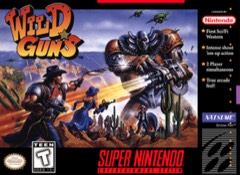
- Wild Guns: Natsume's other 1994 Super NES shooter, just as handsome.
Why it matters
Two people on one couch is the whole point of a co-op game, and the reason it works is that both feel they count. Research on why people enjoy games finds three needs at work: feeling capable, feeling free, and feeling connected to others. Pocky & Rocky 2 meets the first two for player one and quietly takes them from player two, who gets endless lives but less say.
That is why the throw is such a good joke and such a revealing one. It turns a friend into a tool. Anyone who has handed a younger sibling the unplugged controller knows the feeling from the other side, and the game is worth playing together just to talk about who has to be the one thrown.
Read: The second controller →
- Ryan, R. M., Rigby, C. S., & Przybylski, A. (2006). The motivational pull of video games: A self-determination theory approach. Motivation and Emotion, 30(4), 344-360. doi:10.1007/s11031-006-9051-8
What you're levelling up
You have been training these without noticing. Here is how to do it on purpose, and where it pays off away from the couch. All the skills games teach →
Teamwork
In the game. Player two isn't a second hero here, they're Pocky's friend with unlimited lives, and half the time they're getting thrown at a boss. Making that fun for the person on pad two is the real game.
Do it on purpose. Swap pads every stage. Whoever's Pocky has to call when they're about to possess or throw their mate, so nobody's just luggage.
Off the couch. Every group project and every footy team has someone stuck in the support role. Whoever makes that person feel part of it is the one everyone wants on their side next time.
Hand-eye coordination
In the game. Eight-way movement and a steady stream of ofuda mean your thumb is steering and your eyes are three enemies ahead. Easy to pick up, tidy to master.
Do it on purpose. Play a stage firing only at things you're actually looking at. No spraying. Count how many shots miss.
Off the couch. Pays off anywhere your hands chase your eyes: a cricket ball at slip, a car merging late on the freeway. Being quietly handy with stuff is a good look on anyone.
Judging risk
In the game. Throwing a friend hits an enemy very hard, then they're out for a bit. Every throw is a trade: big damage now, no help for the next few seconds.
Do it on purpose. Set a rule: only throw on a boss or a crowd worth it. After each stage, ask if any throw left you caught short.
Off the couch. Same call as spending your whole pay on one big weekend. Sometimes it's worth it. Know what you're giving up before you let go.
Verdict · 7/10
A beautiful, easy-going folklore shooter with one strange idea: your friend is also your weapon. Better alone than its co-op promises.