What it was
You start in 4000 BC with a settler or two and an empty world. Found a city and it builds more settlers, soldiers and buildings. Settlers dig mines, irrigate fields and lay roads, and later railways. Up to seven rival civilisations are doing the same, each led by a famous figure from history, and you can strike alliances with them or go to war. You win by conquering everyone or by being first to land a ship at Alpha Centauri.
The engine of it all is the technology tree. You research one advance at a time, from pottery, the wheel and the alphabet up to nuclear fission and spaceflight, and each one opens new units, buildings or further advances. The wheel gives you chariots. Pottery gives you granaries. Crack flight before anyone else and the map changes. Wonders of the World, from the Pyramids and the Great Wall to Magellan's Expedition, can each be built only once on the whole planet, so racing a rival to one is half the drama.
Where it sits in history
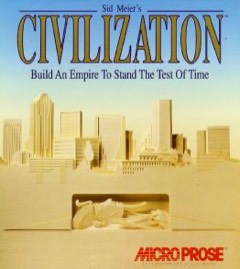
Sid Meier and Bruce Shelley designed it at MicroProse, and it reached PCs in September 1991. Meier likened the work to sculpting clay. It began as a real-time game with SimCity-style zoning, which the pair threw out for turns and settler units. Meier cut anything that made the computer opponents look foolish or punished the player for no reason, which is why no civilisation in it collapses on its own. He halved the map less than a month before release, after playtesting showed the bigger one was dull.
Koei published the Super Famicom version in October 1994, and the North American release followed in June 1995. Critics split. Next Generation called it a disappointing port, with clumsy menus that put a city's view and its production on separate screens, an awkward button layout and shrunken, ugly graphics, yet still recommended it because the game underneath was so strong. GamePro's reviewer liked the interface and felt it stood out on a console stacked with action games.
How it plays today
Next Generation had a point. On a pad you spend a lot of time paging between screens to do what a click once did. Checking what a city is making, then changing it, feels like two trips to the shops for one item. The scaled-down art does the game no favours either.
And yet. Once the buttons are in your fingers, the thing that made Civilization famous takes over. You plant a city on a river, pick the next advance, watch a rival grab the Great Wall you wanted, and look up to find it's past midnight. The decisions are big, slow and genuinely yours. It isn't the best way to play Civilization, but in 1995 it put the whole history of the world on a couch, and that still feels a bit mad.
Compared with
- SimCity: SimCity showed Meier that building something up could be the whole game. It gives you one city; Civilization gives you the planet.
- Populous: The god game that, alongside SimCity, nudged Meier towards something bigger than flight simulators.
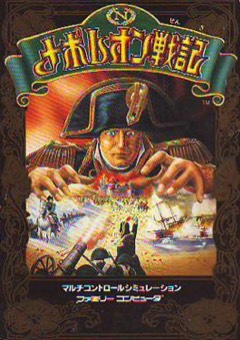
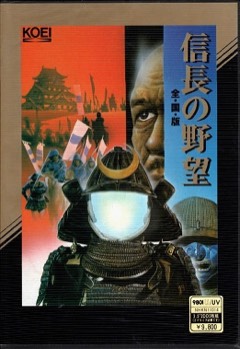
- Nobunaga's Ambition: Koei's own historical strategy on the SNES, fought over one country rather than the whole world's history.
Why it matters
Next Generation's reviewer, unhappy with nearly everything about this port, still warned newcomers they would lose hours, even days, to it. That is the odd thing about Civilization: it moves one slow turn at a time, yet time vanishes inside it. Mihaly Csikszentmihalyi described flow as the absorption that comes when a challenge matches your skill, the goals are clear and the feedback is immediate, and he noticed that time bends while you are in it. Every turn here is a small, clear goal, finish this granary, reach that advance, with the result one button press away.
What you are absorbed in matters too. Not a high score, but people: a little nation you started from one settler in 4000 BC, choosing what it learns and whom it trusts. You finish the night tired and oddly proud of a country that doesn't exist. There are worse ways to spend a weekend than thinking that hard about how people build things together.
Read: The zone: why good games make time disappear →
- Csikszentmihalyi, M. (1990). Flow: The Psychology of Optimal Experience.
What you're levelling up
You have been training these without noticing. Here is how to do it on purpose, and where it pays off away from the couch. All the skills games teach →
Planning ahead
In the game. You can research only one advance at a time, so order is everything: the wheel unlocks chariots, pottery unlocks granaries, and the first to crack flight gets a big edge.
Do it on purpose. Before turn one, write down your first five advances and why. Stick to the list unless something forces your hand.
Off the couch. Doing things in the right order: the course before the promotion, the savings before the car. People who sequence well look lucky. They're not.
Systems thinking
In the game. Settlers found cities, cities build settlers, and settlers irrigate, mine and lay roads that feed the cities back. One idle settler slows the whole empire.
Do it on purpose. Pick one city and watch it for ten turns after each change you make. One change at a time.
Off the couch. Why the team at work keeps missing deadlines: the hold-up usually sits upstream of where it shows. Fix the source, not the symptom.
Reading people
In the game. Rival leaders have personalities. The Aztecs are expansionist and rich, and any neighbour can turn from ally to enemy if you misjudge them.
Do it on purpose. Before you deal with a rival, name what they want: land, money or a fight. Check your guess ten turns later.
Off the couch. Working out what someone actually wants from a night out, quiet pub or loud gig, before you book it. Paying attention to the person beats guessing every time.
Verdict · 7/10
A clumsy port of one of the greatest strategy games ever made, and the greatness mostly survives the trip. Expect to fight the menus, then lose an evening anyway.