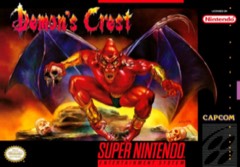
What it was
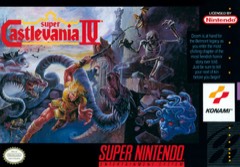
The whip is the story. On the NES, Simon Belmont could only lash straight ahead. Here he whips in eight directions: up, down, diagonally, even behind him in mid-jump. Hold the button and the whip goes limp, dangling where you point it, enough to swat bullets and chip at enemies. Crack it at a metal ring and Simon swings across a gap.
Around that whip sits a familiar setup. Simon is back in 1691 Transylvania to kill Dracula, across eleven levels of castle, cave, forest and treasury. Candles drop hearts, hearts power sub-weapons like the axe, dagger and stopwatch, and the Morning Star lengthens the whip. A password lets you pick up where you left off.
Where it sits in history
Konami released it on the Super Famicom on 31 October 1991 and in North America in late December. Director and main programmer Masahiro Ueno, credited under a pseudonym as Konami staff were at the time, loved the original NES Castlevania most and set out to make a pure action game like it. He called it a remake of that game only to a point. Mitsuru Yaida programmed Simon and built the whip system, an idea first planned for the NES game.
Ueno's team set out to reduce frustration, for instance by giving Simon more control on stairs. Earlier bosses were made easier so you could learn their weak points without retrying. The team also leaned on the new hardware's Mode 7 effects, which rotate and scale whole backgrounds for a sense of depth the NES could not manage. Masanori Adachi and Taro Kudo wrote the music, mixing new pieces with arrangements of older Castlevania themes. It sold 800,000 cartridges.
How it plays today
It is the most comfortable of the classic Castlevanias to pick up. The whip does what you want, the stairs no longer fight you, and the stages are paced like a haunted-house ride, slow and deliberate with a strong sense of place. The music is some of the best on the console, and the moody palette still looks rich.
That comfort costs it some edge. The eight-way whip makes most enemies easy to handle, and the Mode 7 moments, a showpiece in 1991, read as novelty now more than challenge. Difficulty climbs steeply in the final stages, where a knockback into a pit can cost you a long stretch. The early game can feel too gentle, the end too cruel.
Compared with
- Castlevania: The NES original this reworks. Stiffer and harder, with a straight-ahead whip that makes every enemy a timing puzzle.
- Castlevania III: Dracula's Curse: The NES game has branching routes and extra characters; IV drops both and pours everything into Simon.
- Super Ghouls 'n Ghosts: The SNES's other gothic platformer, and by far the less forgiving of the two.
Why it matters
The whip does what you want. That sentence is the whole design brief of Super Castlevania IV, and it's why the game feels so different from its NES parents. Masahiro Ueno's team set out to reduce frustration, gave Simon more control on stairs and made earlier bosses easier to learn. None of that made the game soft. It made it fair.
Mihaly Csikszentmihalyi found flow comes when challenge matches skill, goals are clear and feedback is immediate; self-consciousness falls away and time distorts. A stair that fights you drags attention back to your own clumsy hands. Take the fight out of the stairs, give the whip eight directions, and what's left is the haunted-house ride: slow, deliberate, each lash answering the thought almost before it forms. Looking up to wonder how the later levels arrived so fast is the classic sign. It's a good reminder that the best challenges aren't the cruellest ones. They trust you, then ask a little more.
Read: The zone: why good games make time disappear →
- Csikszentmihalyi, M. (1990). Flow: The Psychology of Optimal Experience.
What you're levelling up
You have been training these without noticing. Here is how to do it on purpose, and where it pays off away from the couch. All the skills games teach →
Hand-eye coordination
In the game. Simon whips in eight directions, swings from metal rings and dangles a limp whip to swat bullets. Your thumb points, the whip follows.
Do it on purpose. In an easy stage, use only diagonal whips. It forces you to aim on purpose.
Off the couch. Precise hands make you good at sport, cooking, fixing stuff. Being competent with your hands reads as quietly confident.
Keeping your cool
In the game. Difficulty climbs steeply in the final stages, where a knockback into a pit costs a long stretch. Rush and you fall.
Do it on purpose. In the late stages, stop before every gap and wait for the enemies to come to you.
Off the couch. Taking it slow when the stakes are high, a big decision or a tense moment on a date, means fewer regrets.
Memory and routing
In the game. The stages are paced like a haunted-house ride. Learning where each enemy pops out turns a cruel ending into a fair one.
Do it on purpose. After each death in the late game, say what comes next before you replay it.
Off the couch. Remembering little things people tell you, a mate's job interview or your date's favourite band, makes them feel like you actually listened.
Verdict · 9/10
The most generous and best-sounding of the early Castlevanias, with a whip that still feels great to crack. If you only play one, play this.