What it was
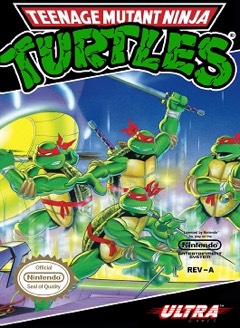
Shredder has kidnapped April and holds a gun that could turn Splinter back into a man. You take the four brothers across New York in six missions, from the streets and a Hudson River dam to rooftops, JFK airport and the Technodrome, walking an overhead map and dropping into side-scrolling sewers and buildings for the fighting.
Only one turtle is on screen at a time, and you swap between them from a menu. Each weapon has its own speed, power and reach, so each turtle suits different enemies and gaps. Lose a turtle and the Foot Clan holds him prisoner until you find him, which is possible only once per area from the third mission onward. Lose all four and it is over. Pizza, in slices, halves or whole pies, restores health. The second mission, defusing timed bombs underwater, is the part everyone remembers.
Where it sits in history
Konami made it and published it through Ultra Games, a label it created in part to get around Nintendo of America's limit of five releases per publisher a year; Europe got it through a sister label, Palcom. It came out in Japan on 12 May 1989 and North America that June, one of the first games based on the 1987 cartoon. In Britain and Europe it was renamed Teenage Mutant Hero Turtles, and a console bundle built around it helped the NES pass Sega's Master System in Britain over Christmas 1990.
It was a huge hit, selling more than four million cartridges and earning Konami $125 million by the end of 1990, and Nintendo Power readers voted it the best game of the year. It also began a long-running habit in Turtles games of pizza as the health item. Konami followed with the arcade game and years of sequels.
How it plays today
Parts still work. The music is strong, the overworld gives a sense of a city to explore, and swapping between turtles adds a layer of strategy the arcade game lacks. Deciding which brother to risk, and which to save for the boss, is a real choice.
Mostly, though, it is hard in ways that feel unfair. Enemies respawn the moment you step back and appear right on top of you, some jumps in the later missions are close to impossible, and flicker and slowdown are common. The dam level is a genuine barrier for many players, and the late platforming is harder still. Many of the enemies look nothing like the show's characters. It is a fascinating piece of history, but most people will want save states.
Compared with
Why it matters
Most kids who played TMNT in 1989 already had a favourite turtle, and the game made you pay for it. Each brother's weapon has its own speed, power and reach, and losing one means the Foot Clan holds him prisoner. So you choose who to risk, who to save for the boss, and which brother you can bear to lose in the dam level.
James Paul Gee calls the bond between player and character a projective identity: a blend of the real self and the character, shaped by what the player wants that character to be. The favourite-turtle question was never only about reach. It was about who you were: the leader, the joker, the brain, the hothead. Swapping between four brothers let a child try on four selves in an afternoon, and feel real guilt when one got captured. The game was cruel. The attachment is why it stung.
Read: Who you are when you play →
- Gee, J. P. (2003). What Video Games Have to Teach Us About Learning and Literacy.
What you're levelling up
You have been training these without noticing. Here is how to do it on purpose, and where it pays off away from the couch. All the skills games teach →
Planning ahead
In the game. Only one Turtle is on screen, each weapon suits different enemies, and a lost brother gets held prisoner. Which one you risk and which you save for the boss is a real choice.
Do it on purpose. Before each mission, pick who takes the boss and keep him out of trouble until then. At the end, check whether you stuck to it.
Off the couch. Saving your best for the thing that matters, the exam, the interview, the date on Friday, beats burning it all on Tuesday.
Keeping your cool
In the game. The second mission, defusing timed bombs underwater, is the bit everyone remembers. The ticking clock is built to rattle you.
Do it on purpose. Swim the dam with one rule: no panic swimming. Pick the next bomb before you move.
Off the couch. Under a deadline, the person who picks the next job and does it, instead of flailing at three, gets through. Work, exams, moving day.
Bouncing back
In the game. Enemies respawn the moment you step back, some late jumps are close to impossible, and the dam stops heaps of players cold. It earned its cruel reputation.
Do it on purpose. Pick the jump or room that keeps killing you. Count deaths per session and aim to cut two each time.
Off the couch. Some things are just hard, and not your fault. Going again anyway, without sulking, is how you finish what other people quit.
Verdict · 6/10
A best-seller with real ambition and a reputation for cruelty that it earned. Play it for the history and the dam level; keep your expectations modest.