What it was
Think of it as a Zelda puzzle box wearing a turn-based RPG. Out on the world map, battles are random and fought from menus as usual. Step into a dungeon, though, and the monsters are visible and only move when you do, and the rooms turn into puzzles you solve with a growing kit of tools that includes a bow, bombs and a hookshot, which also stun monsters. There are hundreds of these puzzles, some of them properly hard.
Combat has its own twist in IP skills: special moves tied to your weapons and armour that charge as you take damage, which makes choosing gear more interesting than comparing numbers. A capsule monster joins the party as a fifth member you feed and evolve. And tucked away in one town is the Ancient Cave, a randomly generated 99-floor dungeon where you start at level one with nothing and dig as deep as you can.
Where it sits in history
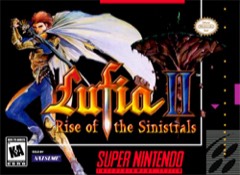
Neverland developed it as a prequel to Lufia & the Fortress of Doom, telling the story of the hero Maxim and the first war against the Sinistrals, four god-like beings set on ruling the world. Taito published it in Japan in 1995. Natsume brought it to North America around September 1996, after a delay from May, and Nintendo released it in Europe and Australia, simply titled Lufia because the first game never came out there.
It arrived when the SNES was near its end and the RPG spotlight was on bigger names, and it sold modestly: just over 60,000 cartridges in Japan. Its reputation has grown since: Nintendo Life calls it one of the best RPGs on the console, and IGN ranks it among its top 40 SNES games. In 2010 Neverland remade it for the DS as Lufia: Curse of the Sinistrals, an action RPG.
How it plays today
The dungeons are the best reason to play, and they hold up superbly. Each puzzle is a small, fair problem, and because monsters move only when you move, fights become part of the puzzle too. The Ancient Cave alone could fill weeks, and the story, once it gets going, lands harder than you expect from a game this cheerful.
The rest is more ordinary. Menu battles on the world map are easy and a little slow, the early hours move sluggishly, and the North American release shipped with some text and graphics glitches that only the European version fixed. Some later puzzles are hard enough that you will reach for a guide. None of that outweighs the dungeon design, which few SNES RPGs match.
Compared with
Why it matters
Tucked away in one town in Lufia II is the Ancient Cave: 99 floors, different every time, and you go in at level one with nothing. It does not advance the story. Nobody in the game needs you to do it. People lose weeks there anyway.
Bernard Suits put it best: playing a game is 'the voluntary attempt to overcome unnecessary obstacles'. Lufia II is a love letter to unnecessary obstacles. Its dungeon puzzles, where monsters move only when you do, are small, fair problems, and solving them yourself is the whole reward. Johan Huizinga described the magic circle, a space set apart from ordinary life with its own order. The Ancient Cave is a circle drawn inside a circle, a game within the game, stripped back until only the rules and your nerve are left. It sold modestly and nearly vanished. Its reputation grew anyway, carried by players who could not stop talking about a hole in the ground.
Read: The magic circle: the world that rules make →
- Suits, B. (1978). The Grasshopper: Games, Life and Utopia.
- Huizinga, J. (1938/1949). Homo Ludens: A Study of the Play-Element in Culture.
What you're levelling up
You have been training these without noticing. Here is how to do it on purpose, and where it pays off away from the couch. All the skills games teach →
Problem solving
In the game. Hundreds of dungeon puzzles solved with a bow, bombs and a hookshot, and monsters only move when you do. Each one is a small, fair problem.
Do it on purpose. Next time a puzzle has you stuck, give it ten more minutes with no guide. Say every idea out loud, even the dumb ones.
Off the couch. Sitting with a problem a bit longer than feels comfortable is what separates good tradies, coders and students from the rest.
Planning ahead
In the game. Because monsters only move when you move, every step in a dungeon is a chess move. Fights become part of the puzzle.
Do it on purpose. Before you step, picture where each visible monster will be after your move. Check if you called it.
Off the couch. Thinking a step ahead in a conversation, like not bringing up the ex on a first date, makes you easier company. It's just respect for how things land.
Judging risk
In the game. The Ancient Cave is 99 random floors, and you start at level one with nothing. Every floor you ask: push on or bank it?
Do it on purpose. Set a rule before you dive: you leave when health drops below a line you pick. Stick to it and see how deep you get.
Off the couch. Knowing when to cash out is gold at the casino, in a share market dip, and at 1am when the night's been good. Leave on a high.
Verdict · 8/10
A late SNES RPG with some of the best puzzle dungeons of the era and a roguelike cave that could keep you busy for months. Worth tracking down.