What it was
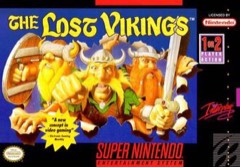
Erik the Swift, Baleog the Fierce and Olaf the Stout are snatched by Tomator, emperor of the alien Croutonians, for his intergalactic zoo. They break out of his ship and land lost in time, and have to cross strange places and eras, and finally beat Tomator, to get home.
You control one Viking at a time and switch whenever you like. Erik runs, jumps and headbutts through some walls. Baleog has a sword and a bow, and an arrow can hit a switch across the room. Olaf carries a shield that blocks shots, works as a hang glider and makes a step for the others to stand on. None of them can finish a level alone, and all three must reach the exit. Each has three hit points, and items like keys, bombs and food can be passed between them when they stand close. Lose one and you carry on, but the level can no longer be won, so you start again. Continues are unlimited.
Where it sits in history
Silicon & Synapse, the studio that became Blizzard Entertainment, made it, and Interplay published it on the Super NES in 1993, before versions for Amiga and MS-DOS later that year and Amiga CD32 and Mega Drive in 1994. T&E Soft released it in Japan. The idea began with Lemmings: hundreds of tiny Vikings with different jobs. Because it was made for consoles and TV screens, that shrank to bigger characters you steer directly, first five and then three, in bright colours that would read on a telly.
Nintendo Power ranked it the seventh-best Super NES game of 1993, and IGN later put it 30th among the console's top 100. The Mega Drive version added five levels and three-player play. A sequel followed in 1997, and the trio turned up in Rock n' Roll Racing, World of Warcraft and Heroes of the Storm. In 2021 Blizzard put the Super NES and Mega Drive versions, and a Definitive Edition combining them, into the Blizzard Arcade Collection.
How it plays today
Very well. The three Vikings are such clear tools that the puzzles explain themselves: you look at a room and think, Olaf goes first, then Erik, and Baleog shoots that switch. The jokes, the banter between the three and the bright art keep it light.
Thirty-seven levels is a lot, and losing one Viking to a careless fall means restarting the level, which tests patience late on. Play it with someone on the couch calling out ideas, even if only one of you holds the controller.
Compared with
- Lemmings: The game that started the idea, with dozens of tiny workers instead of three named ones.
- The Lost Vikings 2: The 1997 sequel, with the same three back.
- Rock n' Roll Racing: The 1993 racer where Olaf can be unlocked as a hidden driver.
- Blackthorne: A darker platformer whose 32X version hides all three Vikings in a secret area.
Why it matters
The Lost Vikings is a game about needing other people. Erik is fast but fragile, Baleog fights but cannot defend himself, Olaf is safe but slow. Any one of them on his own is stuck. Together they are a plan.
Ryan, Rigby and Przybylski found that games satisfy three needs, competence, autonomy and relatedness, and that this predicts enjoyment. Most games feed the first two. This one is built on the third: the satisfaction of a level is three different people arriving at one door, and no one gets to leave early.
Read: The second controller →
- Ryan, R. M., Rigby, C. S., & Przybylski, A. (2006). The motivational pull of video games: A self-determination theory approach. Motivation and Emotion, 30(4), 344-360. doi:10.1007/s11031-006-9051-8
What you're levelling up
You have been training these without noticing. Here is how to do it on purpose, and where it pays off away from the couch. All the skills games teach →
Teamwork
In the game. Erik runs and headbutts, Baleog shoots switches, Olaf's shield blocks shots and makes a step. None can finish alone, and all three must reach the exit.
Do it on purpose. Play with someone on the couch calling the plan while you hold the pad. Swap every level.
Off the couch. Each person being good at one thing is how mates pull off a trip, or a couple pulls off a move. Knowing your bit and trusting theirs is attractive.
Problem solving
In the game. You look at a room and think: Olaf first, then Erik, and Baleog shoots that switch. The three are such clear tools the puzzles explain themselves.
Do it on purpose. Before moving anyone in a new room, say the full plan out loud. Then play it and note where it broke.
Off the couch. Breaking a messy problem into who does what is how jobs get finished. It's also how a share house finally sorts the bins.
Judging risk
In the game. Lose one Viking to a careless fall and the level can't be won, so you start again. One bit of rushing costs all three.
Do it on purpose. Before any risky jump, ask what happens if this Viking dies. If the answer is a restart, look for another way first.
Off the couch. Some risks only cost you; some cost everyone. Know which kind it is before you have a go, at work or out with mates.
Verdict · 9/10
A small, perfect idea: three people, each good at one thing, who only get home together. Still clever, still funny.