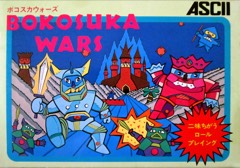
What it was
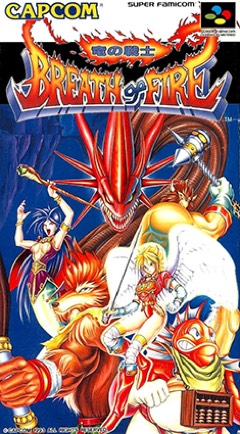
A turn-based role-playing game in the classic top-down style. You are Ryu, one of the last of the Light Dragon Clan, who wakes to find his village burning and his sister Sara taken by the Dark Dragon Empire. To get her back he has to gather six keys that seal away a goddess before Emperor Zog can.
Along the way seven others join: Nina, a winged princess; Bo, a wolf-man; Karn, a thief who can fuse party members into one fighter; Gobi, a fish-man merchant; Ox, a blacksmith; Mogu, a mole who digs; and Bleu, an immortal sorceress. Each has a field skill that opens paths or finds secrets, and you can swap reserve members in even mid-battle. Ryu himself learns to turn into dragons. Enemies show a health bar instead of numbers, and bosses keep fighting after it empties.
Where it sits in history
Capcom calls it its first traditional RPG. Yoshinori Kawano designed it, Tokuro Fujiwara of Ghosts 'n Goblins produced it, and Keiji Inafune drew the first characters before being moved off the project; Tatsuya Yoshikawa kept many of his ideas. Four members of the Alph Lyla sound team, Yoko Shimomura among them, wrote the music. Look for Chun-Li hiding in the world.
It came out in Japan on 3 April 1993. Capcom's American office lacked experience with text-heavy RPGs, so Square Soft handled the English version, released in August 1994 and advertised as 'from the makers of the Final Fantasy series'. Ted Woolsey translated it, and tight text boxes forced many names into abbreviations.
It sold modestly in North America at first, then picked up after Breath of Fire II arrived in December 1995, a 'rare second wind' in Nintendo Power's words. A Game Boy Advance version in 2001 added quick saves and a dash button, and finally brought it to Europe.
How it plays today
This is a comfortable, slightly old-fashioned journey. The random battles come often and the plot runs on familiar rails, which critics noted even then. What lifts it is the party: a game where the thief fuses your friends and the fish-man turns into a giant fish to carry you never gets dull for long.
Ryu's dragon forms are the reward for patience. Expect to grind a little, enjoy the music, and use the dash and quick save if you play the handheld version.
Compared with
- Breath of Fire II: The direct sequel, which gave the first one its second wind.
- Final Fantasy IV: Square's own RPG of the time; its advertising sold Breath of Fire as being from the same makers.
- Secret of Mana: Ted Woolsey's other Square translation from the same years.
Why it matters
Ryu does not win alone. He wins because a thief, a merchant, a smith and a mole each bring the one thing he cannot do. Ryan, Rigby and Przybylski found that games feed our need for competence, autonomy and relatedness, and that this predicts how much we enjoy them. Breath of Fire puts relatedness right into the rules: half its puzzles open only when you call on the right friend.
That is a gentle lesson in a game about dragons. Strength is a party, not a person.
Read: The second controller →
- Ryan, R. M., Rigby, C. S., & Przybylski, A. (2006). The motivational pull of video games: A self-determination theory approach. Motivation and Emotion, 30(4), 344-360. doi:10.1007/s11031-006-9051-8
What you're levelling up
You have been training these without noticing. Here is how to do it on purpose, and where it pays off away from the couch. All the skills games teach →
Teamwork
In the game. Eight party members, each with a field skill: Mogu digs, Gobi turns into a fish to carry you, Karn fuses friends into one fighter. You swap reserves in even mid-battle.
Do it on purpose. Play a whole dungeon with the party member you use least. Find what they're actually good at.
Off the couch. Every team has the quiet one with a skill nobody's asked about. Find it, and you're the one people want to work with.
Planning ahead
In the game. Random battles come often and bosses keep fighting after their health bar empties. Running out of healing halfway into a dungeon hurts.
Do it on purpose. Before a dungeon, write down what you expect to need. Compare after and adjust for the next one.
Off the couch. Money's the obvious one: know what's coming before payday. Also planning a weekend away so it's relaxed, not chaos.
Bouncing back
In the game. Bosses keep swinging after their health bar empties, so a fight you thought you'd won turns on you. You heal, regroup and finish it.
Do it on purpose. Set a goal for one session, a level or a key, and stop when you hit it. Small wins stacked up.
Off the couch. Getting fit, saving money, learning to cook. Nothing big happens in one go. Whoever keeps turning up gets there.
Verdict · 7/10
A traditional quest with an untraditional party. Slow in places, warm throughout, and a fine first step for a long series.