What it was
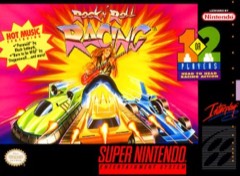
An isometric racing game where shooting matters as much as steering. Four cars, up to two of them human, race four laps on tracks full of hills, dips and guard rails you can fly over. Your car carries forward weapons, rear weapons and a boost, all refilled each lap, and when a car blows up it reappears seconds later, so the only real damage is lost ground.
Finishing blows earn cash, and cash buys engines, tyres, shocks, armour, more ammunition and eventually a better car. Points carry you through two divisions on each planet. A commentator, Loudmouth Larry, voiced by Larry Huffman, narrates the carnage, and in two-player mode a slower friend can be left behind with the question 'Leave your loser friend behind?'
Where it sits in history
Silicon & Synapse, the studio that would rename itself Blizzard Entertainment, developed it as RPMII, a sequel to its own RPM Racing. Interplay published it on the Super NES in 1993 and on the Genesis in 1994. Near the end, Interplay's marketing team added licensed music and the new name. The studio had wanted ZZ Top, but the fee was too high, so the songs came through a low-cost licensing company instead: 'Bad to the Bone', 'Highway Star', 'Paranoid', 'Peter Gunn' and 'Born to Be Wild', all uncredited.
Electronic Gaming Monthly named it the best driving game of 1993, and Game Informer counted its soundtrack among the best on the console. A Game Boy Advance port followed in 2003. For Blizzard's 30th anniversary, the 2021 Blizzard Arcade Collection included the original and a Definitive Edition with four-player split-screen, rewind, and the songs in their real recordings.
How it plays today
It is still a great racer. The cars have weight, the isometric hills keep you guessing, and the upgrade loop between races is quick and satisfying. One player gets repetitive across planets, as reviewers said at the time, but two players turns it into a shouting match.
The SNES chip versions of the songs are half the charm: 'Paranoid' squeezed through 16-bit sound is ridiculous and wonderful. If you can, play the collection, which lets you choose.
Compared with
- RPM Racing: The studio's earlier racer, which this began life as a sequel to; rougher, and worth playing once to see the jump.
- R.C. Pro-Am: Rare's 1988 NES racer, which the game closely resembles.
- The Lost Vikings: Silicon & Synapse's puzzle game from the same year, re-released in the same collection.
Why it matters
Rock n' Roll Racing knows what Ryan, Rigby and Przybylski found: games hold us when they feed our sense of competence, autonomy and connection to others. Every race pays you in cash, every upgrade is your choice, and the next race shows the difference. You feel yourself getting better because your car visibly does.
Then the commentator yells your name, your friend's missile clips you into the lava, and you are back on the track in seconds. Failure costs a few places, not the game, so you keep coming back for one more season.
Read: Wanting, not liking: what dopamine really does when you play →
- Ryan, R. M., Rigby, C. S., & Przybylski, A. (2006). The motivational pull of video games: A self-determination theory approach. Motivation and Emotion, 30(4), 344-360. doi:10.1007/s11031-006-9051-8
What you're levelling up
You have been training these without noticing. Here is how to do it on purpose, and where it pays off away from the couch. All the skills games teach →
Planning ahead
In the game. Cash buys engines, tyres, armour and eventually a better car, but a new car wipes every upgrade you bolted onto the old one. Buy the car too early and you start the next planet on bald tyres.
Do it on purpose. Before you spend, write down which upgrade wins you the most races. Test it, then commit.
Off the couch. Spending on what actually helps, whether that's a course, a tool or a decent pair of shoes, beats buying shiny stuff.
Winning and losing well
In the game. Two players turns it into a shouting match, complete with Larry asking if you want to leave your loser friend behind.
Do it on purpose. After each race against a mate, winner shuts up for one minute. Loser says what they'll do differently.
Off the couch. Banter is great until it isn't. Knowing where the line is with mates, and with someone you're chatting up, makes you fun instead of tiring.
Hand-eye coordination
In the game. Steering through isometric hills while firing forward and rear weapons and timing a boost. Hands busy, eyes everywhere.
Do it on purpose. Do a race using rear weapons only. It forces you to watch behind you while driving forward.
Off the couch. Great for actual driving: mirrors, road and traffic all at once. Being a calm, capable driver is a good look.
Verdict · 8/10
Missiles, upgrades and a heavy metal cassette: one of the best racers on the Super NES. Better still with a second player to leave behind.