What it was
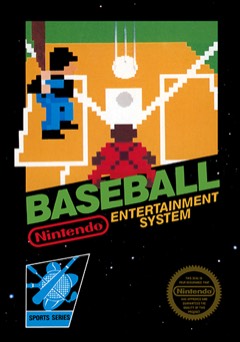
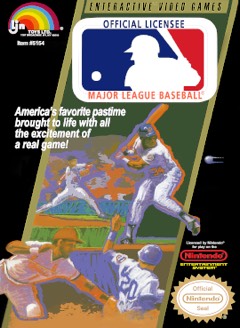
Pick one of six teams, and the only thing that changes is the colour of the uniforms. There are no player names or team licences, just initials that point at real leagues. You pitch, you bat, you run, and the computer or a friend does the same.
Pitching is where IGN found the game's depth, and two people soon learn to read each other. Batting is a matter of timing one swing. Fielding mostly happens to you. It is baseball in outline, and in 1983 that was the point.
Where it sits in history
Shigeru Miyamoto wanted a baseball game on the Famicom and took charge of its design and characters himself. It came out on 7 December 1983, a few months after the console launched with three games. An arcade version, VS. Baseball, added better graphics and speech in 1984 and was a hit in Japanese and American arcades that year.
When Nintendo tested the NES in Manhattan in 1985, Baseball was one of the 17 launch games and one of the most visible. Real major league players played it on a big projector screen and signed autographs. America's game market had crashed two years before, and a sport everyone knew was easier to sell than abstract games like Clu Clu Land. It reached Europe in 1986 and was a Game Boy launch game in 1989. It sold 2.35 million copies in Japan and 3.2 million on Famicom and NES worldwide, and it inspired Namco's Family Stadium, the series that became R.B.I. Baseball.
How it plays today
Thin. With one player there is little to do once you have found a pitch the computer cannot hit, and GameSpot was right in 2006 that the bare-bones version of the sport has not aged well.
With two players it is better than it looks. The duel between pitcher and batter is real, quick and readable, which is what IGN saw in it in 2007 when it praised the pitching and the two-player fun.
Compared with
- R.B.I. Baseball: The series Baseball inspired, by way of Namco's Family Stadium.
- Bases Loaded: Another NES baseball game from a few years later.
- Tennis: Another early Nintendo sports game, simple, two-player, and just as historically useful.
Why it matters
Erving Goffman wrote that a game builds a shared world with its own rules about what matters. Most early video games had to teach that world from scratch. Baseball arrived with it already built: everyone in the room knew what a strike was and why a home run counts.
That is why it could go up on a projector screen in 1985 and make strangers stop. The machine was new and the game was not. Two people who had never touched a controller could share it in a minute, because they had shared the sport for years.
Read: The second controller →
- Goffman, E. (1961). Encounters: Two Studies in the Sociology of Interaction ('Fun in Games').
What you're levelling up
You have been training these without noticing. Here is how to do it on purpose, and where it pays off away from the couch. All the skills games teach →
Reading people
In the game. With two players the duel between pitcher and batter is real, quick and readable. You learn your mate's habits within a few innings.
Do it on purpose. Spend one innings just watching which pitch your mate always swings at. Then throw it somewhere else.
Off the couch. Knowing when someone's keen, bored or nervous is most of what makes a person good company. Watch first, then talk.
Timing and rhythm
In the game. Batting is a matter of timing one swing. Early and you whiff, late and you're out.
Do it on purpose. Take ten pitches without swinging and just count the beat. Then swing on that count.
Off the couch. Sport, music, landing a joke. People with good timing look relaxed because they're not rushing.
Winning and losing well
In the game. With one player, find a pitch the computer can't hit and it's over. With a mate, it's a real contest and somebody's going to lose.
Do it on purpose. After every loss, say 'good game' and mean it. Then ask for a rematch.
Off the couch. How someone handles losing tells you more than almost anything. A good loser makes a good mate, a good boss and a good partner.
Verdict · 5/10
More important than good. Worth a go with a friend for the pitching duel and for the part it played in getting the NES into American homes.