What it was
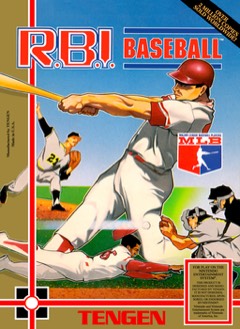
Baseball, pitch by pitch, with the players who actually played it. In America that meant eight teams named only by city, Boston, California, Detroit, Houston, Minnesota, New York, St. Louis and San Francisco, the division winners of 1986 and 1987, plus an American League and a National League all-star side. No logos, no nicknames, but real names on the roster.
Names mattered because they came with abilities. Each batter and pitcher played like himself, more or less, so choosing who to send up was a real decision, not a coin toss between identical sprites.
Where it sits in history
Namco programmer Yoshihiro Kishimoto had time on his hands while a colleague finished planning Toy Pop. He and his workmates spent it playing Nintendo's Baseball on the Famicom and grumbling about it: no player names, no player abilities, no real defence. When Toy Pop was done, his boss told him to make whatever he liked. He made a baseball game, his first on the Famicom and his first in assembly code, and Namco's first baseball video game.
Pro Yakyū: Family Stadium came out in Japan on 10 December 1986 for the Famicom and the arcade VS. System. Famitsu gave it 35 out of 40, named it Best Sports Game, and it sold more than 2.05 million copies, one of the best-selling Famicom games. Atari Games brought the arcade version to North America in September 1987. Tengen published the NES cartridge as R.B.I. Baseball in June 1988, one of only three games Tengen released with Nintendo's licence, and Atari's Peter Lipson localised it. It was the first console game licensed by the Major League Baseball Players Association, and it topped the American sales charts in August 1988.
How it plays today
Surprisingly well. The pitcher-batter duel is quick and readable, games move fast, and the all-star teams are a who's who of the late 1980s. It is still a fine two-player game on one couch.
Alone, it is thinner. With ten teams to choose from, it is best treated as an exhibition game: pick your side, settle a score, play again.
Compared with
Why it matters
Family Stadium began as a complaint. A few colleagues played someone else's baseball game in their spare time, kept saying how they would fix it, and one of them was given the time to try. A lot of good things begin exactly there: in play, among friends, with a shared gripe.
Self-determination research finds people enjoy games most when they feel competent, free to choose and connected to others. Kishimoto got all three at work, and then put them in the box: real names with real abilities to choose between, and a second controller for a mate.
Read: The second controller →
- Ryan, R. M., Rigby, C. S., & Przybylski, A. (2006). The motivational pull of video games: A self-determination theory approach. Motivation and Emotion, 30(4), 344-360. doi:10.1007/s11031-006-9051-8
What you're levelling up
You have been training these without noticing. Here is how to do it on purpose, and where it pays off away from the couch. All the skills games teach →
Reading people
In the game. The pitcher-batter duel is the whole thing. Against a mate, you learn whether they always swing at the first pitch.
Do it on purpose. Spend three innings just watching your mate's swing habits. Then pitch to them on purpose.
Off the couch. Reading whether your boss wants detail or a headline, or whether your date wants advice or just to be listened to, is the same skill.
Systems thinking
In the game. Each real player came with real abilities, so picking who to send up is a proper decision. The roster is a system, not ten identical sprites.
Do it on purpose. Pick your batting order on purpose before a game: speed up top, power in the middle. See if it scores more than random.
Off the couch. Putting the right people in the right spots works at work, on a sports team, even planning a group trip.
Winning and losing well
In the game. It's one of the quickest ways to settle an argument over baseball. Pick your side, settle the score, play again.
Do it on purpose. Lose a game? Rematch straight away, same teams, no complaints about the computer.
Off the couch. Someone who can take a loss and laugh about it is easy to be around. People want to play them again.
Verdict · 7/10
A game made by a player who wanted a better game, and it shows. Still one of the quickest ways to settle an argument over baseball.