What it was
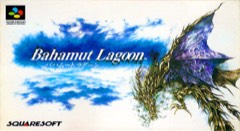
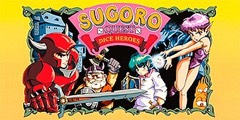
Square's 1996 Super Famicom tactical RPG is set on the floating lands of Orelus. You're Byuu, a silent captain of the Dragon Squad in the kingdom of Kahna, and the Granbelos Empire has invaded. You lead a squadron of four, picked from six squad leaders, and each leader has a dragon.
Here's the hook: dragons aren't yours to command. You give them general orders such as 'Go!' or 'Wait!' and they get on with it. You evolve them by feeding them weapons, armour, accessories and items. Feed them what they like and loyalty climbs; feed them what they don't and it drops, though you can still use that food to make a dragon stronger.
Where it sits in history
Hitoshi Sasaki, known for graphic design on Final Fantasy VI, came up with the idea: a game he had wanted to make for years. It began as a traditional RPG with random encounters and shifted to tactics, and it was at one point titled 'Final Fantasy Tactics'. Production started in 1994 and ran two years at Square's Development Department 6. Kazushige Nojima directed, and Motomu Toriyama wrote the scenario. Noriko Matsueda composed the music.
Sasaki's setting came from a memory of flying over the Izu Peninsula and wanting to capture a floating lagoon. Dragon breeding came in during the second half of development. Programmer Hiroshi Ono wanted the dragons to exist as their own creatures, run by the game's AI, and Sasaki compared them to pets. An abandoned idea had them fighting and eating each other mid-battle.
It was released on 9 February 1996, one of Square's last Super Famicom releases before the move to PlayStation. It sold over 474,600 copies that year, the 17th best-selling game of 1996. It came to Wii Virtual Console in Japan in 2009 and Wii U in 2014. It has never been officially released outside Japan. A fan translation by Near came out in 2021.
How it plays today
Reviewers split on difficulty. One found it unexpectedly high; another thought it too easy. The dragon raising is what everybody picks out, and Nintendo Life said it stands apart from other tactics games.
If you only play it in English, that means a fan patch. We don't link to those. Know that it exists and that Near spent more than twenty years on and off getting it right.
Compared with
- Front Mission: Square's other tactics game from the same era, with mechs instead of dragons.
- Tactics Ogre: Let Us Cling Together: The Quest tactics game that arrived the year before.
- Final Fantasy VI: Sasaki's previous job. Edge rated Bahamut Lagoon's sprite work among the best on the system, and you can see where he learnt it.
Why it matters
Ryan, Rigby and Przybylski found games satisfy needs for competence, autonomy and relatedness, and that predicts wanting to play again. Bahamut Lagoon leans on relatedness in an odd way: you grow attached to creatures that act on their own.
That's the pet feeling. You can't make a dragon do exactly what you want, only feed it well and trust it. A lot of care is that: you shape what you can, then let go.
Read: The second controller →
- Ryan, R. M., Rigby, C. S., & Przybylski, A. (2006). The motivational pull of video games: A self-determination theory approach. Motivation and Emotion, 30(4), 344-360. doi:10.1007/s11031-006-9051-8
What you're levelling up
You have been training these without noticing. Here is how to do it on purpose, and where it pays off away from the couch. All the skills games teach →
Planning ahead
In the game. Each dragon evolves according to what you feed it, so what you give it now decides what you have later.
Do it on purpose. Before feeding a dragon, write down the type you want and which items lead there.
Off the couch. Saving, training for a race or choosing a degree. What you feed it today is what you get in a year.
Systems thinking
In the game. Squads of four, six leaders, a dragon each, food preferences and loyalty all push on one another.
Do it on purpose. Change one thing, such as who leads the squad, and note what else it shifts.
Off the couch. Running a household, a rental or a team. Pull one lever and watch what moves.
Reading people
In the game. Feed dragons what they like and loyalty rises; feed them what they don't and it falls.
Do it on purpose. Work out each dragon's favourite food before you feed anything else.
Off the couch. Knowing a mate's coffee order and what they can't stand. It's a small thing and people notice.
Verdict · 8/10
A strange and inventive tactics RPG about raising creatures you only half control. Hard to play legally in English.