What it was
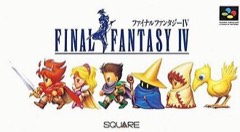
Cecil Harvey is the captain of Baron's airship fleet, the Red Wings, and the game opens with him carrying out an order he knows is wrong. Final Fantasy IV is the story of what he does next: a dark knight turning to the light, set against a sorcerer named Golbez who is gathering the world's crystals. Friends join, leave, betray him and sometimes die. Twelve characters pass through the party, each with a fixed role, from Rosa the white mage to Kain the dragoon.
The big change was in battle. The Active Time Battle system gives each character a gauge that fills in real time, and enemies act when their turn comes, whether or not you have chosen. Hesitate and you take the hit. Up to five fight at once, a first for the series, and you can place each one in the front or back row.
Where it sits in history
Square first planned a Famicom game and a Super Famicom game, but dropped the Famicom one and made this its first 16-bit Final Fantasy, released in Japan in 1991. A team of 14 finished it in about a year. Takashi Tokita, on his first full-time Square project, wrote the scenario; Hironobu Sakaguchi supplied the story; Hiroyuki Ito designed the Active Time Battle after watching Formula One cars pass each other at different speeds. Nobuo Uematsu wrote the score, and the team reworked the sound late in development after hearing Yuzo Koshiro's ActRaiser.
Cartridge space forced the script down to a quarter of its planned length. In North America it came out as Final Fantasy II, because the real second and third games hadn't been released there, and it was partly based on an easier version Square had made for Japan. The Active Time Battle went on to be used in five more Final Fantasy games.
How it plays today
The story still works, and its pace is the reason. Short dialogue and fast turns keep scenes moving, the cast is memorable, and the timed battles make even routine fights feel alive. Uematsu's score does a lot of the emotional heavy lifting, and it holds up. Level rewards are balanced so you rarely have to grind.
Its limits show. You can't choose your party for most of the game, so strategy is shaped by who the story hands you. The original English script is stiff and cut down, and some story turns arrive without enough set-up. Random battles come thick in the later dungeons. A later version with a revised translation fixes the worst of the script.
Compared with
- Final Fantasy VI: Three years later, VI takes the timed battles and dramatic storytelling of IV and spreads them over a much bigger cast.
- Final Fantasy: The NES original lets you build your own four heroes; IV swaps that freedom for written characters and a real plot.
- Dragon Warrior IV: Another story-led role-playing game with a large cast, told in chapters, but still in the older turn-by-turn style.
Why it matters
Final Fantasy IV opens with Cecil Harvey carrying out an order he knows is wrong. The rest of the game is Cecil trying to become someone better, and the player walks every step of that turn from dark knight to the light.
Andrew Przybylski and colleagues found games are most engaging when playing a character brings people closer to their ideal self. Cecil makes a neat test case. Few players see themselves in an airship captain, but most know what it is to go along with something and regret it. Playing Cecil's turn lets you rehearse the version of yourself that says no next time. The Active Time Battle adds its own quiet lesson: hesitate and you take the hit. Choices happen whether or not you have finished deciding. Cartridge space cut the script to a quarter of its planned length, and the story still lands, because the idea at its heart is simple and common. We all want to be better than our worst order.
Read: Who you are when you play →
- Przybylski, A. K., Weinstein, N., Murayama, K., Lynch, M. F., & Ryan, R. M. (2012). The ideal self at play: The appeal of video games that let you be all you can be. Psychological Science, 23(1), 69-76. doi:10.1177/0956797611418676
What you're levelling up
You have been training these without noticing. Here is how to do it on purpose, and where it pays off away from the couch. All the skills games teach →
Keeping your cool
In the game. Active Time Battle means enemies act when their gauge fills, whether you've chosen a move or not. Hesitate and you take the hit.
Do it on purpose. In a tough fight, decide your next two commands while the gauges fill, so you're never caught staring at the menu. Notice when you freeze.
Off the couch. Meetings, footy, a job interview question you didn't see coming. Life doesn't wait for you to finish deciding. A calm, decent answer now beats a perfect one late.
Story sense
In the game. Cecil opens the game carrying out an order he knows is wrong, then spends it turning from dark knight to the light. Friends join, leave, betray him and sometimes die.
Do it on purpose. When a character turns on Cecil, stop and work out why from their side before the game tells you.
Off the couch. Owning it when you got something wrong is rare and attractive. With mates, at work or with someone you're seeing, 'I stuffed that up, here's the fix' says more than any compliment.
Teamwork
In the game. Up to five fight at once, each with a fixed role, from Rosa the white mage to Kain the dragoon, and you set each one in the front or back row.
Do it on purpose. Before each boss, give every character one job and the right row. If it goes wrong, ask which role you neglected.
Off the couch. Every workplace has a Rosa and a Kain. Knowing who does what, and putting them where they shine, is what good bosses do.
Verdict · 9/10
The game that made Final Fantasy a story series, and still a brisk, dramatic play. The original shows its age in the script; the story and battles don't.