What it was
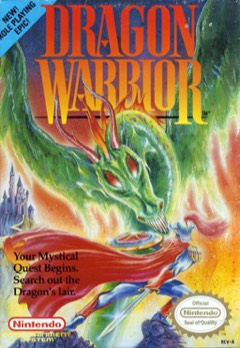
From the throne room where you start, you can see the castle of the Dragonlord across the water. Getting there is the whole game. One hero, alone, walks out of Tantegel Castle with a little gold, fights slimes in the fields, buys better gear and slowly pushes further out, because the monsters get stronger the further you stray.
Battles are turn-based, one enemy at a time, seen through the hero's eyes with four commands: fight, run, spell, item. Die and the king revives you with half your gold gone. Towns hold inns, shops and people who drop the clues you need. There are only five towns and five dungeons, and that small scale is part of its clarity.
Where it sits in history
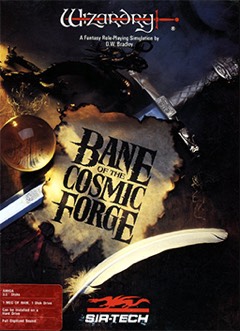
Yuji Horii created it at Chunsoft, published by Enix in Japan in May 1986 as Dragon Quest. Horii loved Wizardry and Ultima but saw that most Famicom owners would bounce off their complexity, so he stripped the genre down to one hero, a visible goal and a gentle early curve. Akira Toriyama of Dragon Ball drew the characters and Koichi Sugiyama wrote the score. It sold 1.5 million copies in Japan and started a series.
Nintendo brought it to North America in August 1989 as Dragon Warrior, the name changed to avoid a clash with a tabletop game called DragonQuest. The localisation added a battery save in place of passwords, sprites that face the way they walk, and dialogue in mock-Elizabethan English. It sold slowly until Nintendo gave copies away to Nintendo Power subscribers, which drew in close to half a million new subscribers and cleared the way for its sequels.
How it plays today
As history, it is essential. As a game, it asks for patience. The early hours are brisk and the sense of pushing one bridge further from the castle each time is real. But one-on-one fights against the same few enemies, repeated for hours to afford the next sword, is the core loop, and it wears thin in the middle.
The old command menu, where you choose 'stairs' to take the stairs and 'door' to open a door, is charming for about an hour. The music holds up completely. If you want to see where every Japanese RPG began, play it with a guide nearby and set aside a weekend; if you just want a good RPG, start with one of its sequels.
Compared with
- Final Fantasy: Square's answer gave you a whole party and busier battles; Dragon Warrior is lonelier and simpler.
- The Legend of Zelda: Both let you roam a fantasy world from the start, but Zelda trades levels and turns for real-time sword swings.
- Dragon Warrior III: The prequel in the same trilogy is bigger in every direction, and Famitsu ranked it higher.
Why it matters
Somewhere around the fourth hour, you are walking in circles outside a town, fighting the same few monsters one at a time, saving for a sword you can already picture. Are you enjoying it? Hard to say. Do you stop? Almost never.
Kent Berridge and Terry Robinson argued that dopamine is more about wanting than liking: it marks a thing as worth chasing, which is a different job from the pleasure of having it. Dragon Warrior runs on that gap. The Dragonlord's castle sits in view from the very first throne room, and every gold coin is a step toward the next bridge, the next sword, the next patch of map. The wanting carries you through stretches the liking never would. Yuji Horii built a whole genre on that pull. It is worth knowing how it works, not to resist it, but to notice when the grind has stopped being fun and still has hold of your hands.
Under the menus, every swing in Dragon Warrior is settled by chance: a hit lands or misses, the damage falls somewhere in a range. It is the tabletop dice roll moved inside the machine, which is where Japanese RPGs came from.
Read: Wanting, not liking: what dopamine really does when you play →
- Berridge, K. C., & Robinson, T. E. (1998). What is the role of dopamine in reward: hedonic impact, reward learning, or incentive salience? Brain Research Reviews, 28(3), 309-369. doi:10.1016/S0165-0173(98)00019-8
What you're levelling up
You have been training these without noticing. Here is how to do it on purpose, and where it pays off away from the couch. All the skills games teach →
Judging risk
In the game. The further you stray from Tantegel, the nastier the monsters. Die and the king revives you with half your gold gone, so every push past the next bridge is a bet.
Do it on purpose. Before you cross a bridge, say how many fights you reckon you can survive. Head back at that number and see if you called it right.
Off the couch. Asking for a raise, buying shares, asking someone out. Push too early and you lose half your gold; wait forever and you never get anywhere. Learn what a good bet feels like.
Curiosity
In the game. Towns hold people who drop the clues you need. Skip the chat and you'll be wandering the map for hours.
Do it on purpose. Talk to every person in each town and write down anything that sounds like a hint. Tick it off when it pays.
Off the couch. Most good tips in life come from asking people stuff. Whoever chats to the barista, the neighbour and the new starter at work hears about the job first.
Spatial thinking
In the game. From the first throne room you can see the Dragonlord's castle across the water. Five towns and five dungeons: a world small enough to hold in your head.
Do it on purpose. Play with no map open and sketch the world on paper as you go. Check it against the real one when you finish.
Off the couch. Moving to a new suburb. Learn where everything sits and you're the one who picks the spot for dinner, not the one asking Google.
Verdict · 6/10
The template for the Japanese console RPG, clear and lean, but repetitive by any modern measure. Play it for what it started.