What it was
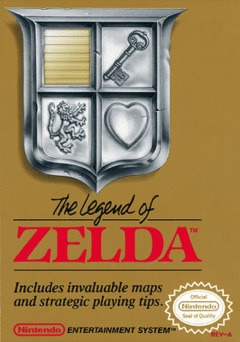
You start on a single screen of Hyrule with a small shield and nothing else. A cave to the north holds an old man and a sword. Past that, the game tells you almost nothing: eight dungeons hide the pieces of the Triforce of Wisdom, and finding them is your problem.
It plays from overhead, one screen at a time. You fight, collect rupees, buy gear, burn bushes and bomb walls looking for secrets. Each dungeon hands over a tool, such as the boomerang or the recorder that warps you between cleared dungeons, and each tool opens more of the map. Finish all nine dungeons and a harder Second Quest begins, with new dungeon layouts and moved secrets.
Where it sits in history
Shigeru Miyamoto and Takashi Tezuka directed and designed it, building it alongside Super Mario Bros. and deliberately pulling the two apart: Mario would run in a line, Zelda would let you wander. Koji Kondo wrote the music. It launched the Famicom Disk System in Japan on 21 February 1986, where the rewritable disk saved your progress.
The NES cartridge followed in North America and Europe in 1987, gold plastic showing through a hole in the box, with a battery inside so players could save. That was new for the console. The game sold more than a million cartridges in the US that year and about 6.5 million worldwide, and its hidden rooms fed the Nintendo Fun Club newsletter that grew into Nintendo Power.
How it plays today
Better than its age suggests, if you accept its terms. The combat is simple but honest, the overworld rewards poking at every rock and tree, and there is real pleasure in drawing your own map and cracking a dungeon with no help. Few games since have trusted players this much.
The trust cuts both ways. Some secrets are close to unguessable without the manual, the fold-out map or a friend, and several dungeon entrances are hidden behind walls you would only bomb on a hunch. Link's four-direction movement feels stiff next to later entries. Keep a guide or a hand-drawn map nearby, and do not be ashamed of either.
Compared with
- Zelda II: The Adventure of Link: The sequel swapped the overhead view for side-on sword fights and experience levels; this one is purer and easier to love.
- The Legend of Zelda: A Link to the Past: The SNES game keeps the overhead view and fixes almost every frustration here, with clearer hints and a far bigger toolkit.
- StarTropics: Nintendo's own overhead adventure borrows the dungeon structure and adds a story, but the world is linear where Hyrule is open.
Why it matters
Ask anyone who played it in 1987 how they found the last dungeons and you rarely hear about the game. You hear about a cousin, a kid at school, a fold-out map gone soft at the creases. The Legend of Zelda told you almost nothing, so people told each other, and the secrets travelled from the playground to a Nintendo newsletter that grew into Nintendo Power.
That is why it lingers. Tim Wildschut and colleagues found nostalgia is mostly positive, often features close others, and raises our sense of social connection and our regard for ourselves. Zelda memories fit the pattern almost too well: the person in them is rarely alone. The old man in the cave warns that it is dangerous to go alone, and players took the advice, just not the way he meant it. Going back to Hyrule now, pencil in hand, is partly a visit to the people who helped you draw the map.
Read: Why old games feel like home →
- Wildschut, T., Sedikides, C., Arndt, J., & Routledge, C. (2006). Nostalgia: Content, triggers, functions. Journal of Personality and Social Psychology, 91(5), 975-993. doi:10.1037/0022-3514.91.5.975
What you're levelling up
You have been training these without noticing. Here is how to do it on purpose, and where it pays off away from the couch. All the skills games teach →
Spatial thinking
In the game. One screen at a time and almost no help. Drawing your own map is half the game, and cracking a dungeon with no help feels earned.
Do it on purpose. Grid paper, a pencil, one session. Mark every screen as you go, then check it against a proper map when you're done.
Off the couch. People who can picture a place find their way round a new city without the phone. On a trip with someone, that's handy and a bit impressive.
Curiosity
In the game. The overworld rewards poking at every rock and tree, and several dungeon entrances hide behind walls you'd only bomb on a hunch.
Do it on purpose. Pick one stretch of the map and burn every bush and bomb every wall that looks off. Note what turned out to be hiding something.
Off the couch. Hunches are worth testing. The odd question at work or the side trip on a holiday is where the good stuff hides.
Problem solving
In the game. Eight dungeons hide the pieces of the Triforce, and the game tells you almost nothing. Finding them is your problem.
Do it on purpose. When stuck, write down every item, every screen you haven't explored and every hint you've heard. Try one thing per line.
Off the couch. Getting handed a job with no instructions is most first weeks at work. Listing what you know and trying things in order beats freezing.
Verdict · 9/10
For a lot of players, the first open world they ever explored, and still a lesson in trusting the player. Play it with a map, and with patience.