What it was
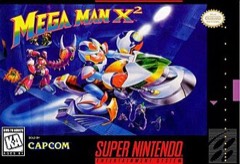
Six months after Sigma's defeat, X leads the Maverick Hunters, and the rebellion has not stopped. Three Mavericks calling themselves the X-Hunters take the North Pole and taunt X with something they have collected: the scattered body of his partner Zero, who died in the first game. Each of them waits in one of the eight Maverick stages, and beating one wins you a piece of your friend.
Underneath, it is Mega Man X as you remember it: eight bosses in any order, a weapon from each, wall climbs, Heart Tanks, Sub-Tanks and armour capsules tucked into corners. The dash is yours from the start now, and the new leg armour lets you dash in mid-air, which changes how you read every gap. There are ride-on vehicles in two stages, and if you meet the right conditions a capsule near the end grants an uppercut you might recognise from Street Fighter. Whether you gather all three Zero parts decides which Zero meets you in the final stretch: a friend at your side, or Zero rebuilt for Sigma and standing against you.
Where it sits in history
Capcom released Mega Man X2 in Japan on 16 December 1994, and in North America and Europe in 1995. Keiji Inafune stepped back from the art to plan, produce and write the X series. Designer Yoshihisa Tsuda recalled that bringing Zero back was Inafune's call, because he thought it would be a shame to keep him dead; Inafune had designed Zero and once meant him to lead the series, and would not allow big changes to his look. The X-Hunters began as sketches that had been merged into Sigma for the first game.
Unlike the classic series, the bosses were not drawn by fans. Sho Tsuge said the team wanted the X world to feel harder edged, with bosses refined by professionals. The cartridge carried Capcom's Cx4 chip for rotating and scaling wireframe effects, and the team met weekly to find uses for it. Yuki Iwai wrote most of the music.
How it plays today
It is tighter than the first X in small ways: the starting dash, the air dash, more hiding places to find. The Cx4 moments are brief, but the bosses look great and Overdrive Ostrich's desert run on a hover bike is a highlight. Critics asked for bigger changes, and they had a point; it is the first X again, sharpened.
What lifts it is the Zero hunt. The X-Hunters roam between stages, so you return to levels you have cleared, check who is waiting, and chase them down. It turns backtracking into a rescue.
Compared with
- Mega Man X: The first game, the one this refines; Zero's sacrifice there is what X2 sets out to undo.
- Mega Man X3: The third X game, out a year later, built on the same ground.
- Mega Man 7: The classic series on the same console a few months later, brighter and gentler.
Why it matters
Most games ask you to win. This one asks you to go and get your friend. The three Zero parts are optional, and the game would end without them. Ryan, Rigby and Przybylski found that games hold us when they meet three needs: feeling capable, feeling free to choose, and feeling connected to others. X2 folds the third into the first two. You choose where to look, you prove you can beat the hunters, and what you earn is a person.
A sprite in a red helmet is not a friend. But the urge to put him back together is real, and it is the same urge that sends us back for anyone we have lost.
Read: The second controller →
- Ryan, R. M., Rigby, C. S., & Przybylski, A. (2006). The motivational pull of video games: A self-determination theory approach. Motivation and Emotion, 30(4), 344-360. doi:10.1007/s11031-006-9051-8
What you're levelling up
You have been training these without noticing. Here is how to do it on purpose, and where it pays off away from the couch. All the skills games teach →
Teamwork
In the game. The X-Hunters carry the scattered body of Zero, your partner. Gather all three parts and he's a friend in the final stretch; miss them and he's not.
Do it on purpose. Make getting every Zero part your goal for the run. Track who's waiting in which stage before you pick one.
Off the couch. Going back for your mate when it costs you is what loyalty looks like. People remember who showed up.
Spatial thinking
In the game. The new leg armour lets you dash in mid-air, which changes how you read every gap.
Do it on purpose. Before each big gap, decide whether it needs an air dash and from where. Check if you judged it right.
Off the couch. Judging distance and space matters for driving, sport and moving furniture up the stairs without taking the paint off.
Planning ahead
In the game. The X-Hunters roam between stages, so you return to cleared levels, check who's waiting and chase them down.
Do it on purpose. Each time you pick a stage, check the map first and plan your route around where the X-Hunters are.
Off the couch. Checking where things stand before you move, your bank account, your mates' plans, saves a heap of wasted trips.
Verdict · 8/10
More of the first X, with an air dash and a reason to go back. A rescue mission dressed as a sequel.