What it was
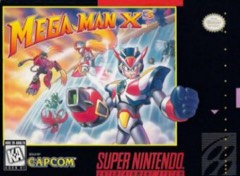
Sigma has been beaten twice, and a Reploid scientist called Dr. Doppler seems to have cured the Maverick problem for good. His followers build a utopia, Dopple Town. Then the cured Reploids turn again, attack Maverick Hunter headquarters, and X and Zero are sent after Doppler. You can guess who is behind it.
It is the X formula at its fullest: eight stages in any order, a boss weapon from each, and each boss weak to one of them. X still dashes and climbs walls, and capsules hide armour for his head, body, legs and buster. New chips add abilities, but X can only use one at a time, so you choose. Heart Tanks, Sub-Tanks and Ride Armour return, and you can now summon the mech suits once you find them. And for the first time you can swap to Zero for most of a stage, with two catches: he cannot fight bosses, bar one, and if he falls he is gone for the rest of the game.
Where it sits in history
Capcom wrote the story and designed the characters, but handed most of the game design to Minakuchi Engineering, who had made most of the Game Boy Mega Man games. Keiji Inafune, now directing and producing, admitted to psychological turmoil over letting outsiders build it, and to being possessive of Zero, whom he drew himself along with X and Vile. Freelancer Kinuyo Yamashita wrote the music, and the Cx4 chip from X2 returned for wireframe 3D effects.
It came out in Japan on 1 December 1995, North America in January 1996 and Europe on 15 May 1996, as the Super NES was winding down. Capcom had cut its 16-bit shipments, so the Western cartridges had short runs and a higher price than any Mega Man before; today they fetch very large sums. Later 32-bit ports for PlayStation, Saturn and Windows added anime cutscenes and remixed music but drew harsher reviews.
How it plays today
There is a lot here, which is both the charm and the complaint. The stages are bigger and crammed with secrets, and hunting every capsule and chip is a proper project. Critics at the time were mostly kind and liked the size and the challenge, but several said it was the same game a third time, with a kitchen-sink design that made levels feel sluggish.
Both are fair. It is not as clean as Mega Man X, and the upgrade system can bury the platforming. But the X controls still feel great, the chips give a real reason to replay, and calling Zero in for a tough stretch is a treat, even if he plays much like X here. Capcom noticed that too: in X4, Zero picks up a sword.
Compared with
- Mega Man X: The first and tightest of the three, and the one to start with.
- Mega Man X2: The direct predecessor, with the same Cx4 chip and a leaner design.
- Mega Man 7: The classic series' only Super NES game, out the same year.
Why it matters
X3 asks you to choose. One chip at a time, so you decide what kind of X you want. Zero in or Zero out, and if you lose him, he stays lost, and the ending changes. Ryan, Rigby and Przybylski found that games feel good and pull us back when they meet three needs: competence, autonomy and relatedness.
X3 leans hard on the middle one. It is not the cleanest Mega Man, but it is the one that most often lets you make a call and live with it. That small weight, a decision that sticks, is a big part of why people go back to it.
Read: Who you are when you play →
- Ryan, R. M., Rigby, C. S., & Przybylski, A. (2006). The motivational pull of video games: A self-determination theory approach. Motivation and Emotion, 30(4), 344-360. doi:10.1007/s11031-006-9051-8
What you're levelling up
You have been training these without noticing. Here is how to do it on purpose, and where it pays off away from the couch. All the skills games teach →
Judging risk
In the game. You can swap to Zero for most of a stage, but if he falls he's gone for the rest of the game.
Do it on purpose. Only call Zero in for one section where you're sure he's the better pick. Ask yourself if that call was worth the risk.
Off the couch. Some things you only get to lose once: a mate's trust, a reference, a first impression. Spend them carefully.
Planning ahead
In the game. New chips add abilities, but X can only use one at a time. You choose, and the choice shapes the whole run.
Do it on purpose. Before you commit to a chip, write down what problem it solves for you. Stick to it all game.
Off the couch. You can't do everything at once. Pick the one thing that fixes your biggest problem, at work or in your budget, and back it.
Curiosity
In the game. The stages are bigger and crammed with secrets, and hunting every capsule and chip is a proper project.
Do it on purpose. Spend one session without moving forward at all. Just explore stages you've cleared and see what you missed.
Off the couch. Curious people are good company. Ask the question nobody else asks at dinner and watch the conversation open up.
Verdict · 7/10
A busy, generous farewell to X on the Super NES. Play it through a collection rather than paying collector prices.