What it was
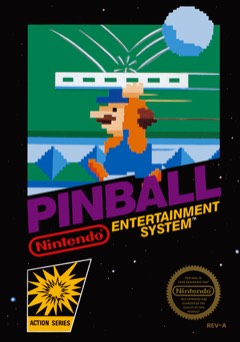
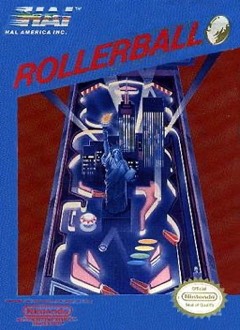
A pinball table split over two screens. You launch the ball from the bottom, it flies up into the top screen, and you work two sets of flippers to keep it alive. Drop through the top screen and you are back at the bottom; lose it past the bottom flippers and the ball is gone.
Find the bonus hole and the game becomes something else: a Breakout-style stage where Mario carries a platform and bounces the ball into blocks below Pauline, who first appeared with him in Donkey Kong. Clear the blocks and she falls. Catch her for points; let her hit the ground and you lose.
Where it sits in history
Nintendo and HAL Laboratory made it, based on a Game & Watch of the same name. It came out on the Famicom in Japan in 1984, then in arcades on the VS. System, and in 1985 it was a launch game for the NES in North America. The hardest problem was collision: the console could not do real curves, so the programmers treated a curved surface as a stack of small squares.
It sold over a million copies. It came back on the Famicom Disk System in 1989, as an unlockable in Animal Crossing on GameCube, on the e-Reader in 2002, on the Wii and Wii U Virtual Console, and on Nintendo Classics on Switch from 26 May 2022. Hamster released the arcade version in its Arcade Archives line on Switch on 30 August 2019. Reviews were mixed from the start: Tilt liked its speed but not its odd physics glitches.
How it plays today
It is a good five-minute game. The ball moves quickly, the flippers respond, and the two-screen hand-off is smarter than a single cramped table would be.
The squares show. Now and then the ball takes a bounce no real table would give it, and the table has few features to learn. The Mario bonus stage is the reason to keep going, and it is a nice nod to Nintendo's own past even now.
Compared with
Why it matters
Caillois sorted games by what drives them, and pinball sits between two of his kinds: agon, the contest of skill, and alea, chance. You control the flippers. You do not control the bounce. That mix is why a lost ball rarely feels entirely your fault, and why you always launch another.
Here the chance is partly built in by accident, a curve made of squares. It hardly matters, because a little unfairness is part of pinball's appeal. We like games that let us try hard and still leave room for luck.
Read: The magic circle: the world that rules make →
- Caillois, R. (1958/1961). Man, Play and Games (trans. M. Barash).
What you're levelling up
You have been training these without noticing. Here is how to do it on purpose, and where it pays off away from the couch. All the skills games teach →
Hand-eye coordination
In the game. The ball moves quickly across two screens, and you work two sets of flippers to keep it alive.
Do it on purpose. Play one ball trying to trap it on a flipper instead of slapping it. Count how many times you get it.
Off the couch. Quick reactions catch the glass before it hits the floor. Small physical competence reads as confidence.
Timing and rhythm
In the game. In the bonus stage Mario bounces the ball into blocks, then has to catch Pauline when she falls. A beat early or late and she hits the ground.
Do it on purpose. Get to the bonus stage and focus only on where Pauline will land. Move early, not late.
Off the couch. Showing up at the right moment, for a mate who's struggling, matters more than showing up perfect.
Deep focus
In the game. It's a good five-minute game. The ball takes the odd bounce no real table would give, so you can't switch off.
Do it on purpose. Play one ball with nothing else on, no music, no phone. Notice how long you last compared with usual.
Off the couch. Five minutes of full attention beats an hour of half. Try it at uni, in the gym, or listening to a partner talk about their day.
Verdict · 6/10
Simple, quick and a little glitchy, with a Mario bonus round that makes it more than a table. Good for one ball, not for an evening.